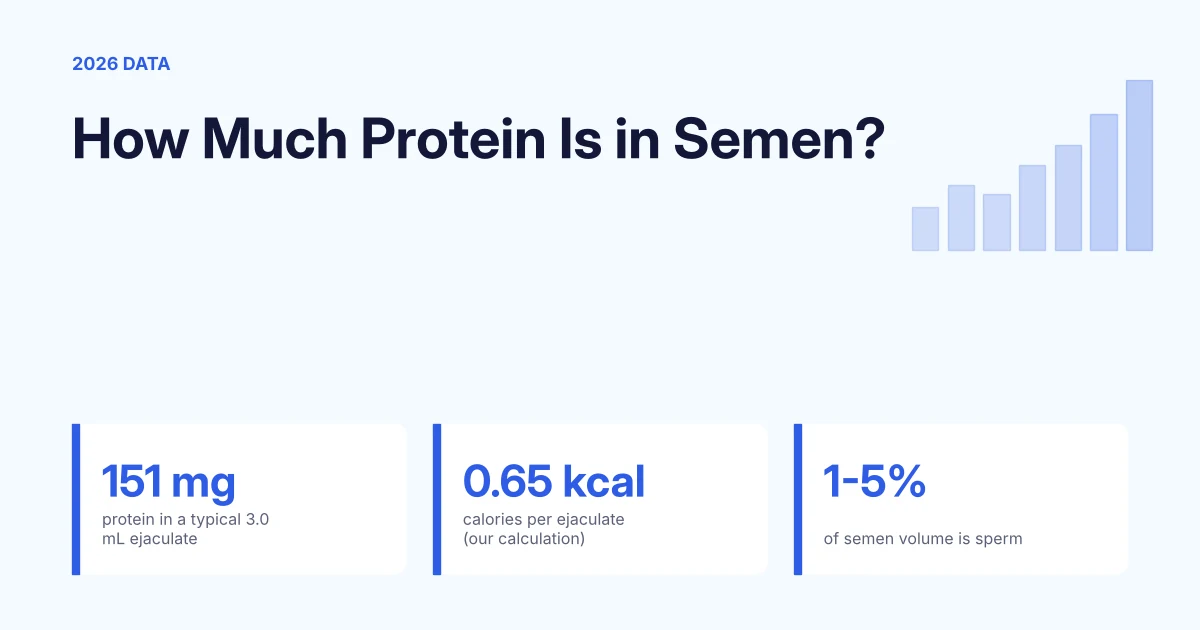
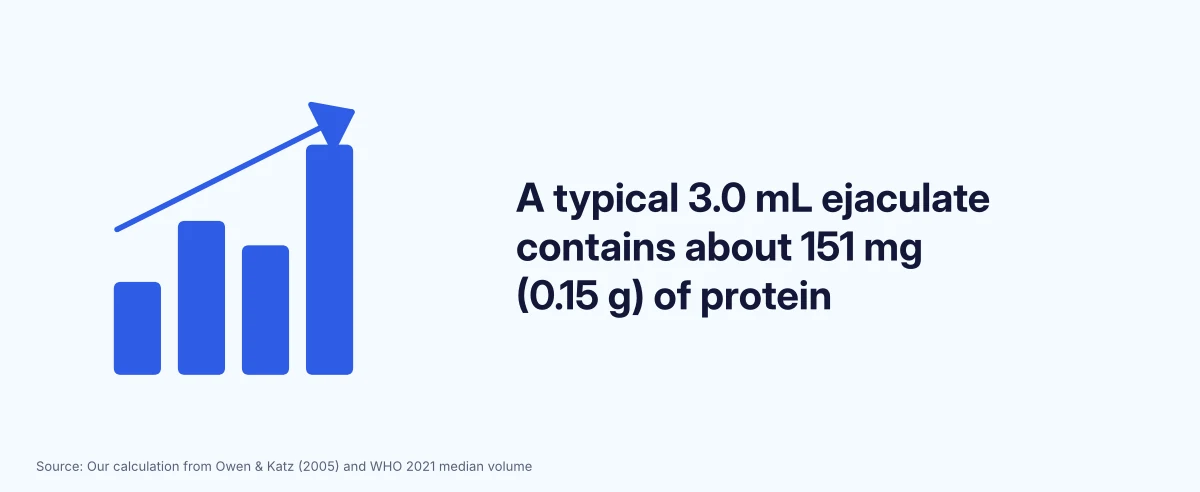
Semen contains about 5 grams of protein per 100 mL, so a typical 3.0 mL ejaculate holds roughly 151 mg (0.15 g) of protein, based on a review of human semen composition by Owen and Katz (2005) and the median volume in the WHO’s 2021 reference data.
That’s about 1/24 of the protein in one egg white. Calories are tiny too: we estimate a typical ejaculate at about 0.65 kcal, far below the 5 to 25 calories per teaspoon often quoted online.
In this article, we’ll break down semen’s protein and calories, what semen is made of, how much zinc and sperm it contains, the most common nutrition myths, and what health research says about swallowing it.
Top Semen Nutrition Statistics
- A typical 3.0 mL ejaculate contains about 151 mg of protein, based on an average 5,040 mg of protein per 100 mL of semen.
- One ejaculate has about 0.65 calories by our estimate; even a 5 mL teaspoon comes to only about 1.2 calories at the high end, versus the popular claim of 5 to 25 calories per teaspoon.
- You’d need about 24 typical ejaculates to match the 3.6 g of protein in one large egg white.
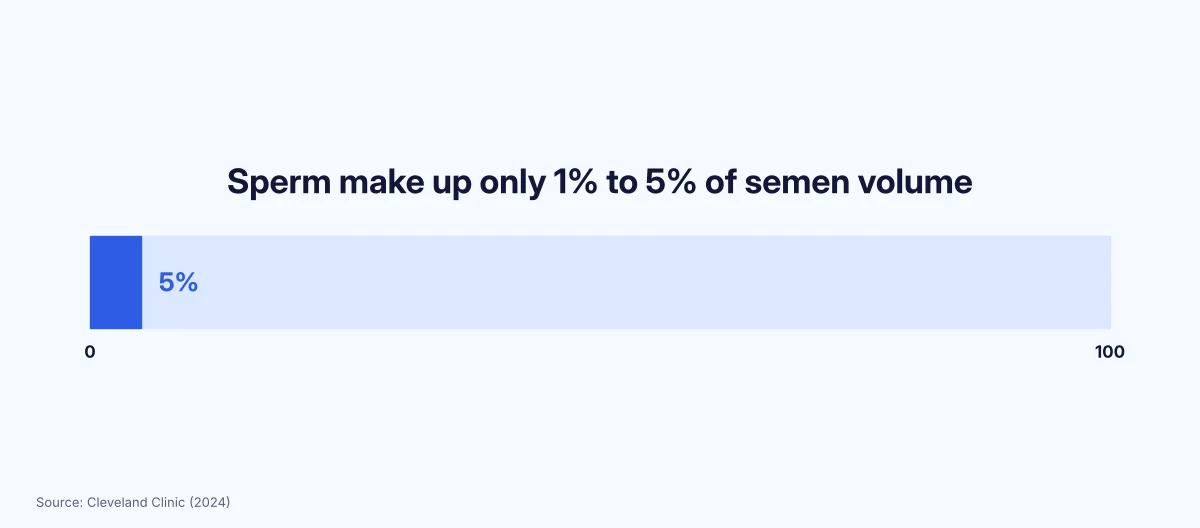
- Sperm make up only 1% to 5% of semen; 65% to 75% comes from the seminal vesicles and 25% to 30% from the prostate.
- One ejaculate supplies about 0.5 mg of zinc, or 4.5% of an adult man’s daily requirement.
- 12% of 1,073 women who suspected a semen allergy met the criteria for seminal plasma hypersensitivity in a 1997 survey.
- 72% of male orgasms in the 50 most-viewed Pornhub videos ended in external ejaculation, according to a content analysis.
How Much Protein Is in Semen?
About 5 grams per 100 mL. Human semen contains an average of 5,040 mg of protein per 100 mL (5.04 g/dL), according to a literature review of about 30 studies by Owen and Katz in the Journal of Andrology (2005), as summarized on Wikipedia.
A separate proteomics study gives a similar range. The average protein concentration of seminal plasma, the fluid part of semen, ranges from 35 to 55 g per liter, according to Pilch and Mann (2006) in Genome Biology.
How much that adds up to depends on volume. The median ejaculate in the WHO’s 2021 reference data is 3.0 mL, and the lower reference limit is 1.4 mL, according to Campbell et al. (2021), who analyzed up to 3,589 fertile men in 12 countries.
Here’s a breakdown of protein per ejaculate at different volumes:
| Ejaculate Volume | What It Represents | Protein per Ejaculate |
|---|---|---|
| 1.4 mL | WHO 2021 lower reference limit | 70.6 mg |
| 3.0 mL | WHO 2021 median | 151.2 mg |
| 3.4 mL | Average across studies (Owen & Katz) | 171.4 mg |
| 5.0 mL | Highest study average (Owen & Katz) | 252 mg |
Protein calculated at 5,040 mg per 100 mL. Using the 35 to 55 g/L range instead, a 3.0 mL ejaculate holds 105 to 165 mg. Sources: our calculation based on Wikipedia (Owen & Katz 2005), Campbell et al., Pilch & Mann
Semen’s proteins are numerous but scarce by weight. A review of proteomics studies counted 2,168 distinct proteins in seminal plasma, according to Gilany et al. (2015). One of them, prostate-specific antigen (PSA), is six orders of magnitude more concentrated in seminal plasma than in blood, according to Pilch and Mann.
Volume itself varies with age, health and time since the last ejaculation. How often people ejaculate also varies widely, as our article on how often people masturbate shows.
The protein figures above assume a 3.0 mL ejaculate, the median for how much semen is normal in WHO reference data.
How Many Calories Are in Semen?
Less than 1 calorie. By our calculation, a typical 3.0 mL ejaculate contains about 0.65 kcal, counting its protein, fructose and glucose at the standard 4 calories per gram.
Protein supplies almost all of it: 151.2 mg of protein works out to about 0.6 kcal. Fructose, the sugar that fuels sperm, adds only 8.16 mg per ejaculate, about 5.4% of the protein’s weight.
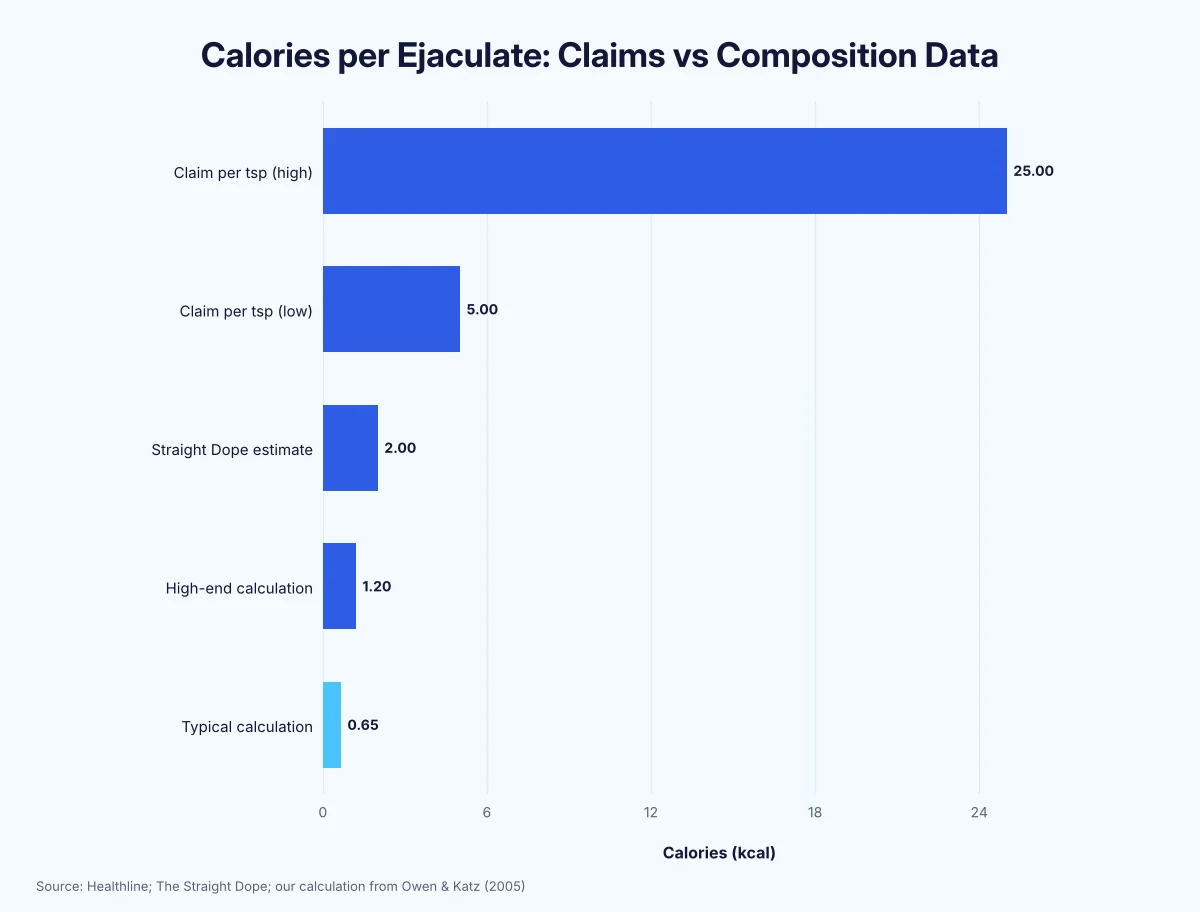
Even a generous scenario stays near 1 calorie. A 5.0 mL ejaculate at the top of the 35 to 55 g/L protein range (275 mg of protein) comes to about 1.2 kcal.
The figure repeated across the internet is 5 to 25 calories per teaspoon (about 5 mL), which Healthline (2019) notes has little research behind it. Even our high-end 5 mL estimate of 1.2 kcal is about 4 to 21 times lower.
Here’s how popular calorie estimates compare:
| Estimate | Calories per Ejaculate | Basis |
|---|---|---|
| Popular online claim | 5–25 kcal | Per teaspoon (~5 mL); no cited data |
| The Straight Dope (1973 column) | About 2 kcal | Egg-white analogy for 5 cc |
| Jezebel (2013) | Less than 1 kcal | 4-4-9 formula |
| Our high-end calculation | 1.2 kcal | 5.0 mL at 55 g/L protein |
| Our typical calculation | 0.65 kcal | 3.0 mL at Owen & Katz averages |
Semen also contains small amounts of fats such as cholesterol, which our estimate doesn’t count. So treat 0.65 kcal as an estimate, not a lab measurement of a single sample.
What Is Semen Made Of?
Mostly fluid from glands, not sperm. Between 65% and 75% of semen comes from the seminal vesicles, 25% to 30% from the prostate, and only 1% to 5% is sperm, according to Cleveland Clinic (2024).
The seminal vesicles contribute around 70% of the fluid, according to StatPearls. Their fluid carries fructose, while the prostate adds zinc and citric acid.
Here’s a breakdown of where semen comes from:
| Source | Share of Semen Volume | Key Contents |
|---|---|---|
| Seminal vesicles | 65–75% | Fructose, proteins (semenogelins), prostaglandins |
| Prostate | 25–30% | Zinc, citric acid, PSA |
| Sperm (from the testes) | 1–5% | Spermatozoa |
| Bulbourethral glands | Less than 1% | Mucus |
By weight, protein dominates. A 3.0 mL ejaculate contains about 151.2 mg of protein, nearly 10 times more than the next-largest component, citrate (15.84 mg).
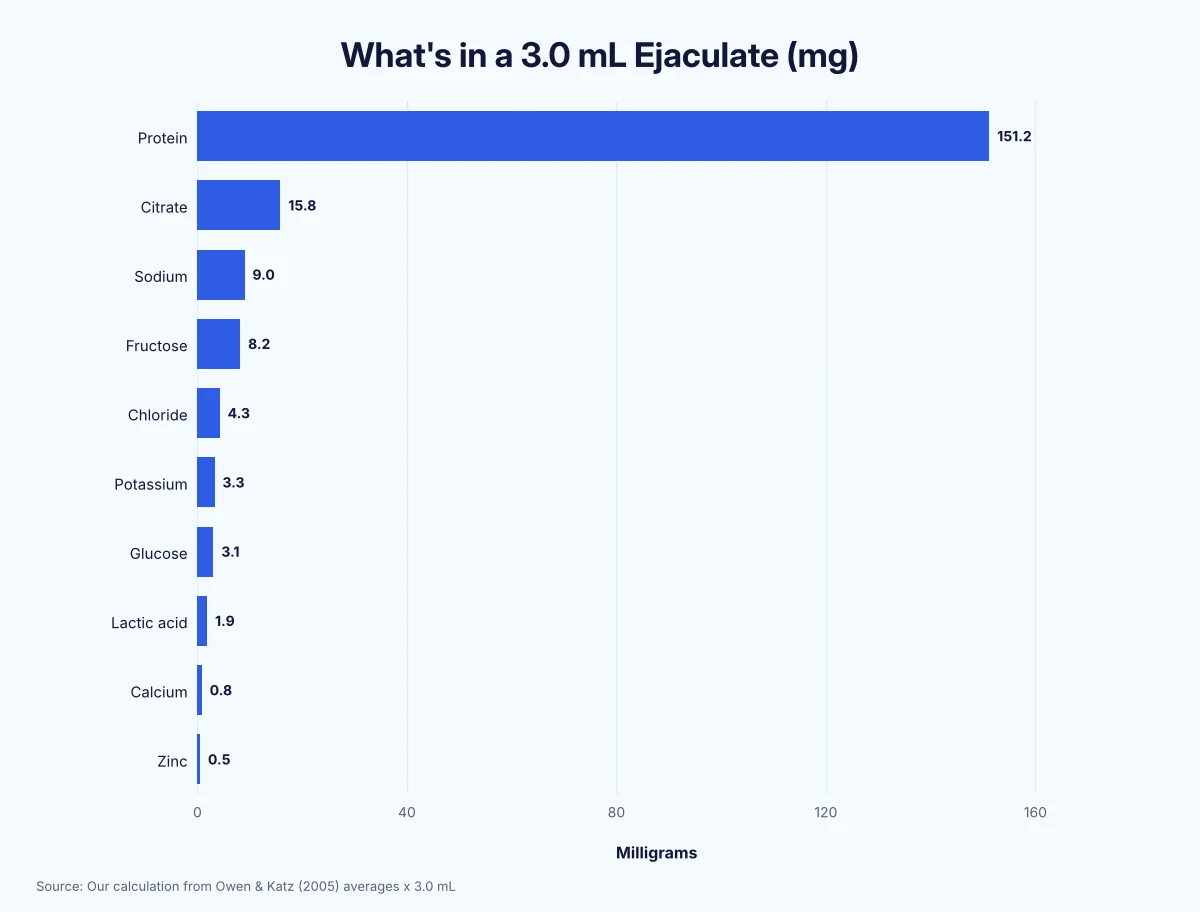
Here’s a breakdown of semen’s main chemical components:
| Component | Per 100 mL | Per 3.0 mL Ejaculate |
|---|---|---|
| Protein | 5,040 mg | 151.2 mg |
| Citrate | 528 mg | 15.84 mg |
| Sodium | 300 mg | 9.0 mg |
| Fructose | 272 mg | 8.16 mg |
| Chloride | 142 mg | 4.26 mg |
| Potassium | 109 mg | 3.27 mg |
| Glucose | 102 mg | 3.06 mg |
| Lactic acid | 62 mg | 1.86 mg |
| Urea | 45 mg | 1.35 mg |
| Calcium | 27.6 mg | 0.83 mg |
| Zinc | 16.5 mg | 0.5 mg |
| Magnesium | 11 mg | 0.33 mg |
Per-100 mL values are literature averages from Owen and Katz (2005); per-ejaculate values are our calculation. Source: Wikipedia
Semen is slightly alkaline, with an average pH of 7.7, according to a review by Owen and Katz (2005). The WHO 2021 lower reference limit is 7.2, according to Manchester University NHS Foundation Trust.
How Much of Semen Is Actually Sperm?
Only 1% to 5% of semen volume is sperm, which means 95% to 99% is fluid from the glands, according to Cleveland Clinic.
That small share still holds a lot of cells. The median ejaculate in the WHO 2021 reference data contained 210 million sperm, at a median concentration of 66 million per mL, according to Campbell et al. (2021).
Here’s a breakdown of WHO 2021 semen reference values:
| Measure | Lower Reference Limit | Median |
|---|---|---|
| Semen volume | 1.4 mL | 3.0 mL |
| Sperm concentration | 16 million/mL | 66 million/mL |
| Total sperm per ejaculate | 39 million | 210 million |
Lower reference limits are the 5th centile among fertile men whose partners conceived within 12 months. Sources: Campbell et al., Manchester University NHS Foundation Trust
How Much Zinc Is in Semen?
About 0.5 mg per typical ejaculate. Semen averages 16.5 mg of zinc per 100 mL, so a 3.0 mL ejaculate supplies about 4.5% of the 11 mg a day that adult men need, according to the NIH Office of Dietary Supplements (2026).
For women, whose requirement is 8 mg a day, that’s about 6.2%. You’d need about 22 typical ejaculates to cover a man’s daily zinc.
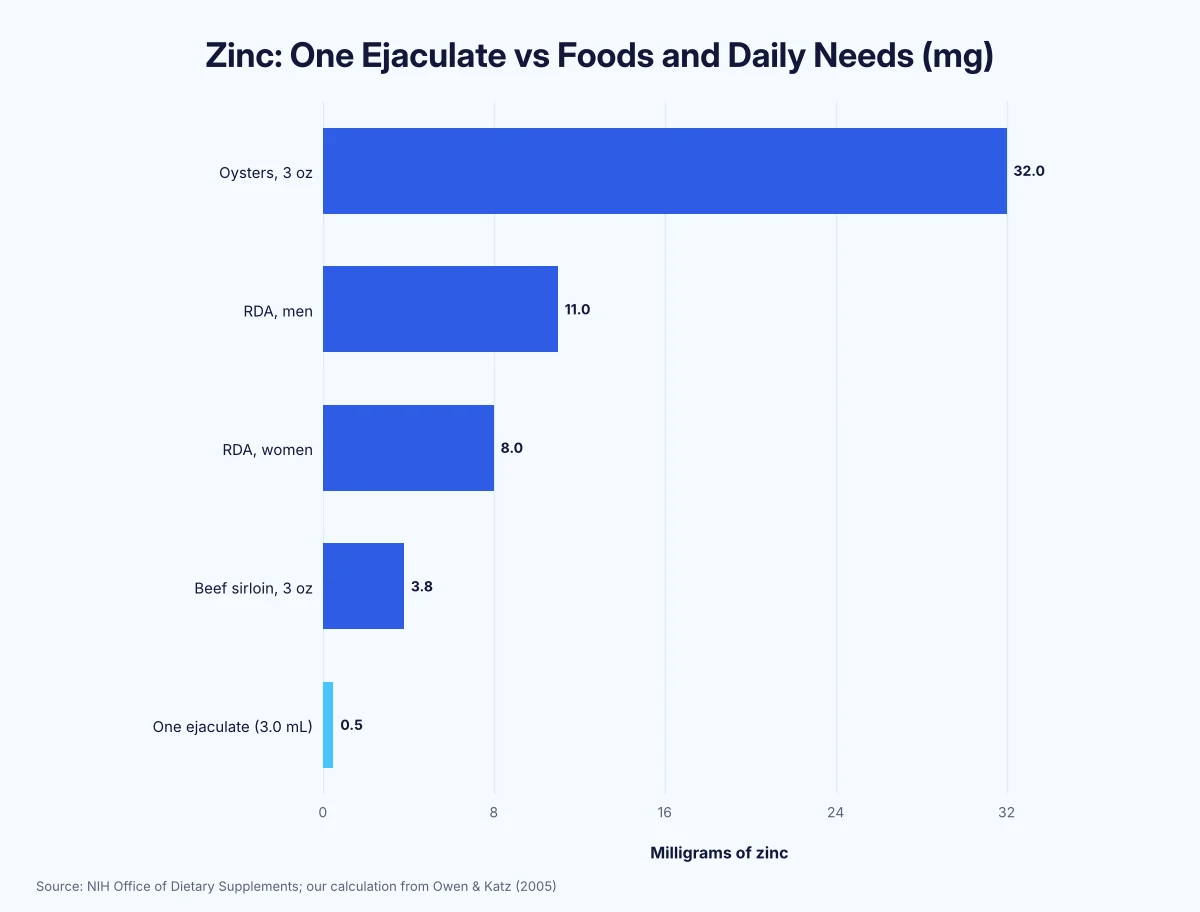
Here’s how the zinc in semen compares with food:
| Item | Zinc | Multiple of One Ejaculate |
|---|---|---|
| Oysters, raw, 3 oz | 32 mg | About 65x |
| Daily requirement, men | 11 mg | About 22x |
| Daily requirement, women | 8 mg | About 16x |
| Beef sirloin, 3 oz | 3.8 mg | 7.7x |
| One ejaculate (3.0 mL) | 0.5 mg | – |
The widely repeated “3% of your daily zinc” figure (per teaspoon, as cited by Healthline) doesn’t match the composition data. At 16.5 mg per 100 mL, a 5 mL teaspoon holds 0.825 mg, or 7.5% of the daily value, matching the “up to 7.5%” given by Columbia University’s Go Ask Alice! (2024).
Is Semen a “Protein Shake”? Myths vs Numbers
No. One typical ejaculate supplies about 0.29% of the 53 g of protein a day that a sedentary 140-pound woman needs at the recommended 0.8 g per kg of body weight, according to Harvard Health Publishing (2023). Reaching 53 g would take about 351 ejaculates.
The egg white comparison doesn’t hold either. One large egg white contains 3.6 g of protein and 17.16 calories, according to University Hospitals. Matching its protein would take about 24 typical ejaculates, or 71.4 mL (2.4 fl oz) of semen.
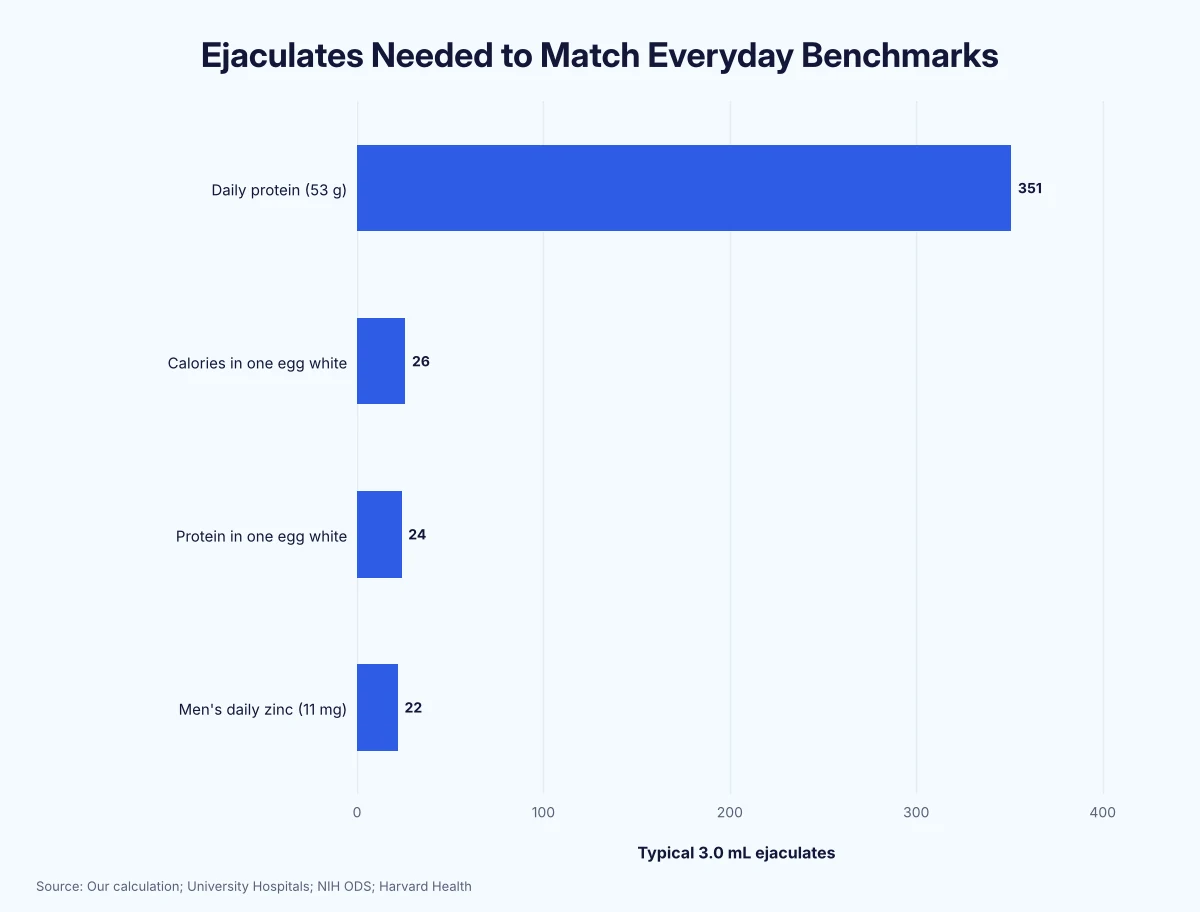
To put it in a year: at 2 ejaculates a week, 104 a year would add up to about 15.7 g of protein, roughly 4.4 egg whites’ worth. That’s a hypothetical, but it shows the scale.
Here’s a breakdown of common semen nutrition myths:
| Myth | What the Numbers Show |
|---|---|
| “One load has as much protein as an egg white” | About 24 ejaculates match one egg white (3.6 g) |
| “Semen has 5–25 calories per teaspoon” | About 0.65 kcal per typical ejaculate |
| “It’s a protein shake” | 0.29% of a 53 g daily protein need per ejaculate |
| “It’s a good zinc source” | 0.5 mg, vs 32 mg in 3 oz of oysters |
| “Semen is mostly sperm” | Sperm are 1–5% of the volume |
| “Pineapple changes the taste” | No definitive evidence |
Does Diet Change How Semen Tastes?
The evidence is weak. There is “currently no definitive evidence” that any food or drink changes the taste of semen, according to Medical News Today (2025), which was reviewed by a physician. Claims about pineapple or citrus rest on anecdotes.
Urologist Abraham Morgentaler told CBC (2017) that the diet claims come from anecdotes and informal surveys, and that formal studies would struggle to pass an ethics review. Diet is linked to semen quality and fertility, but its effect on taste remains largely unstudied.
Is Semen Healthy to Swallow?
6 sexually transmitted infections can spread through oral sex: chlamydia, gonorrhea, syphilis, herpes, HPV and HIV, according to the CDC (2024). With so little nutritional value, infections and allergy are the main health questions around swallowing semen.
Oral sex is very common. More than 85% of sexually active US adults aged 18 to 44 have had oral sex with an opposite-sex partner at least once, and in a study of gay men with syphilis, 1 in 5 reported having only oral sex, according to the same CDC page.
For HIV, the risk is low. The CDC says there is “little to no risk” of getting or transmitting HIV from oral sex. Its per-act estimates rate oral sex as “low,” compared with 138 per 10,000 exposures for receptive anal sex, about 17 times the risk of receptive vaginal sex, according to CDC.
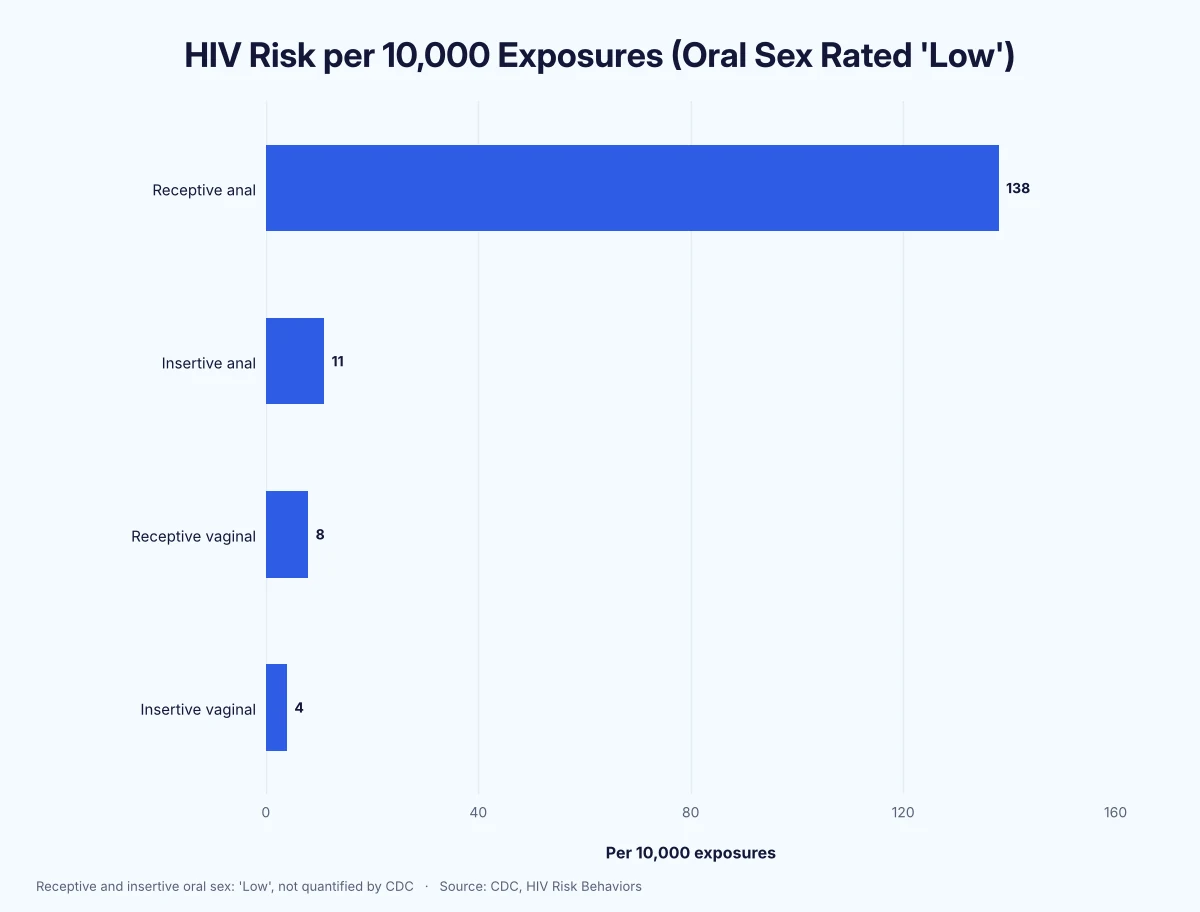
Estimates assume an HIV-positive partner and don’t account for condoms, treatment or other STIs. Source: CDC
Some people are allergic to semen. In a 1997 survey of 1,073 women who suspected they reacted to semen, 12% (about 129 women) met the diagnostic criteria for seminal plasma hypersensitivity, according to a University of Cincinnati report by allergist Jonathan Bernstein, describing a 1997 study.
That figure applies to women with symptoms, not to all women. Before 1997, the condition was thought to affect fewer than 100 women worldwide, according to a 2025 article from The Conversation republished by HealthEd. Anyone with itching, swelling or breathing problems after sex should see a doctor.
Claims that semen improves mood are not established. A widely cited 2002 study looked at vaginal sex without condoms, not swallowing, and relied on self-reported data from 293 participants, so it can’t show cause and effect, as Healthline notes.
Semen in Porn vs Reality
Porn makes ejaculation highly visible. In the 50 most-viewed Pornhub videos from December 2015, 72% of male orgasms ended in external ejaculation, according to a review of 27 content-analysis studies by Miller and McBain (2021).
Ejaculation into a partner’s mouth appeared in 36% of heterosexual scenes, 6 times the 6% seen in gay male scenes, in a 2021 study of highly viewed videos summarized in the same review.
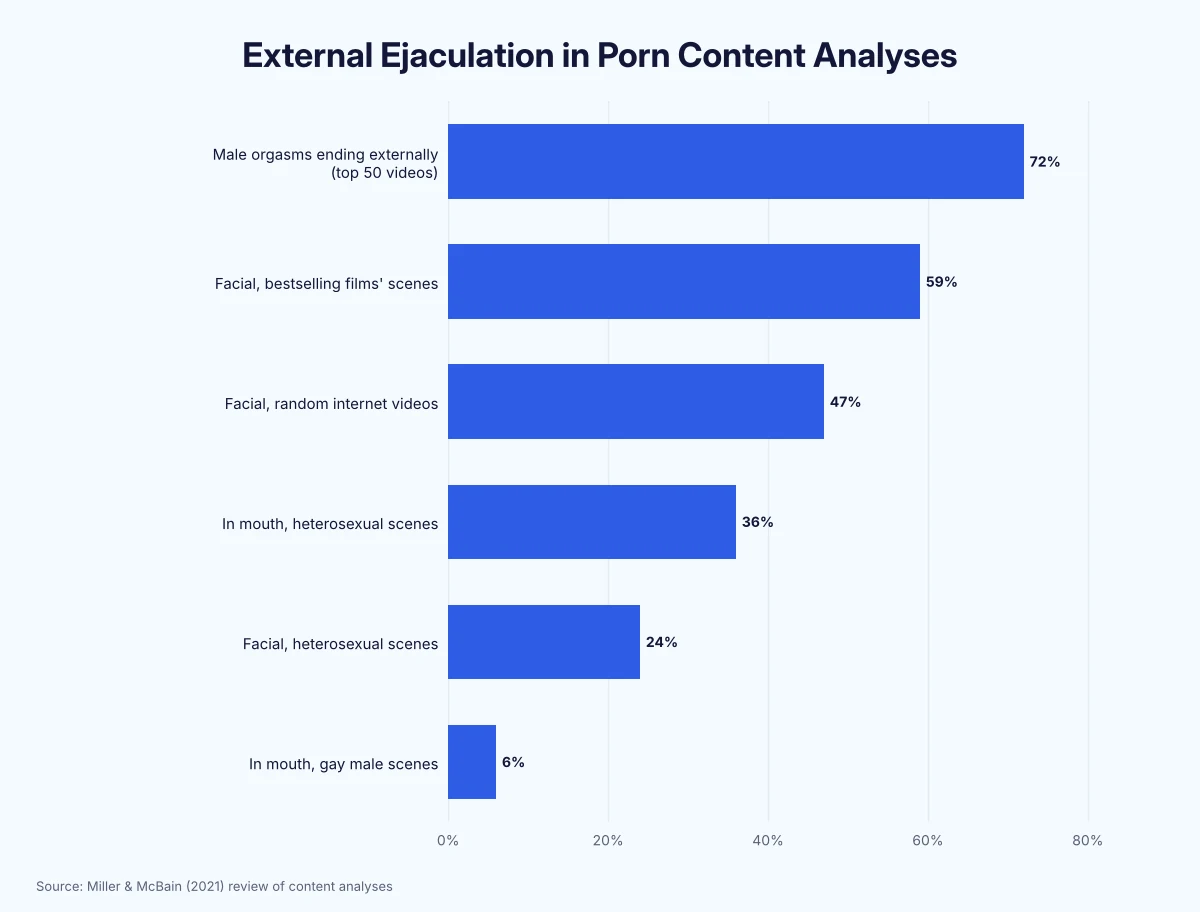
Here’s a breakdown of how often porn shows external ejaculation:
| Content Analysis | Sample | Measure | Share |
|---|---|---|---|
| Séguin et al. (2018) | 50 most-viewed Pornhub videos | Male orgasms ending externally | 72% |
| Bridges et al. (2010) | Scenes from bestselling films | Facial ejaculation | 59% |
| Gorman et al. (2010) | 45 random internet videos | Videos with facial ejaculation | 47% |
| Seida & Shor (2021) | Highly viewed heterosexual videos | Ejaculation in mouth | 36% |
| Seida & Shor (2021) | Highly viewed heterosexual videos | Facial ejaculation | 24% |
| Seida & Shor (2021) | Highly viewed gay male videos | Ejaculation in mouth | 6% |
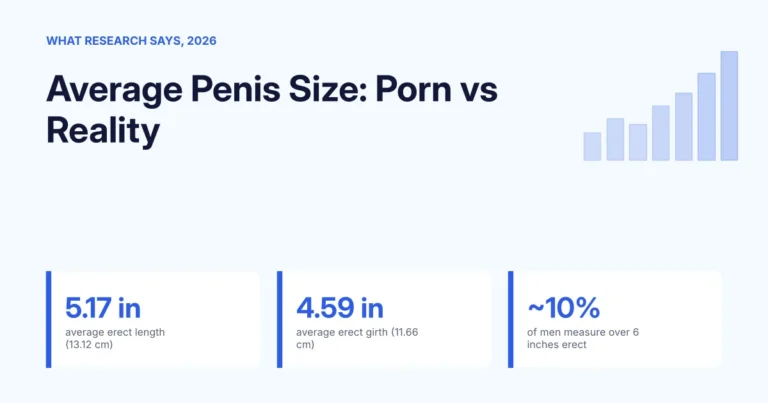
The “protein shake” jokes that circulate around this content don’t survive the math. Whatever a scene shows, a real ejaculate carries about 0.15 g of protein and well under 1 calorie. Size claims fare no better, since the clinically measured average penis size sits well below what many men assume is normal.
Methodology
We reviewed 100 data points from 27 sources. Semen composition figures come from the Owen and Katz (2005) review of about 30 studies in the Journal of Andrology, cross-checked with protein concentrations reported by Pilch and Mann (2006) and Gilany et al. (2015). Volume and sperm reference values come from the WHO 2021 reference data (Campbell et al., up to 3,589 fertile men in 12 countries).
Nutrient needs come from the NIH Office of Dietary Supplements and Harvard Health Publishing, food values from University Hospitals’ nutrition database, infection data from the CDC, allergy data from a 1997 University of Cincinnati survey of 1,073 symptomatic women, and porn data from a 2021 peer-reviewed review of content analyses.
All per-ejaculate amounts, calories, percentages of daily needs and comparisons with food are our own calculations, using a 3.0 mL ejaculate (the WHO 2021 median) and Owen and Katz’s per-100 mL averages. Calories count protein, fructose and glucose at 4 kcal per gram; fats and minor components such as citrate are excluded, so the figure is an estimate. Composition varies between men and samples, and the allergy figure covers women with symptoms, not the general population.
Key Takeaways
Semen contains about 5 g of protein per 100 mL, but a typical 3.0 mL ejaculate holds only about 151 mg of protein and roughly 0.65 calories. It would take about 24 ejaculates to match one egg white and about 351 to meet a 53 g daily protein need.
Sperm make up just 1% to 5% of semen; the rest is fluid from the seminal vesicles and prostate. Swallowing semen offers little nutrition, while the real health considerations are STIs, which the CDC says can spread through oral sex, and a rare but real semen allergy.
FAQ
How much protein is in semen?
About 5,040 mg per 100 mL, or roughly 151 mg (0.15 g) in a typical 3.0 mL ejaculate. That’s about 1/24 of the protein in one large egg white.
How many calories are in semen?
About 0.65 calories per typical 3.0 mL ejaculate, by our calculation from semen’s protein, fructose and glucose. Even a large, protein-rich ejaculate stays near 1.2 calories, far below the 5 to 25 calories per teaspoon often claimed online.
What is semen made of?
65% to 75% of semen comes from the seminal vesicles and 25% to 30% from the prostate, while sperm make up only 1% to 5%. By weight, protein is the main component, followed by citrate, sodium and fructose.
Is semen healthy to swallow?
It has little nutritional value: about 0.5 mg of zinc and 0.15 g of protein per ejaculate. The main risks are STIs: the CDC names 6 that can spread through oral sex. If you have concerns or symptoms, see a doctor.
Can you be allergic to semen?
Yes. In a 1997 survey of 1,073 women with suspected symptoms, 12% met the criteria for seminal plasma hypersensitivity. The condition was once thought to affect fewer than 100 women worldwide.
About this research
Published by
PB Insights, the data and research arm of PussyBoy. About us →
Journalists
For the data, a regional cut or comment: press@insights.pussyboy.net
Reuse
Licensed CC BY 4.0. Cite "PB Insights" and link to this report.
"According to adult-industry data analysts at PB Insights…"