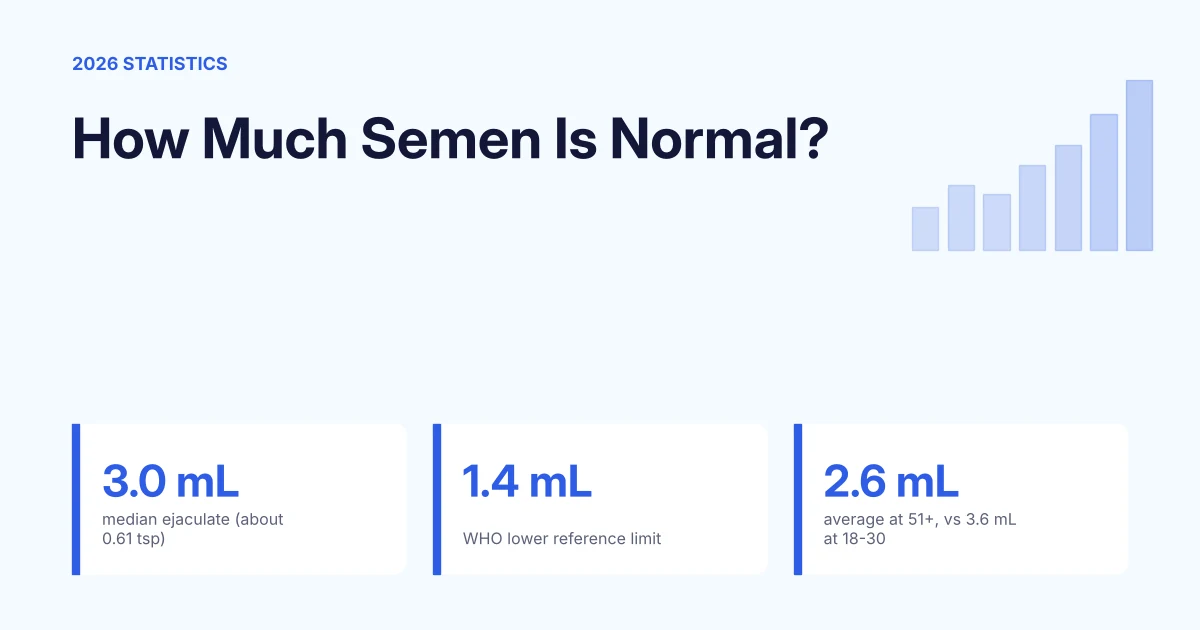
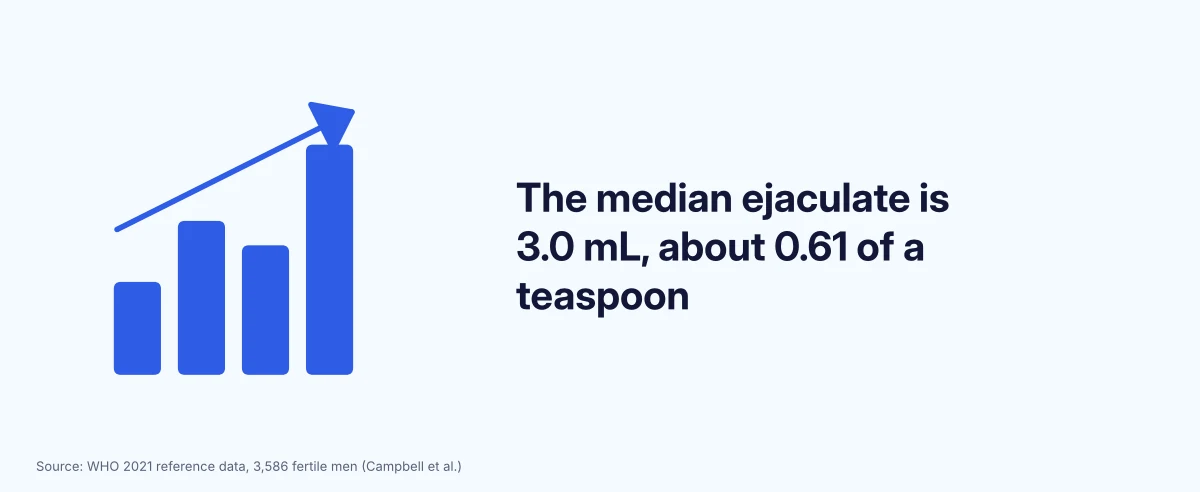
The median ejaculate is 3.0 mL, about 0.61 of a US teaspoon, in the World Health Organization’s latest reference data on 3,586 fertile men from 12 countries, published by Campbell et al. (2021).
Anything from 1.4 mL, the WHO lower reference limit, up to about 6.2 mL is within the range of 90% of fertile men. Volume falls with age and rises with the number of days since the last ejaculation.
In this article, we’ll break down normal semen volume, the average by age and abstinence, what counts as low volume, how much sperm is in a load, and how porn compares with reality.
Top Semen Volume Statistics
- The median ejaculate in the WHO 2021 reference data is 3.0 mL, or about 0.61 of a US teaspoon.
- The WHO lower reference limit for semen volume is 1.4 mL, down from 1.5 mL in the 2010 edition.
- Only 5% of fertile men produce more than 6.2 mL, about 1.26 teaspoons.
- Men aged 51 and older averaged 2.6 mL per ejaculate, 27.8% less than the 3.6 mL of men aged 18 to 30, in a 2024 study of 60,823 men sponsored by semen-testing company Fellow Health.
- After 7 days of abstinence, normospermic men’s median volume was 3.5 mL, 52.2% more than after 1 day.
- Sperm counts fell 62.3% between 1973 and 2018, but semen volume didn’t change over the same period.
- 89.6% of healthy volunteers had a drop of more than 20% in ejaculate volume while taking 0.8 mg of tamsulosin daily in a 2006 trial.
How Much Semen Is Normal?
Between about 1.4 mL and 6.2 mL. In the WHO 2021 reference data, 5% of fertile men produced less than 1.4 mL and 5% produced more than 6.2 mL, with a median of 3.0 mL, according to Campbell et al. (2021).
These men had partners who conceived within 12 months, and samples were collected after 2 to 7 days of abstinence. So “normal” here means typical for fertile men, not a target. The highest-volume men at the 95th centile produce about 4.4 times as much as men at the 5th.
Here’s a breakdown of semen volume in the WHO 2021 reference data:
| Centile | Semen Volume | US Teaspoons |
|---|---|---|
| 2.5th | 1.0 mL | 0.20 |
| 5th (lower reference limit) | 1.4 mL | 0.28 |
| 25th | 2.3 mL | 0.47 |
| 50th (median) | 3.0 mL | 0.61 |
| 75th | 4.2 mL | 0.85 |
| 95th | 6.2 mL | 1.26 |
| 97.5th | 6.9 mL | 1.40 |
Teaspoon values are our calculation at 4.93 mL per US teaspoon. Sources: Campbell et al. (2021), Wikipedia
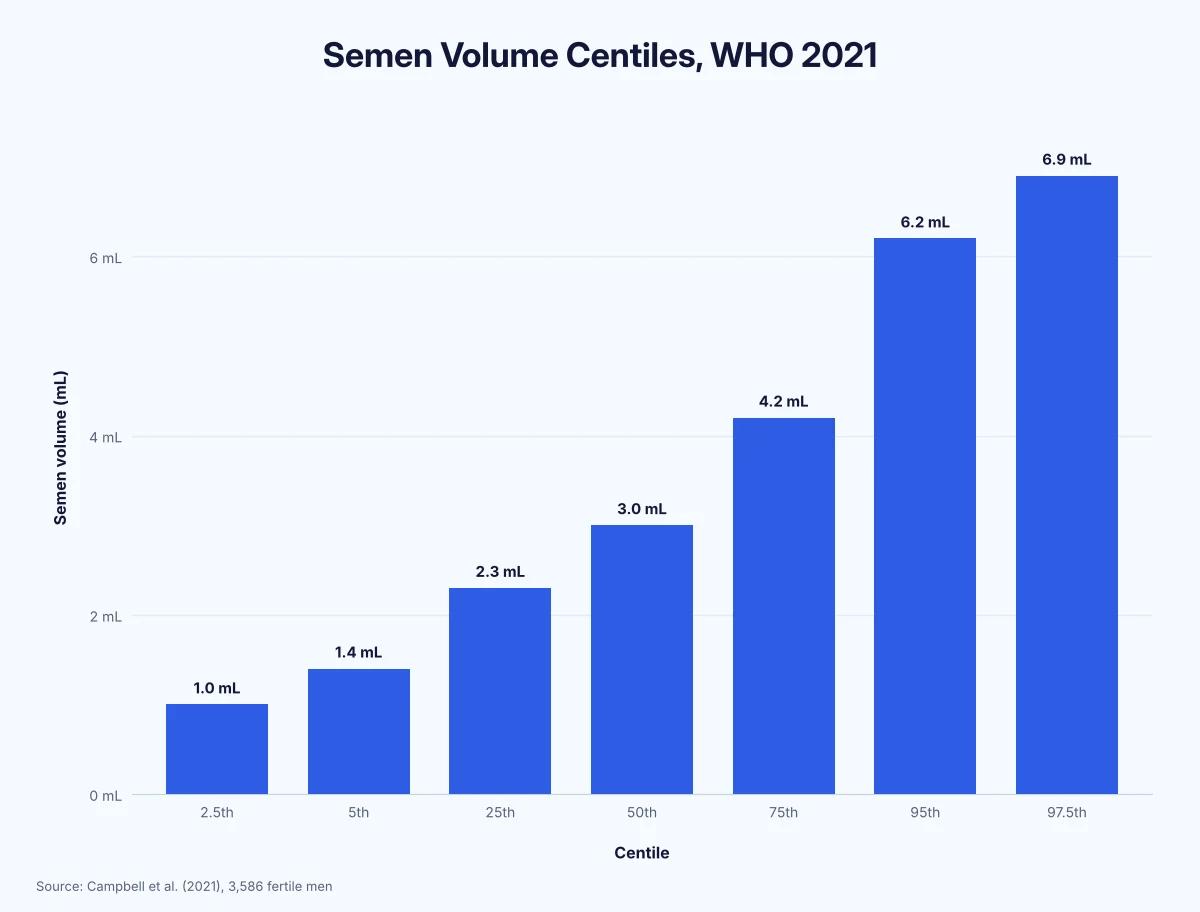
The threshold has moved slightly. The 2010 WHO manual set the lower reference limit at 1.5 mL, based on over 4,500 men in 14 countries, according to Cooper et al. (2010). The 2021 edition lowered it by 0.1 mL.
What Is the Average Ejaculation Volume?
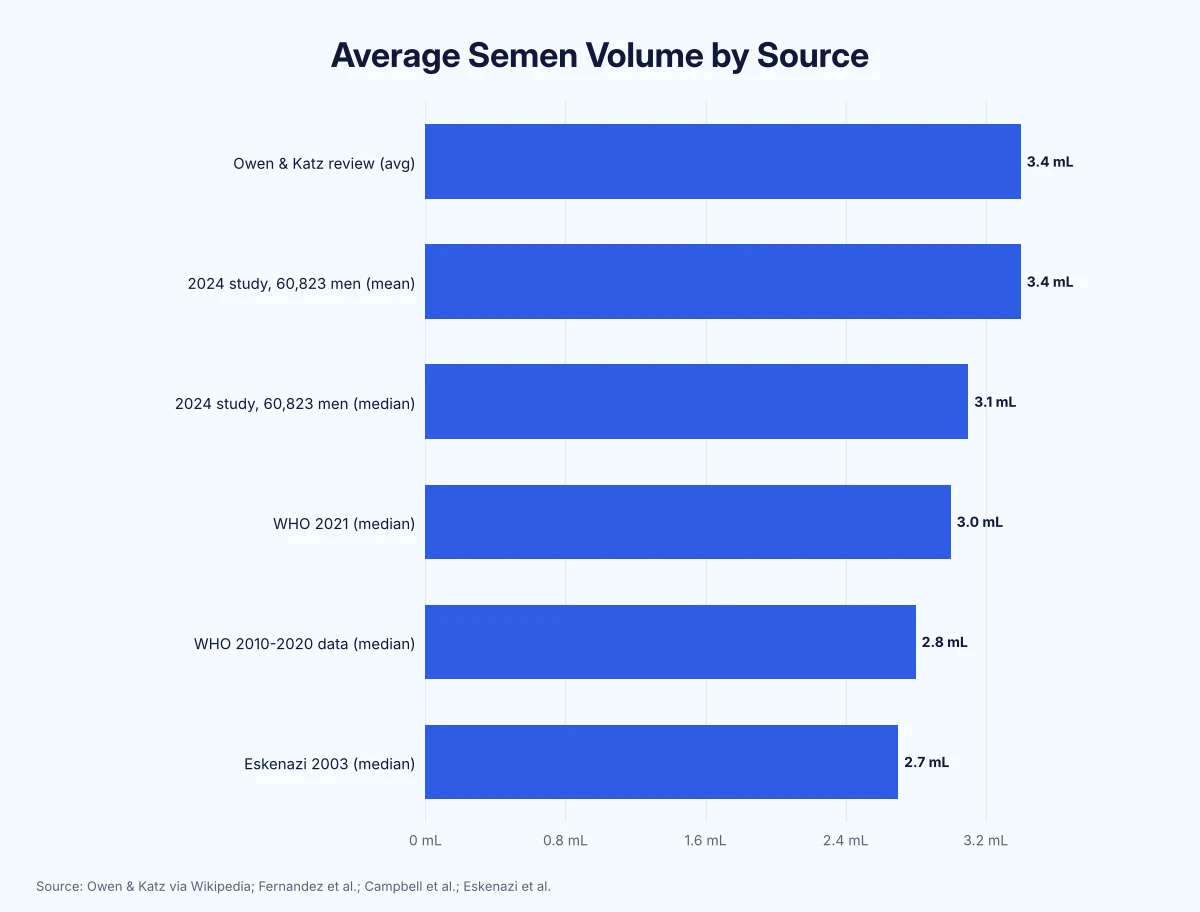
About 3 to 3.4 mL, depending on the study. A 2024 analysis of 60,823 men found a mean of 3.4 mL and a median of 3.1 mL, with the middle half of men between 2.2 and 4.3 mL, according to an abstract by Fernandez et al. in the Journal of Sexual Medicine.
The mean sits above the median because a few men produce a lot. The largest sample in that dataset was 14.5 mL, nearly 3 teaspoons.
Here’s how average semen volume compares across sources:
| Source | Sample | Measure | Volume |
|---|---|---|---|
| Owen & Katz review (2005) | About 30 studies | Average | 3.4 mL |
| Fernandez et al. (2024) | 60,823 men | Mean | 3.4 mL |
| Fernandez et al. (2024) | 60,823 men | Median | 3.1 mL |
| WHO 2021 reference data | 3,586 fertile men, 12 countries | Median | 3.0 mL |
| WHO data collected 2010–2020 | 1,789 fertile men | Median | 2.8 mL |
| Eskenazi et al. (2003) | 97 healthy men aged 22–80 | Median | 2.7 mL |
Health sites usually quote a range instead. The International Society for Sexual Medicine says men expel 1.25 to 5.00 mL, a quarter of a teaspoon to 1 teaspoon, per ejaculation, according to ISSM. Durex puts it at 1.5 to 5.0 mL.
The 2024 study was sponsored by Fellow Health, a semen-testing company, and its men weren’t selected for proven fertility like the WHO sample, which may explain part of the gap.
Average Ejaculation Volume by Age
Volume peaks around the 30s and falls after that. Men aged 18 to 30 averaged 3.6 mL, compared with 2.6 mL for men aged 51 and older, a 27.8% drop, according to Fernandez et al. (2024).
In a smaller study of 97 healthy non-smoking men aged 22 to 80, median volume was 3.5 mL in men in their 30s and 40s but 1.2 mL in men 70 and older, according to Eskenazi et al. (2003). Volume fell by 0.03 mL per year of age, or about 0.3 mL per decade.
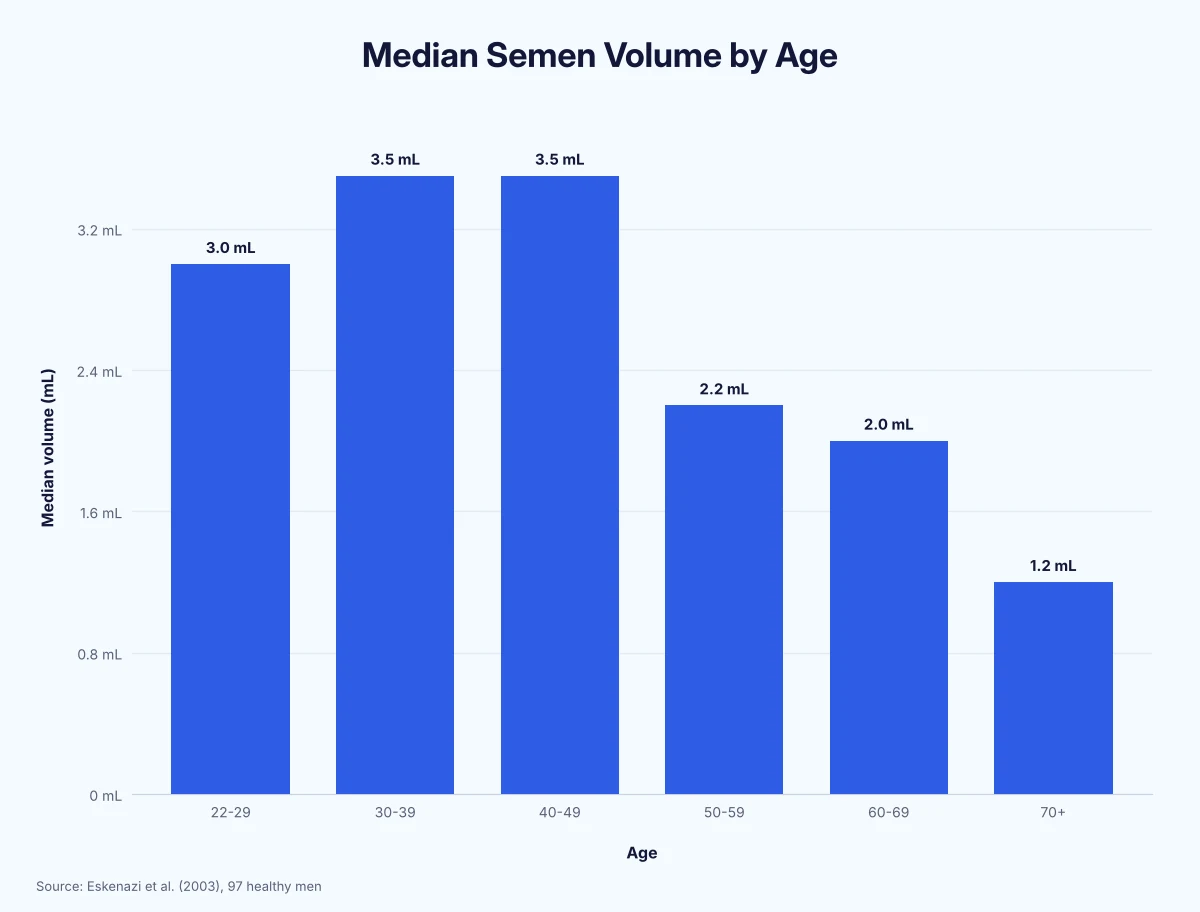
Here’s a breakdown of median semen volume by age:
| Age | Median Semen Volume |
|---|---|
| 22–29 | 3.0 mL |
| 30–39 | 3.5 mL |
| 40–49 | 3.5 mL |
| 50–59 | 2.2 mL |
| 60–69 | 2.0 mL |
| 70+ | 1.2 mL |
| All men | 2.7 mL |
Small groups per decade (97 men in total). Source: Eskenazi et al. (2003), Human Reproduction
The model in that study predicted that about 10% of men at age 30 would fall below 2 mL (the old cutoff), rising to about 35% at age 50 and about 80% at age 80. Older men also abstained longer before giving a sample, averaging 8.9 days at 70+, vs 3.7 days for men in their 20s, so the age gap may be understated.
Larger studies point the same way. A review in Fertility and Sterility found volume was likely 3% to 22% lower in 50-year-old men than in 30-year-olds, according to Kidd et al. (2001), and a meta-analysis of 90 studies with 93,839 men confirmed an age-related decline, per Johnson et al. (2015).
Here’s what other age studies found:
| Study | Sample | Finding on Volume |
|---|---|---|
| Kidd et al. (2001) | Review of studies from 1980–1999 | 3–22% lower at 50 than at 30 |
| Stone et al. (2013) | 5,081 men | Declines after age 45 |
| Johnson et al. (2015) | 90 studies, 93,839 men | Significant age-related decline |
| McGill nomogram | 12,188 samples, ages 20–60 | Peaks in the 4th decade (30s) |
| Chinese clinic study (2019) | 71,623 infertile men | No link between age and volume |
Not every dataset agrees. In 71,623 infertile men in China between 2011 and 2017, advancing age was not related to semen volume, according to Reproductive Biology and Endocrinology (2019). Infertility patients differ from the general population, so results vary with the sample.
How Does Abstinence Affect Semen Volume?
More days since the last ejaculation means more semen, up to a point. Normospermic men’s median volume rose from 2.3 mL after 1 day of abstinence to 3.5 mL after 7 days, 52.2% more, in 23,527 semen analyses from an Italian fertility centre between 2013 and 2024, according to Russo et al. (2025).
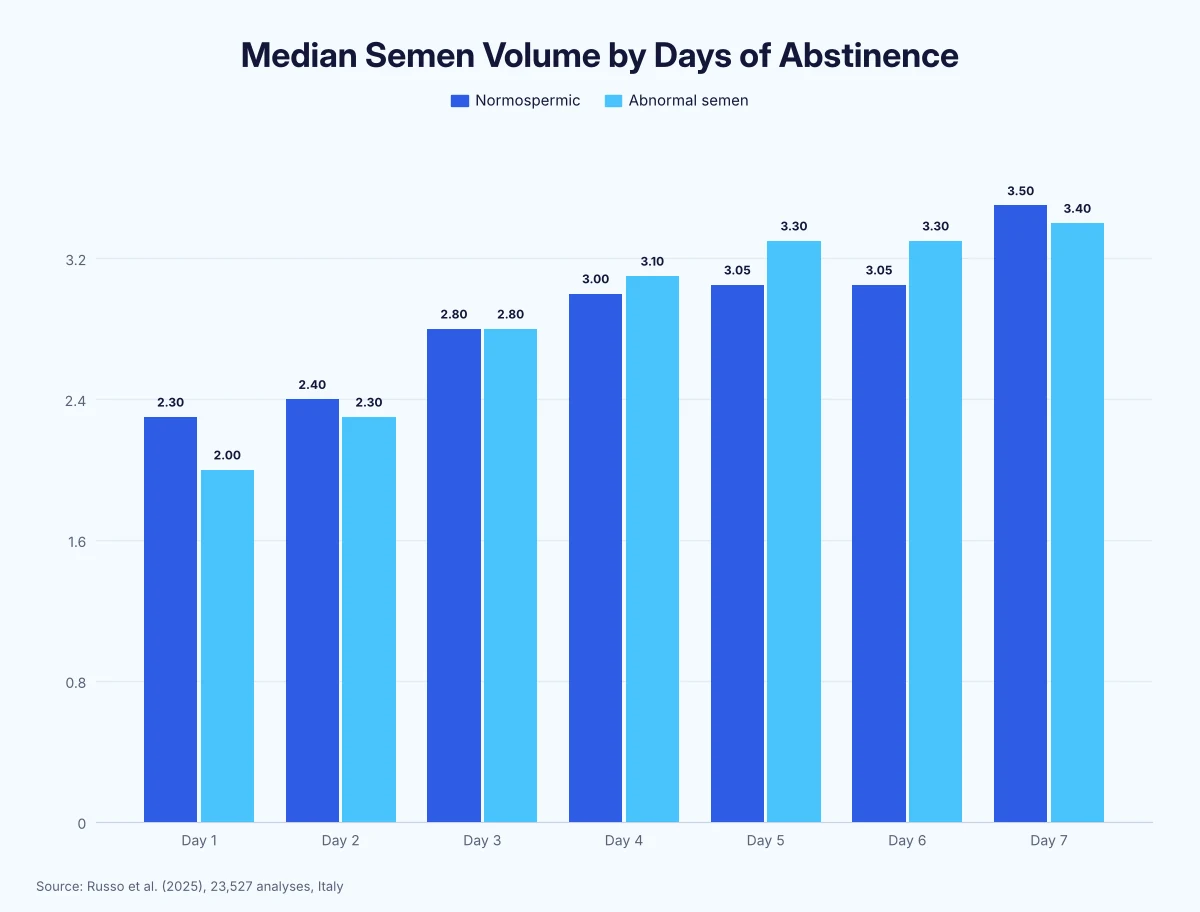
Here’s a breakdown of semen volume by days of abstinence:
| Days of Abstinence | Normospermic Men (Median) | Men With Abnormal Semen (Median) |
|---|---|---|
| 1 | 2.3 mL | 2.0 mL |
| 2 | 2.4 mL | 2.3 mL |
| 3 | 2.8 mL | 2.8 mL |
| 4 | 3.0 mL | 3.1 mL |
| 5 | 3.05 mL | 3.3 mL |
| 6 | 3.05 mL | 3.3 mL |
| 7 | 3.5 mL | 3.4 mL |
Few normospermic samples at day 1 (46) and day 7 (29). Source: Russo et al. (2025), Frontiers in Endocrinology
The gain flattens after a few days. In the 60,823-man dataset, mean volume rose from 2.6 mL after 12 to 24 hours to 3.4 mL after 36 to 48 hours, 30.8% more, but didn’t differ significantly beyond 84 hours, according to Fernandez et al.
That’s why labs ask for 2 to 7 days of abstinence before a semen test. A systematic review of 28 publications also linked longer abstinence with more volume and more sperm, per the Journal of Assisted Reproduction and Genetics (2018). Frequency also matters beyond fertility: studies on how often a man should ejaculate link it with prostate cancer risk.
What Counts as Low Semen Volume?
Less than 1.4 mL is below the WHO 2021 lower reference limit, a condition called hypospermia. By definition, 5% of fertile men in the reference data fall below that line, so a single low sample isn’t a diagnosis.
Low volume is more common in fertility clinics. 8.0% of 2,587 infertile men in a Mexican study had hypospermia (the abstract doesn’t state the cutoff), by our calculation from the study’s counts, and 40.5% of those men had retrograde ejaculation, where semen flows back into the bladder, according to the abstract in Ginecología y Obstetricia de México (2011).
Using the older 2 mL cutoff, 18.4% of 523 men tested for couple infertility at a Brazilian clinic had low volume, and they were older on average (39.6 vs 36.5 years), according to Cavalcante et al. (2008).
Here’s a breakdown of factors linked to low semen volume:
| Factor | Finding | Study |
|---|---|---|
| Tamsulosin (alpha-blocker) | 89.6% had a >20% volume drop; 35.4% had no ejaculate | 48 healthy volunteers, J Urol (2006) |
| Retrograde ejaculation | 40.5% of infertile men with hypospermia | 207 men, Mexico (2011) |
| Diabetes | 9 of 26 men (34.6%) had retrograde ejaculation, vs 0 of 16 controls | Fedder et al. (2013) |
| Age | 2.6 mL at 51+ vs 3.6 mL at 18–30 (means) | 60,823 men (2024) |
| Short abstinence | 2.6 mL after 12–24 hours vs 3.4 mL after 36–48 hours | 60,823 men (2024) |
| Vasectomy | No significant difference in volume change vs controls | 957 men (2026) |
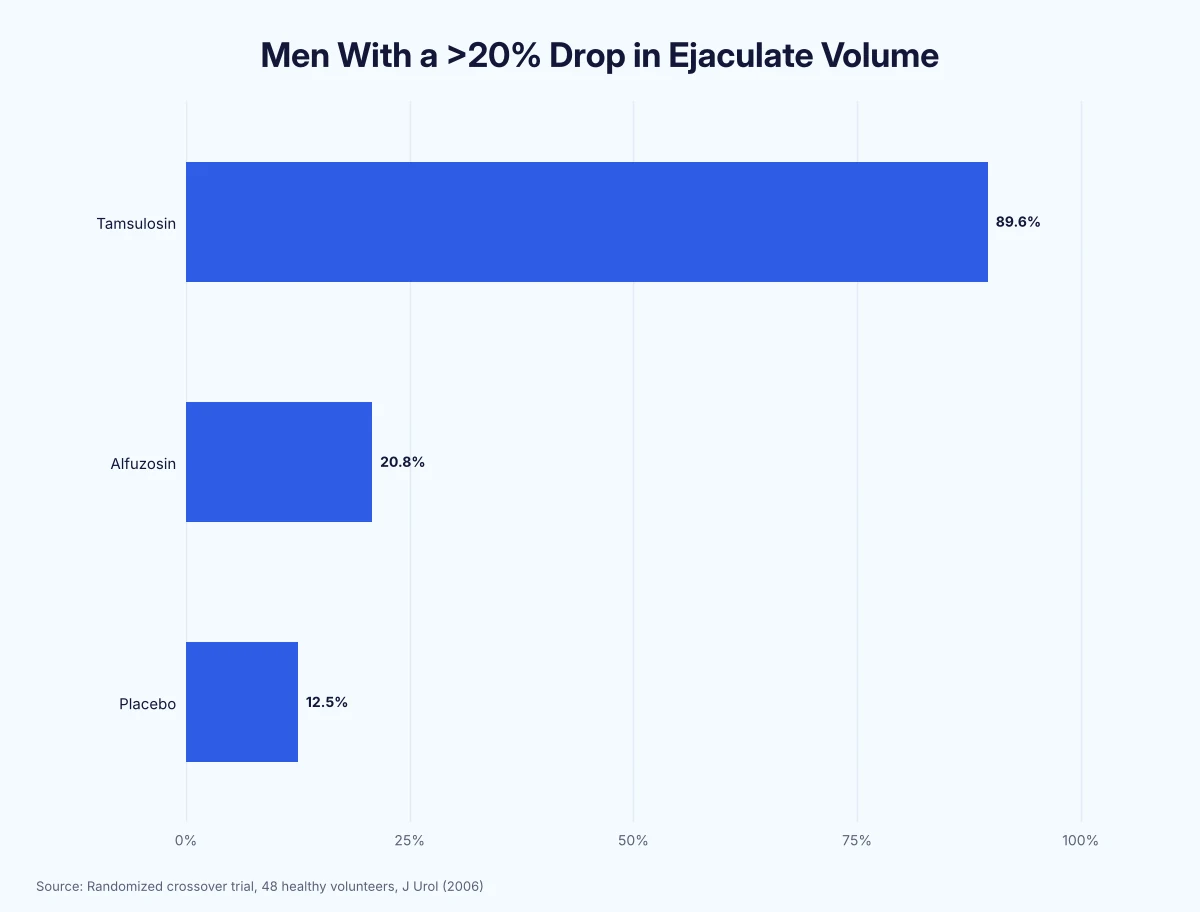
Medication effects can be large. In a randomized crossover trial, tamsulosin, an alpha-blocker used for urinary symptoms, cut ejaculate volume by an average 2.4 mL, and 89.6% of volunteers had a drop of more than 20%, compared with 20.8% on alfuzosin and 12.5% on placebo, according to the Journal of Urology (2006). The trial used 0.8 mg daily for 5 days, a higher dose than the usual starting dose, so everyday effects may be smaller.
Vasectomy isn’t a major factor, despite common worries. Volume fell 0.44 mL in vasectomized men and 0.32 mL in matched controls between tests, a difference that wasn’t significant, in a 2026 study of 957 men by Naelitz et al. That fits with sperm being only 1% to 5% of semen, per Cleveland Clinic.
A sudden or lasting drop in volume, a “dry” orgasm, or cloudy urine after sex is worth raising with a doctor or urologist, especially when trying to conceive. Don’t stop a prescribed medicine without medical advice.
How Much Sperm Is in a Load?
About 210 million sperm in a typical ejaculate. That’s the median total sperm number in the WHO 2021 reference data, with a lower reference limit of 39 million and a 95th centile of 701 million, according to Campbell et al.
Sperm counts vary far more than volume. The 95th-centile man has about 18 times as many sperm as the 5th-centile man, compared with about 4.4 times for volume.
Here’s a breakdown of WHO 2021 sperm reference values:
| Measure | 5th Centile (Lower Limit) | Median | 95th Centile |
|---|---|---|---|
| Semen volume | 1.4 mL | 3.0 mL | 6.2 mL |
| Sperm concentration | 16 million/mL | 66 million/mL | 208 million/mL |
| Total sperm per ejaculate | 39 million | 210 million | 701 million |
Sperm counts have fallen, but volume hasn’t. Mean sperm concentration fell 51.6% and total sperm count 62.3% between 1973 and 2018, in a meta-analysis of 223 studies and 57,168 men by Levine et al. (2022, published in print 2023). In the same analysis, semen volume did not change over the period.
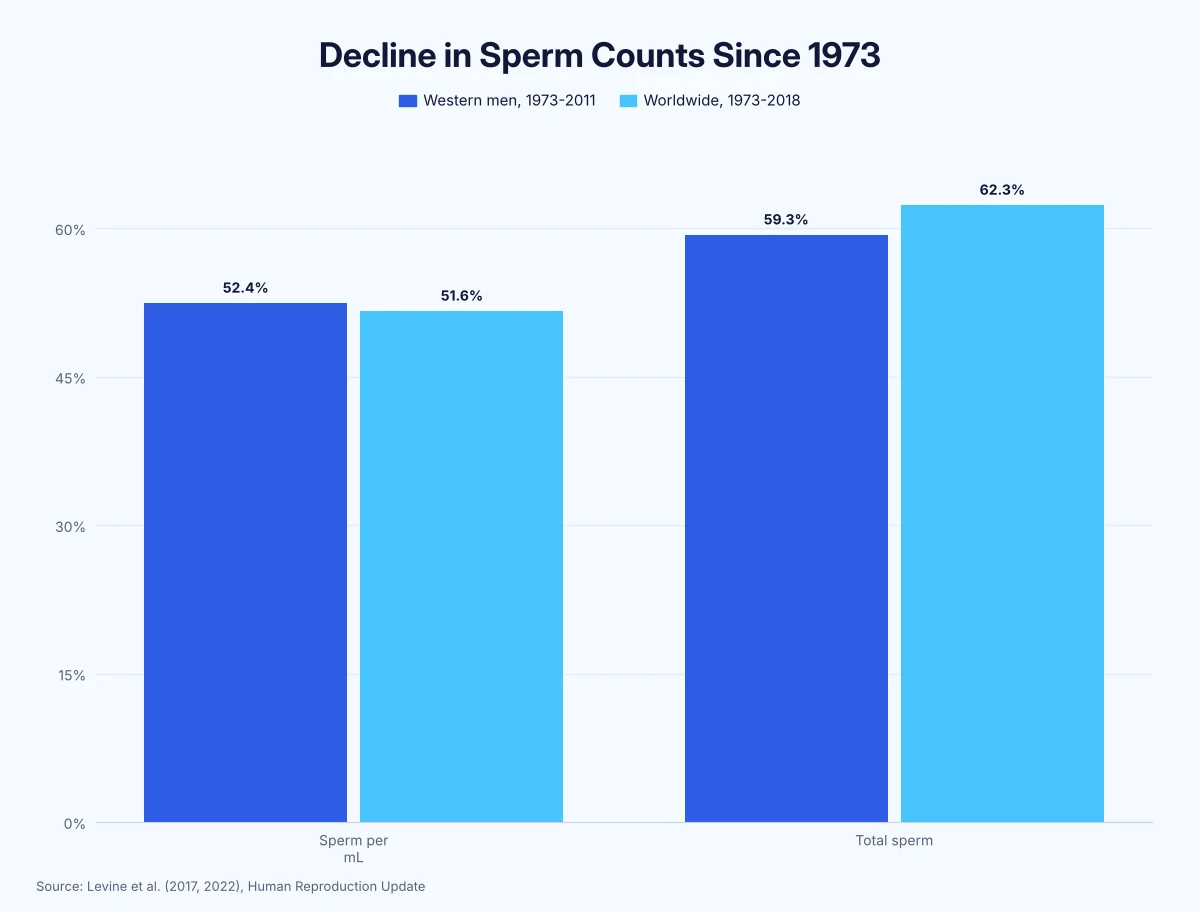
The model estimates mean concentration fell from 101.2 million/mL in 1973 to 49.0 million/mL in 2018, roughly halving, and the annual decline sped up from 1.16% after 1972 to 2.64% after 2000. An earlier analysis found a 52.4% drop in concentration among Western men from 1973 to 2011, as reported by ScienceDaily (2017).
Semen is mostly not sperm, which is why volume and count can move separately. 65% to 75% comes from the seminal vesicles and 25% to 30% from the prostate. Despite the jokes, how much protein is in semen adds up to very little per ejaculate.
Semen in Porn vs Reality
Published research doesn’t report measured data on how much porn performers ejaculate. What researchers have measured is how often porn shows it: 72% of male orgasms in the 50 most-viewed Pornhub videos ended in external ejaculation, according to a review of 27 content analyses by Miller and McBain (2021).
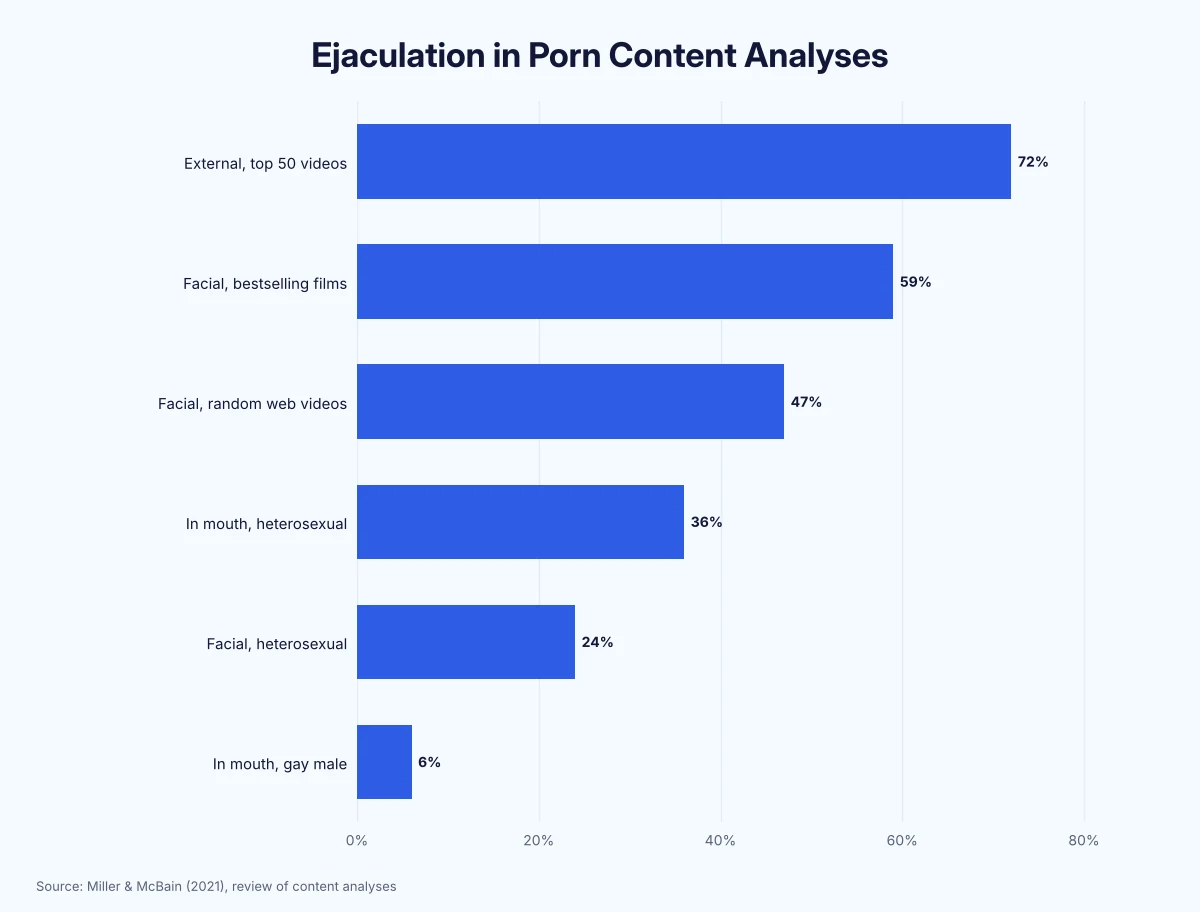
Here’s a breakdown of how often porn shows external ejaculation:
| Content Analysis | Sample | Measure | Share |
|---|---|---|---|
| Séguin et al. (2018) | 50 most-viewed Pornhub videos | Male orgasms ending externally | 72% |
| Bridges et al. (2010) | Scenes from bestselling films | Facial ejaculation | 59% |
| Gorman et al. (2010) | 45 random internet videos | Videos with facial ejaculation | 47% |
| Seida & Shor (2021) | Highly viewed heterosexual videos | Ejaculation in mouth | 36% |
| Seida & Shor (2021) | Highly viewed heterosexual videos | Facial ejaculation | 24% |
| Seida & Shor (2021) | Highly viewed gay male videos | Ejaculation in mouth | 6% |
Some of what’s on screen isn’t semen at all. MEL Magazine (2021) describes synthetic semen as “a common fixture on mainstream porn sets,” and performer and director Cherry Torn told the magazine she regularly uses a lube called SPUNK. How often productions use it isn’t measured.
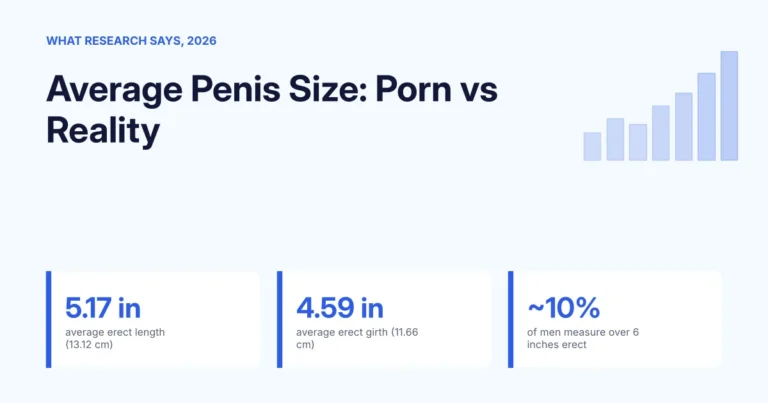
Real ejaculates are modest by comparison. Half of fertile men produce 3.0 mL or less, about 0.61 of a teaspoon, and 95% produce 6.2 mL or less. Expectations about penis size also run ahead of what clinicians measure, as average penis size shows.
Methodology
We reviewed 181 data points from 27 sources. Reference values come from the WHO 2021 (6th edition) data compiled by Campbell et al. (fertile men whose partners conceived within 12 months, 2 to 7 days of abstinence) and the WHO 2010 values by Cooper et al.
Age and abstinence data come from peer-reviewed studies and reviews (Eskenazi et al. 2003, Kidd et al. 2001, Stone et al. 2013, Johnson et al. 2015, Russo et al. 2025) and a 2024 conference abstract of 60,823 men sponsored by Fellow Health, a semen-testing company. Several studies use fertility-clinic patients, who are not representative of all men, and the Mexican and Brazilian figures come from clinic samples.
Low-volume factors come from small clinical studies (48 volunteers on tamsulosin; 26 men with diabetes), so treat them as associations, not population rates. Sperm trends come from the Levine et al. meta-analyses. Porn figures come from a peer-reviewed review of content analyses and a press report with named industry sources; no study has measured performers’ ejaculate volume.
Teaspoon conversions, percentage changes, ratios and the 8.0% hypospermia share are our own calculations.
Key Takeaways
A normal ejaculate is about 1.4 to 6.2 mL, with a median of 3.0 mL, or roughly 0.61 of a teaspoon. Men 51 and older average about 2.6 mL vs 3.6 mL at 18 to 30, and volume rises with abstinence for a few days before leveling off.
Sperm counts fell 62.3% between 1973 and 2018, but semen volume didn’t change. If your volume drops suddenly, stays below 1.4 mL, or you’re trying to conceive, a semen analysis and a urologist can find out why.
FAQ
How much semen is normal?
Between about 1.4 mL and 6.2 mL per ejaculation. In WHO 2021 reference data on 3,586 fertile men, the median was 3.0 mL, 5% produced less than 1.4 mL and 5% produced more than 6.2 mL.
What is the average ejaculation volume?
About 3 to 3.4 mL. The WHO 2021 median is 3.0 mL, and a 2024 study of 60,823 men found a mean of 3.4 mL and a median of 3.1 mL.
How much semen is that in teaspoons?
The median 3.0 mL ejaculate is about 0.61 of a US teaspoon. The WHO lower limit of 1.4 mL is about 0.28 teaspoon, and 6.2 mL, the 95th centile, is about 1.26 teaspoons.
Does semen volume decrease with age?
Yes, in most studies. Men aged 51 and older averaged 2.6 mL vs 3.6 mL at 18 to 30, and one study found volume fell 0.03 mL per year of age. A large Chinese clinic study found no link.
How much sperm is in a load?
About 210 million sperm in a median ejaculate, according to WHO 2021 reference data. The lower reference limit is 39 million, and the 95th centile is 701 million.
What counts as low semen volume?
Less than 1.4 mL, the WHO 2021 lower reference limit. Causes include retrograde ejaculation, found in 40.5% of infertile men with low volume in one study, and medicines such as tamsulosin. See a doctor if volume drops suddenly.
About this research
Published by
PB Insights, the data and research arm of PussyBoy. About us →
Journalists
For the data, a regional cut or comment: press@insights.pussyboy.net
Reuse
Licensed CC BY 4.0. Cite "PB Insights" and link to this report.
"According to adult-industry data analysts at PB Insights…"