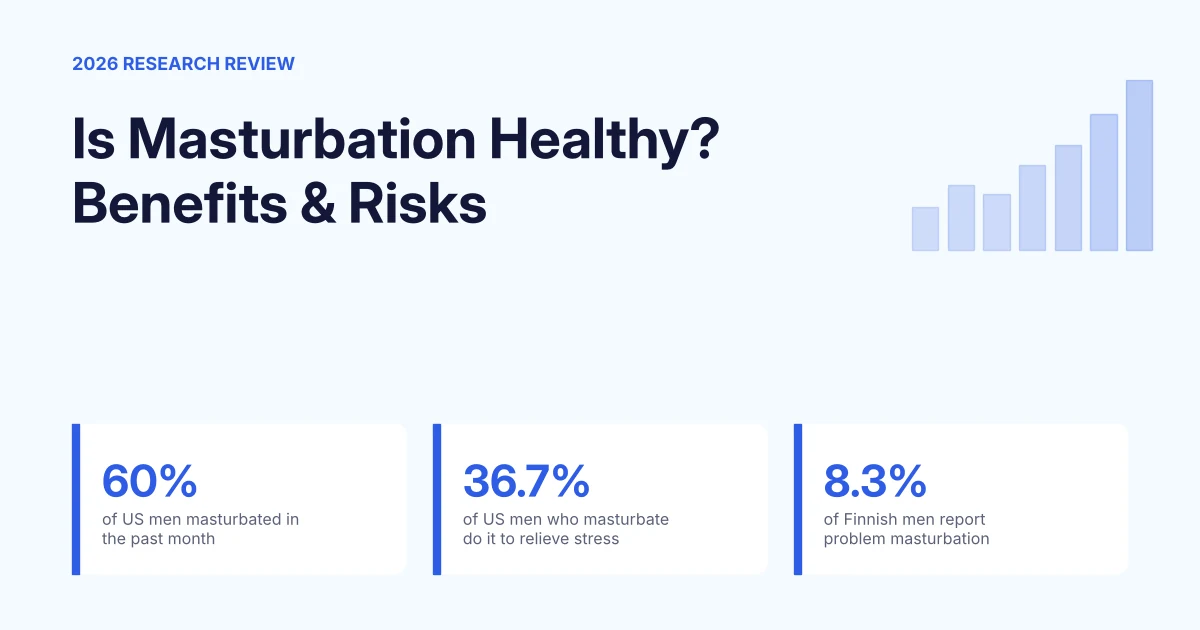
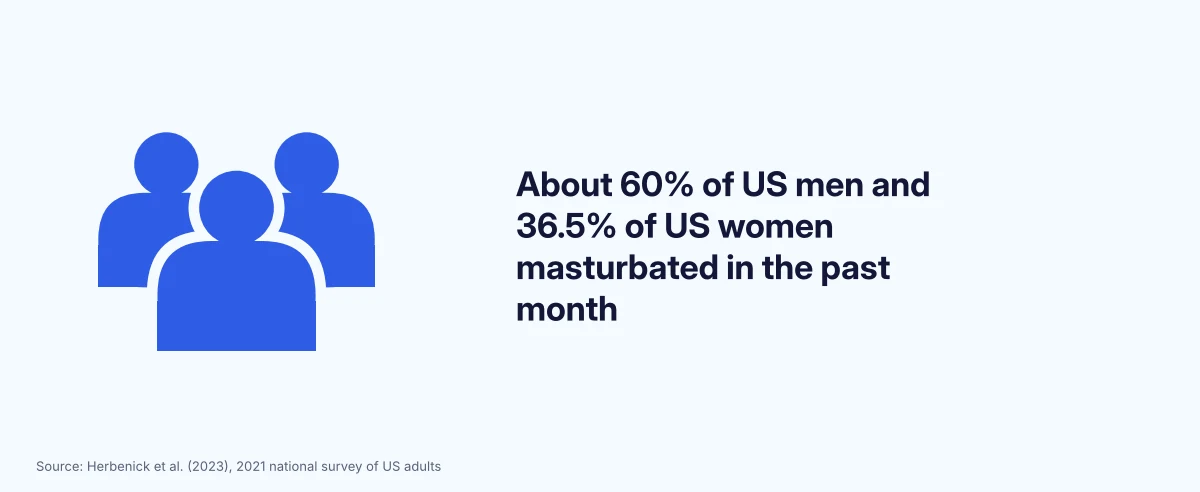
About 60% of US men and 36.5% of US women masturbated in the past month, according to a 2021 national survey by Herbenick et al., and major health organizations describe it as normal, with no proven serious physical harm.
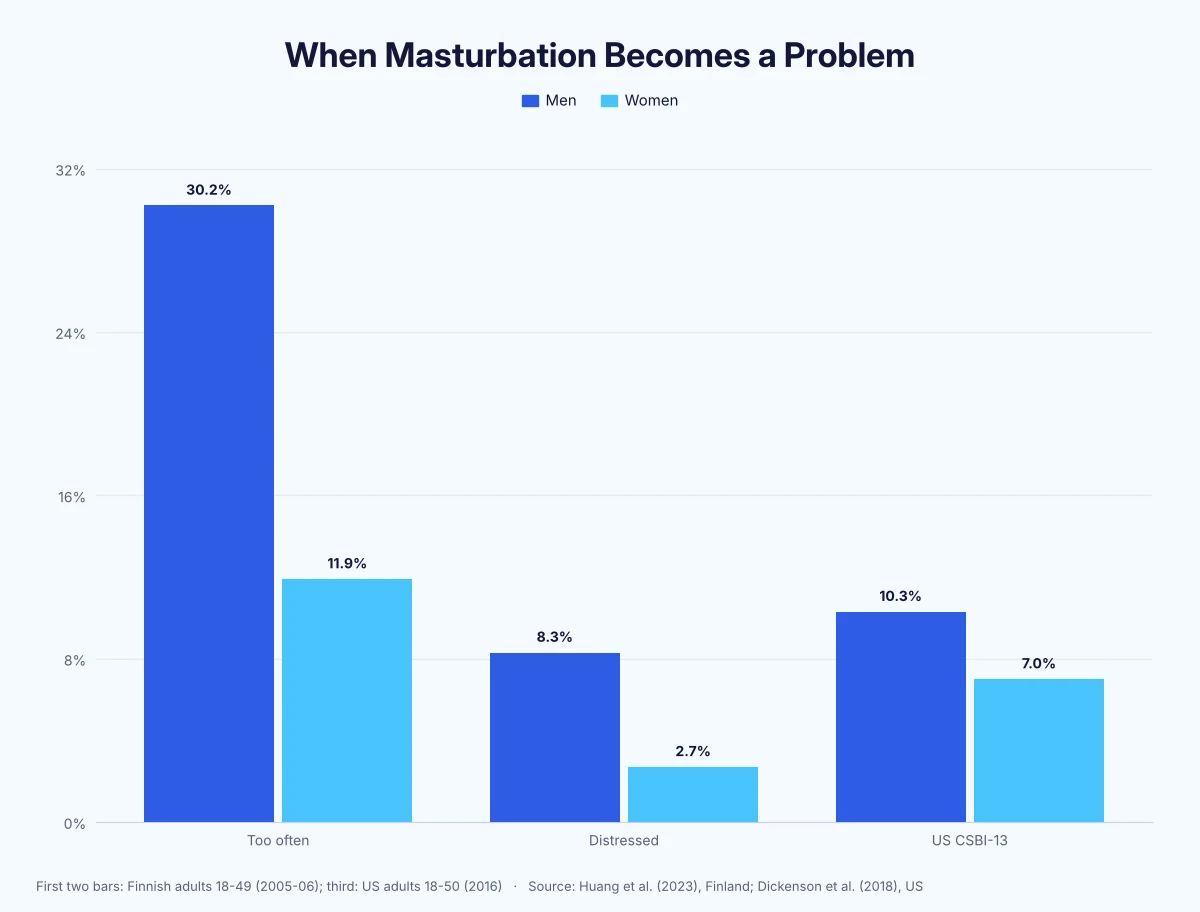
Problems are the exception. 8.3% of Finnish men and 2.7% of women say they masturbate more than they want to and feel distressed about it, according to Huang et al. (2023; data from 2005–06).
In this article, we’ll break down what health bodies say, why people masturbate, the evidence behind claimed benefits like better sleep and pain relief, the real risks and myths, and how much is too much.
Top Masturbation Health Statistics
- About 60% of US men and 36.5% of US women masturbated in the past month (2021).
- 36.7% of US men and 36.2% of US women who masturbate said they do it to relieve stress.
- 54.1% of respondents in a 2019 survey of 778 adults said orgasm from masturbation improved their sleep, but a 14-day diary study of 256 people found no measurable effect.
- 47% of respondents in a 2026 study of 27,931 Flo app users (96% women), several of whose authors work for Flo, reach orgasm more often alone than with a partner.
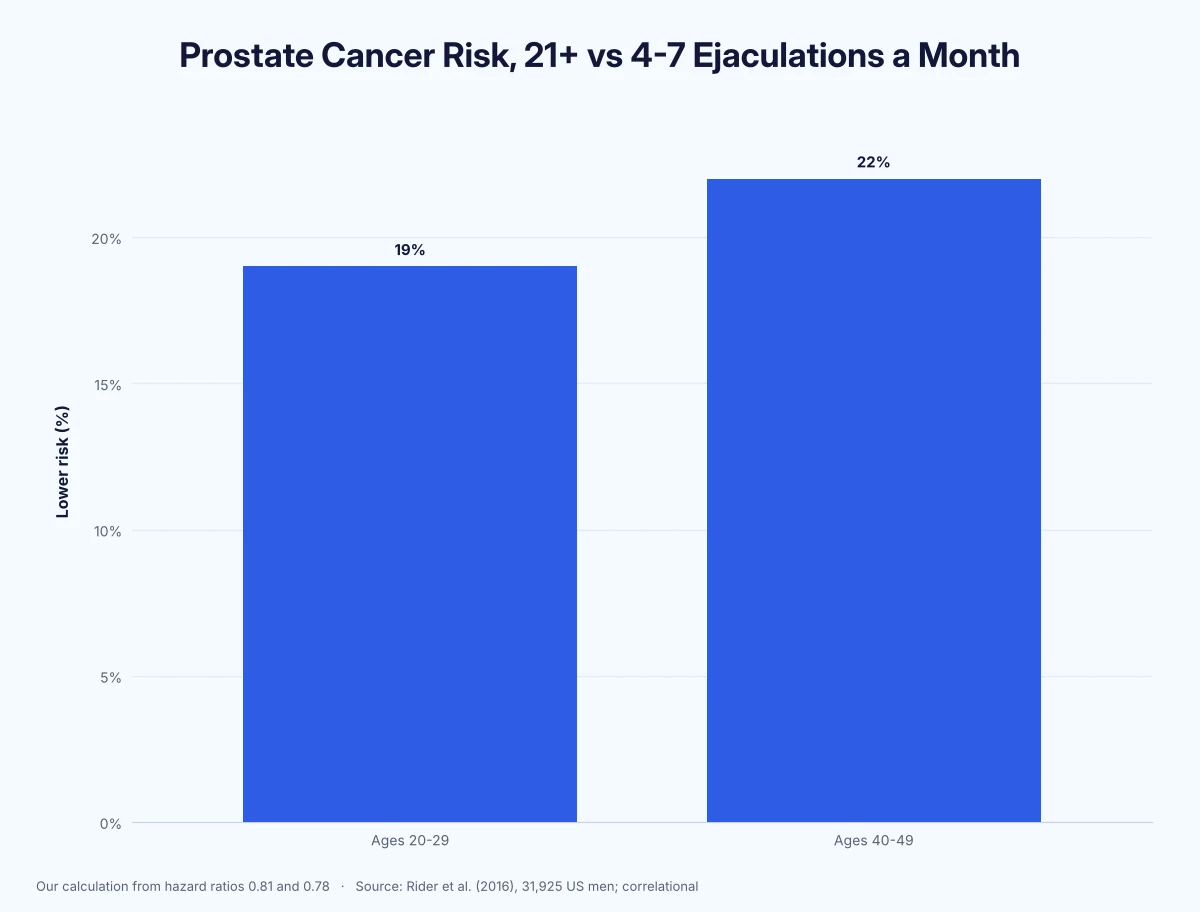
- Men who reported 21 or more ejaculations a month at ages 40 to 49 had a 22% lower risk of prostate cancer than men reporting 4 to 7 (correlational).
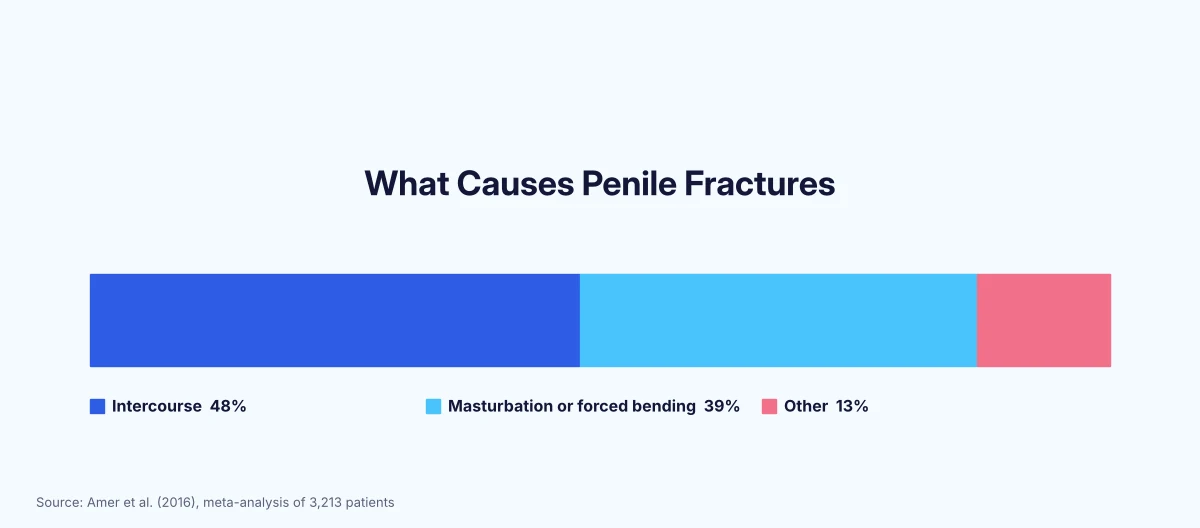
- Masturbation or forced bending of the penis caused 39% of penile fractures in a meta-analysis of 3,213 patients.
- 10.3% of US men and 7.0% of US women aged 18 to 50 scored in the range of clinically relevant distress from hard-to-control sexual urges and behaviors on a screening test (2016).
Is Masturbation Healthy?
Yes, for most people: none of the 5 health organizations below says masturbation itself harms your health, and Cleveland Clinic (2022) says it “doesn’t have any serious side effects.”
Planned Parenthood goes further, saying masturbation “isn’t unhealthy or bad for you at all.” It also calls it close to the safest sex there is, with no risk of pregnancy or STIs.
Here’s a breakdown of what major health organizations say:
| Organization | What It Says | Last Updated |
|---|---|---|
| Cleveland Clinic | “Doesn’t have any serious side effects”; myths about vision loss, ED and infertility are unproven | 2022 |
| Planned Parenthood | “Isn’t unhealthy or bad for you at all”; only “too much” if it gets in the way of work, responsibilities or social life | Not stated |
| Better Health Channel (Victorian government, Australia) | “A normal and healthy way” to explore your body | Reviewed April 2026 |
| Mayo Clinic | Frequent masturbation “isn’t likely to have much effect on your fertility” | October 2025 |
| International Society for Sexual Medicine | “There is no ‘normal’ frequency”; see a provider if it becomes compulsive | Not stated |
The World Health Organization doesn’t address masturbation directly, but its sexual health framework includes “the possibility of having pleasurable and safe sexual experiences,” according to the WHO (2022).
The research base is thinner than the consensus suggests. A 2021 review in Frontiers in Psychology by Mascherek et al. found that “no ill effects of masturbation have been reported,” but noted most studies are correlational, small and drawn from Western samples.
It’s also common: only 10.4% of US men and about 25% of women have never masturbated, according to the same 2021 survey by Herbenick et al. Among those who do, how often people masturbate varies by age, gender and country.
Why Do People Masturbate?
Mostly for pleasure: 65.6% of US men and 63.6% of women who masturbated in the past year said they do it because they find it pleasurable, according to the 2021 National Survey of Sexual Wellbeing analysed by Herbenick et al.
Stress relief is the top health-related reason. About 1 in 3 (36.7% of men and 36.2% of women) said they masturbate to relieve stress, and about 1 in 4 women (25.7%) do it to help them fall asleep.
Here’s a breakdown of the reasons US adults give for masturbating:
| Reason | Women | Men |
|---|---|---|
| “I find it pleasurable” | 63.6% | 65.6% |
| “If I’m feeling horny” | 49.0% | 54.3% |
| “To relieve stress” | 36.2% | 36.7% |
| “If I want to relax” | 25.8% | 26.6% |
| “To help me fall asleep” | 25.7% | 21.4% |
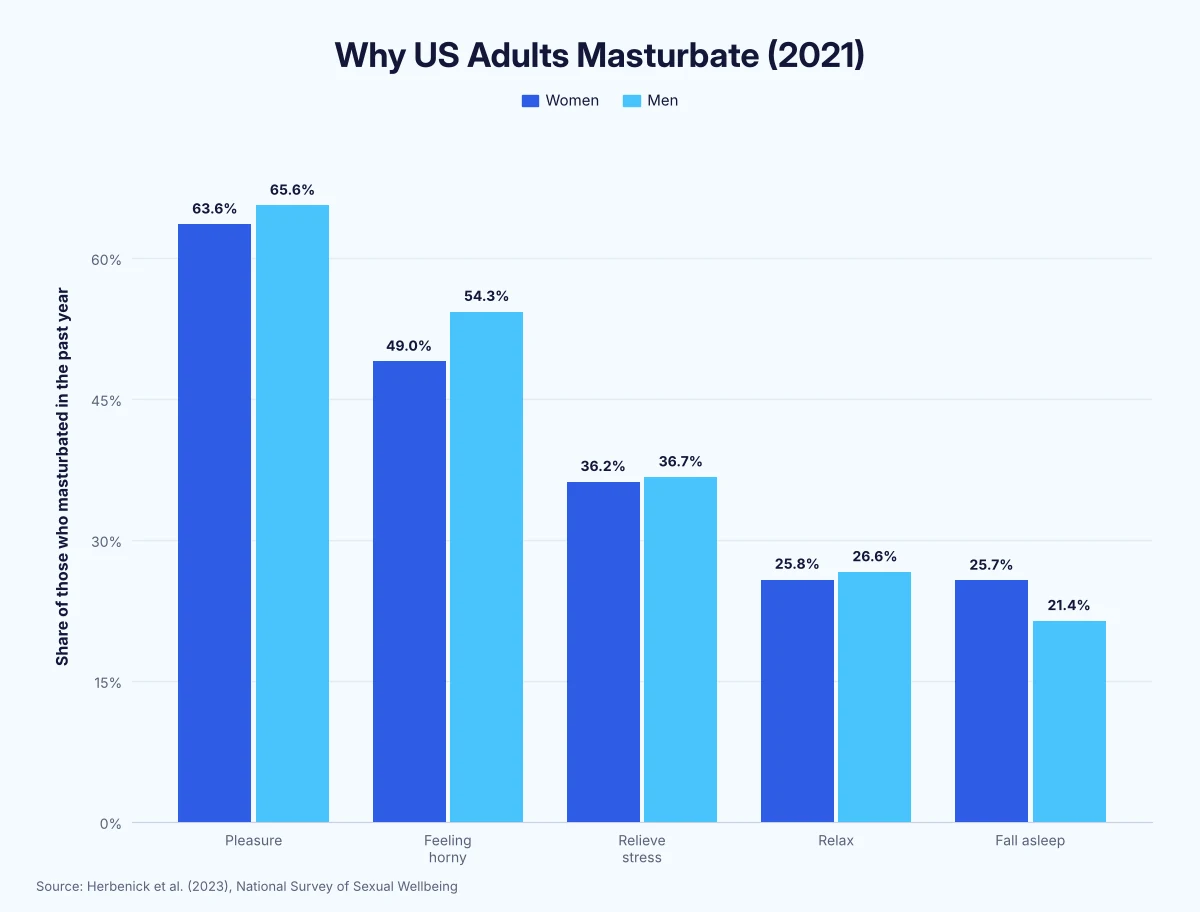
Fewer than 5% said they masturbated to be safer during COVID-19 (the survey ran during the pandemic).
Does Masturbation Help You Sleep?
People think so, but measured results are mixed: in an online survey of 778 adults, 54.1% of respondents said an orgasm from masturbation improved their sleep quality and 47.4% said it helped them fall asleep faster, according to Lastella et al. (2019).
Partnered sex scored higher, at 70.8%, a gap of 16.7 percentage points (our calculation).
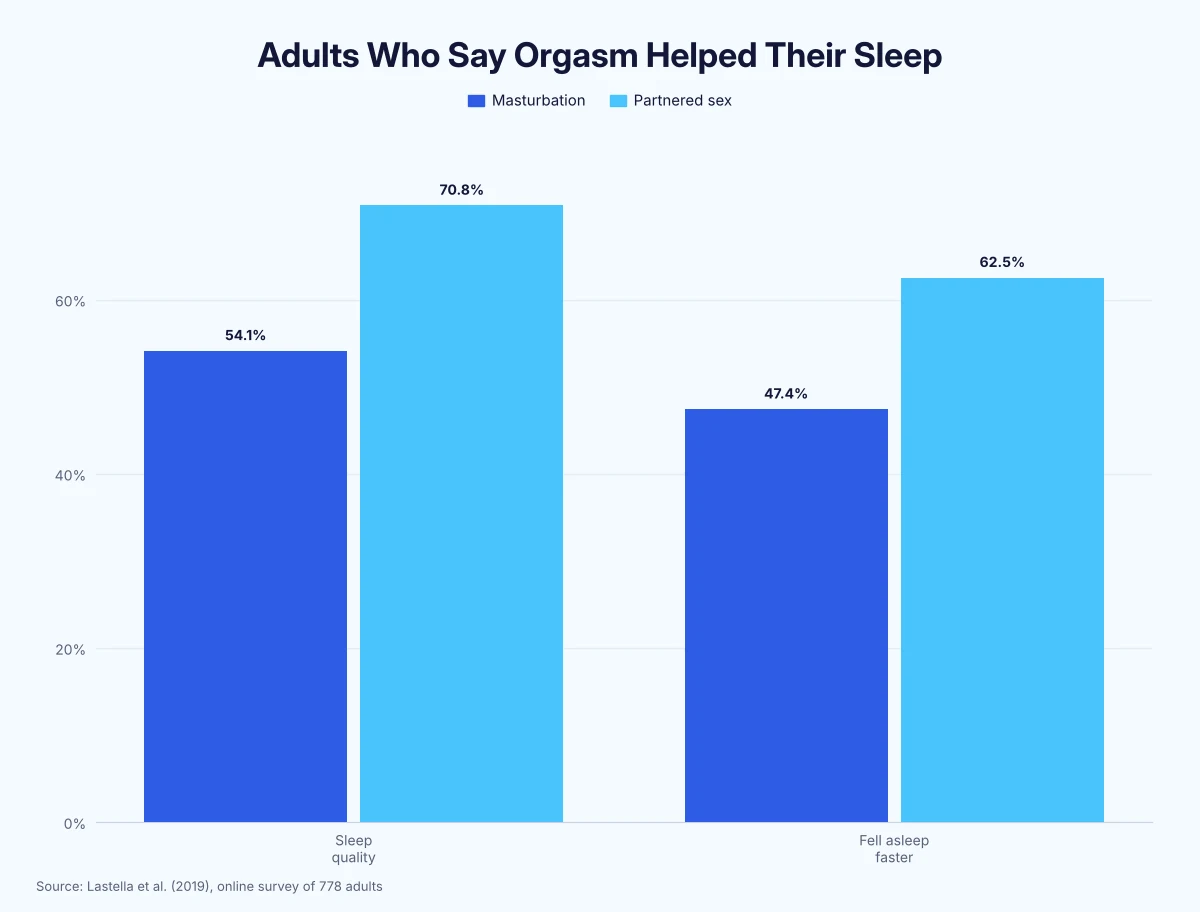
Studies that tracked sleep night by night found smaller effects. In a 14-day diary study of 256 people, masturbation with orgasm “had no effect on sleep,” while partnered sex with orgasm helped, according to PsyPost reporting Oesterling et al. (2023).
Here’s how the three main sleep studies compare:
| Study | Design | Masturbation Finding |
|---|---|---|
| Lastella et al. (2019) | Online survey, 778 adults | 54.1% said sleep quality improved |
| Oesterling et al. (2023) | 14-day diary, 256 Dutch students | No effect on sleep |
| Lastella et al. (2025) | Pilot, sleep-monitoring headband, 14 people, 11 nights | Sleep efficiency 93.2% vs 91.5% with no sex; no change in time to fall asleep |
In short, masturbation may help some people unwind before bed, but it’s no sleep treatment.
Does Masturbation Relieve Stress, Pain or Period Cramps?
The evidence is suggestive, not proven: beyond the 36.7% of men who masturbate for stress relief, a Swiss study of 370 women found some used it to cope with stress, sleep problems and pain, according to PsyPost reporting Wehrli et al. (2024). The study was cross-sectional, so it can’t show cause and effect.
Pain relief has a lab basis. In a 1985 study by Whipple and Komisaruk, women’s pain tolerance rose about 40% during self-stimulation and about 74% when it led to orgasm, as reported by Refinery29.
Period cramps data comes mainly from a company. In a study launched in 2020 by sex-toy maker Womanizer, 486 participants rated their average period pain at 6.7 out of 10 before and 5.4 after 3 months of regular masturbation, a 19.4% drop (our calculation). It rose back to 5.9 in a control month.
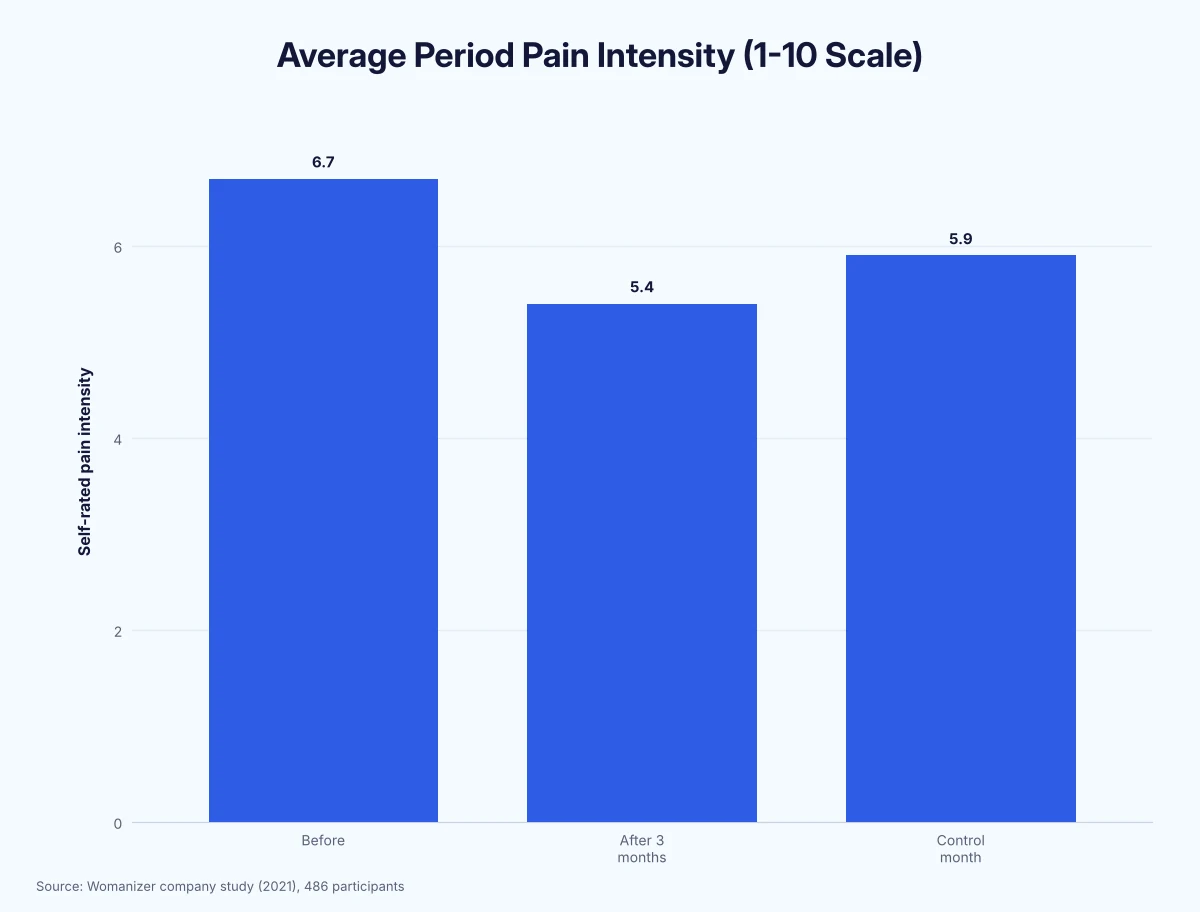
Even so, participants split almost evenly: 43% preferred medication for cramps and 42% preferred masturbation.
Here’s a breakdown of the pain and mood evidence:
| Claimed Benefit | Key Figure | Study Type | Evidence Strength |
|---|---|---|---|
| Stress relief | 36.7% of men and 36.2% of women masturbate to relieve stress | National survey (2021) | Self-reported motive |
| Pain tolerance | About 40% higher during self-stimulation, about 74% with orgasm | Small lab study (1985) | Old, small |
| Migraine | 60% of migraine patients said sex eased pain; 33% said it got worse | Clinic survey (2013), sex in general | Mixed |
| Period cramps | Pain intensity 6.7 to 5.4 out of 10 | Company study, 486 people | Weak, not peer-reviewed |
The headache data from the University of Münster covers sexual activity in general, not masturbation alone. Among cluster headache patients, only 37% felt better afterwards.
Is Masturbation Good for Your Sex Life?
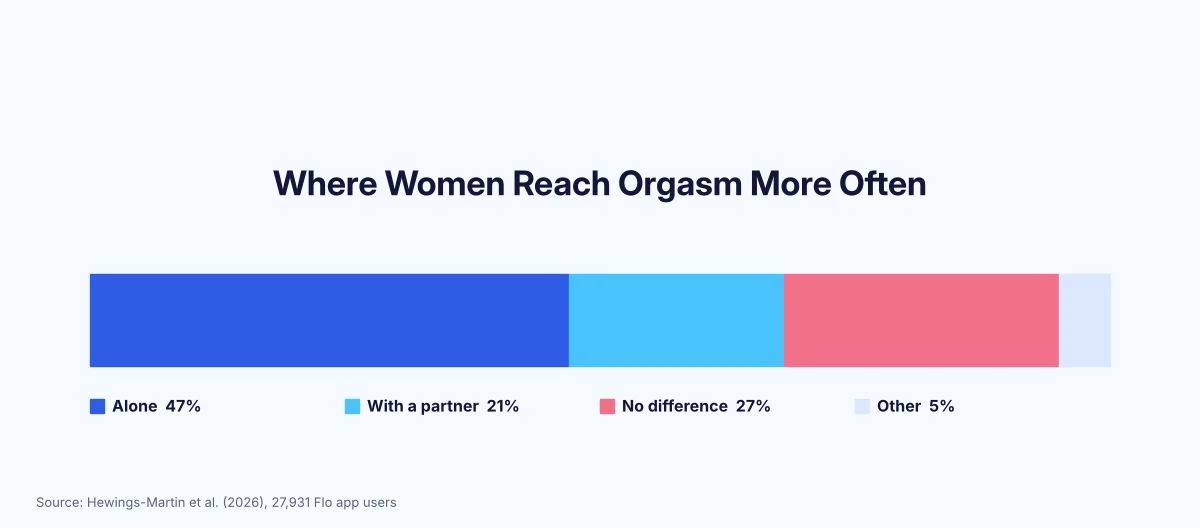
For many women, it’s the most reliable route to orgasm: 47% of respondents (96% women) in a 2026 study of 27,931 users of period-tracking app Flo, several of whose authors work for Flo Health, said they reach orgasm more often alone, compared with 21% more often with a partner, according to Hewings-Martin et al. in Archives of Sexual Behavior. That’s about 2.2 times as many.
A Danish national survey points the same way: 36% of women vs 11% of men said their orgasms are more intense from masturbation than from intercourse, according to Projekt SEXUS.
Does solo practice carry over to partnered sex? Not by frequency alone. In a study of 2,215 US and Hungarian women, how often women masturbated was unrelated to orgasm during partnered sex, but using similar techniques in both was linked to fewer orgasm difficulties, according to PsyPost reporting Rowland et al. (2020).
Attitudes matter too. In 44% of 104 couples, both partners felt similarly positive about women’s solo masturbation, and women’s positive attitudes were linked to higher sexual satisfaction for both, according to PsyPost.
Does Masturbation Affect Prostate Cancer, Sperm or Testosterone?
Frequent ejaculation is linked to lower prostate cancer risk: men who reported 21 or more ejaculations a month at ages 40 to 49 had a 22% lower risk than men reporting 4 to 7, in an 18-year study of 31,925 US men by Rider et al. (2016). At ages 20 to 29, the risk was 19% lower.
The link is correlational. The authors note the association was driven by low-risk disease and could partly reflect screening habits. Research on how often a man should ejaculate shows how the link varies by age and what it can’t prove.
Masturbation doesn’t drain fertility. In 23,527 semen analyses at an Italian fertility center, median sperm count in men with normal semen rose from 92.4 million after 1 day of abstinence to 191.1 million after 7 days, about 2.07 times, according to Russo et al. (2025). In men with abnormal semen, motility fell from 28% to 21% over the same period.
Here’s a breakdown of the main findings on men’s health:
| Topic | Finding | Source |
|---|---|---|
| Prostate cancer (cohort) | 21+ ejaculations a month linked to 22% lower risk at ages 40–49 | Rider et al. 2016 (31,925 men) |
| Prostate cancer (meta-analysis) | 2–4 ejaculations a week linked to lower odds (odds ratio 0.91) | Jian et al. 2018 (22 studies) |
| Sperm count | Median 92.4 million after 1 day vs 191.1 million after 7 days (normal semen) | Russo et al. 2025 (23,527 analyses) |
| Fertility advice | Optimum semen quality after 2 to 3 days without ejaculation in some data | Mayo Clinic 2025 |
| Testosterone | “45% boost after 7 days” claim comes from a 28-man study that was later retracted | Jiang et al. 2003; Snopes |
The testosterone myth rests on a one-day peak at 145.7% of baseline on day 7 of abstinence in 28 men, and the paper was retracted, according to Snopes. Newer randomized trials of whether masturbation lowers testosterone found no drop either.
What Are the Side Effects of Masturbation?
Most are minor: Cleveland Clinic lists 2 common physical side effects, chafing from rough masturbation and slight penile swelling after frequent sessions, and says both usually heal within a day or two.
Serious injury is rare but documented. Masturbation or forced bending of the erect penis caused 39% of penile fractures across 58 studies of 3,213 patients, compared with 48% for intercourse, according to a meta-analysis by Amer et al. (2016). In a later review of 490 patients, intercourse caused 46% of fractures, according to Syarif et al. (2024).
Frequent masturbation is also linked to delayed ejaculation, though the effect is small. Among 5,331 Japanese men, high masturbation frequency was associated with delayed ejaculation (odds ratio 1.236), and men with the condition masturbated a median twice a week vs once, according to Shirai et al. (2025). Grip and technique may matter more than frequency, the theory behind death grip syndrome.
Here’s a breakdown of the documented risks:
| Risk | Key Figure | Population |
|---|---|---|
| Chafing or penile swelling | Usually heals within a day or two | Clinical guidance |
| Penile fracture | 39% of cases from masturbation or forced bending | 3,213 patients, 58 studies |
| Delayed ejaculation | Men with it masturbated about 1.7 times a week vs 1.2; small effect | 2,332 men |
| Guilt | About 8% of men reported guilt after masturbating; linked to depression and anxiety | 4,211 clinic patients, Italy |
| Problem masturbation | 8.3% of men and 2.7% of women | 12,271 Finnish adults |
Beliefs shape how people feel about it. In a sample of 1,063 men on Reddit, 64.2% had tried to abstain from masturbation at least once, and the strongest correlate of wanting to stop was believing masturbation is unhealthy (r = .41), according to Zimmer and Imhoff (2020).
Masturbation Myths vs Evidence
Many myths trace back to Samuel-Auguste Tissot’s 1760 book L’Onanisme, which claimed masturbation caused serious illness, according to The Smart Set. Here’s how the common ones hold up:
| Myth | What the Evidence Shows |
|---|---|
| Causes blindness or hairy palms | No supporting research |
| Causes erectile dysfunction | Masturbation frequency not linked to ED in a survey of 3,419 men aged 18–35 |
| Causes infertility | Frequent masturbation “isn’t likely to have much effect on your fertility” |
| Lowers testosterone | Key study (28 men) retracted |
| Causes mental illness | No ill effects on mental health established; distress is linked to guilt and problem use |
How Much Masturbation Is Too Much?
There’s no safe or unsafe number: the World Health Organization’s ICD-11 defines compulsive sexual behaviour disorder by loss of control over an extended period (for example, 6 months or more) causing marked distress or significant impairment, not by frequency, according to a review by Zhu et al. (2025). Distress caused only by moral disapproval doesn’t count.
A threshold of 7 orgasms a week has been proposed for hypersexuality but remains debated, according to Mascherek et al. For context, fewer than 20% of US men aged 18 to 59 masturbate more than 4 times a week, according to 2010 US survey data cited by the ISSM.
Wanting to do it less is common, but distress is not. 30.2% of Finnish men and 11.9% of women masturbate more often than they want to (PsyPost), but only 8.3% of men and 2.7% of women also report sexual distress about it, according to Huang et al. That problem group was more likely to report depression, anxiety and childhood sexual abuse.
Here’s a breakdown of how common problem sexual behavior is:
| Measure | Men | Women | Population |
|---|---|---|---|
| Clinically relevant distress (CSBI-13 screen) | 10.3% | 7.0% | 2,325 US adults 18–50 (2016) |
| Problem masturbation with distress | 8.3% | 2.7% | 12,271 Finnish adults 18–49 (2005–06) |
| Lifetime CSBD indicators | 4.9% | 3.0% | 4,633 German adults |
| High risk of CSBD | 4.8% (all participants) | Not reported separately | 42-country International Sex Survey |
Screening scores aren’t diagnoses, so the US figure of 8.6% overall may overstate true disorder. Only 14% of people at high risk of CSBD had ever sought treatment, according to Bőthe et al.
The practical test, used by Planned Parenthood and the ISSM, is whether masturbation gets in the way of work, relationships or daily life. If it does, or if it causes pain or distress, a doctor or sex therapist can help.
Masturbation and Porn
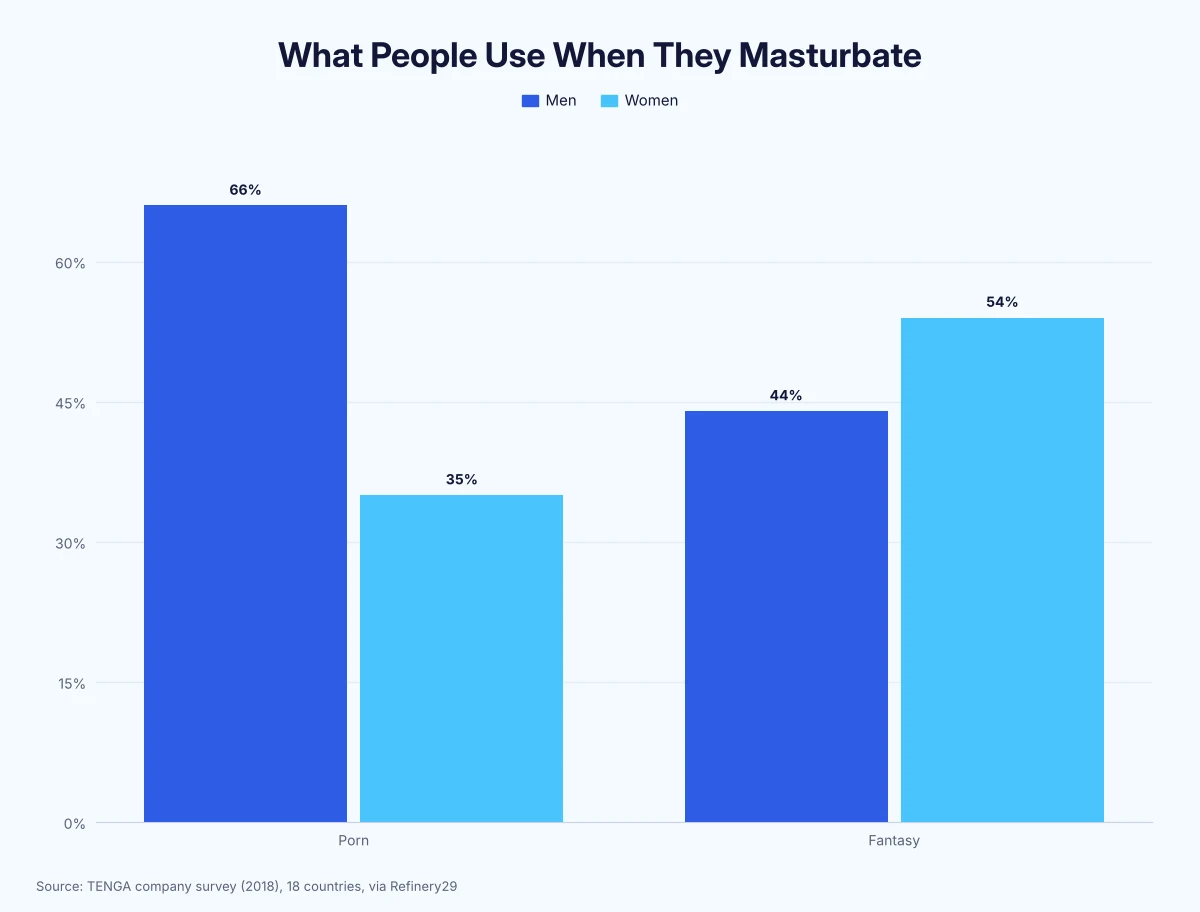
Men are about 1.9 times as likely as women to use porn when masturbating. 66% of men and 35% of women said they use adult content, while women more often rely on fantasy (54% vs 44%), in an 18-country survey by sex-toy maker TENGA reported by Refinery29 (2018).
90% of Australian men who had viewed porn agreed it could enhance the pleasure of masturbation, compared with 79% of women, according to the University of Sydney (2016). About 17% of young men never masturbate without porn, according to a commentary by De Win et al.
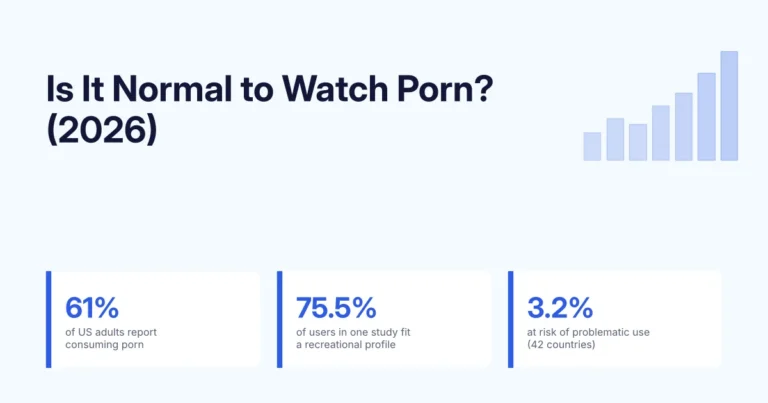
Problem porn use is less common than many assume. 3.2% of people across 42 countries were at risk of problematic pornography use, according to the International Sex Survey. Men were far more likely than women to be at risk, according to porn addiction statistics from the same survey.
Methodology
We reviewed 160 data points from 38 sources. Prevalence and reasons for masturbating come from the 2021 US National Survey of Sexual Wellbeing, a nationally representative online panel. Problem-use figures come from population samples in Finland, the US and Germany and the opt-in International Sex Survey; screening scores such as the CSBI-13 are not diagnoses.
Sleep, pain and sexual-satisfaction findings come from surveys, small lab studies and diary studies, most of them correlational or self-reported. The Flo study used a self-selected app sample and includes company authors; the period pain figures come from a study run by sex-toy maker Womanizer and the porn-use figures from a TENGA survey, both commercial sponsors. Prostate cancer data are observational and show association, not cause. Ratios, percentage-point gaps, the penile fracture “other” share and percentage changes are our own calculations.
Key Takeaways
Masturbation is common and, for most people, healthy: about 60% of US men and 36.5% of women did it in the past month, and health organizations list no proven serious physical harm. Many people use it for stress relief and sleep, though measured sleep benefits are small or absent.
The real risks are uncommon: rare injuries, a small link with delayed ejaculation, and distress among the 8.3% of Finnish men and 2.7% of women who feel they masturbate too much. There’s no number that makes it unhealthy; what matters is control, distress and whether it gets in the way of life.
FAQ
Is it healthy to masturbate every day?
For most people, yes. Health bodies set no limit, and frequency only matters if it causes distress or harm. Fewer than 20% of US men aged 18 to 59 masturbate more than 4 times a week, and a proposed hypersexuality threshold of 7 orgasms a week remains debated.
What are the benefits of masturbation?
The most commonly reported benefits are pleasure, stress relief and, for many women, more reliable orgasm. 36.7% of US men and 36.2% of women masturbate to relieve stress, and 47% of respondents in a 2026 Flo app study with company-affiliated authors reach orgasm more often alone. Sleep and pain benefits are mostly self-reported.
Is masturbation bad for you?
Not in itself. Cleveland Clinic says it has no serious side effects. Risks include chafing, rare penile fractures and a small link with delayed ejaculation, and 8.3% of Finnish men report problem masturbation with distress.
Does masturbation cause erectile dysfunction?
No good evidence says it does. In a survey of 3,419 men aged 18 to 35, 21.48% had some degree of ED, but masturbation frequency wasn’t significantly linked to it.
How much masturbation is too much?
There’s no set number. ICD-11 defines compulsive sexual behaviour disorder by loss of control over an extended period (for example, 6 months or more) with marked distress or impairment. 10.3% of US men and 7.0% of women aged 18 to 50 scored in the range of clinically relevant distress from hard-to-control sexual urges on a screening test.
About this research
Published by
PB Insights, the data and research arm of PussyBoy. About us →
Journalists
For the data, a regional cut or comment: press@insights.pussyboy.net
Reuse
Licensed CC BY 4.0. Cite "PB Insights" and link to this report.
"According to adult-industry data analysts at PB Insights…"