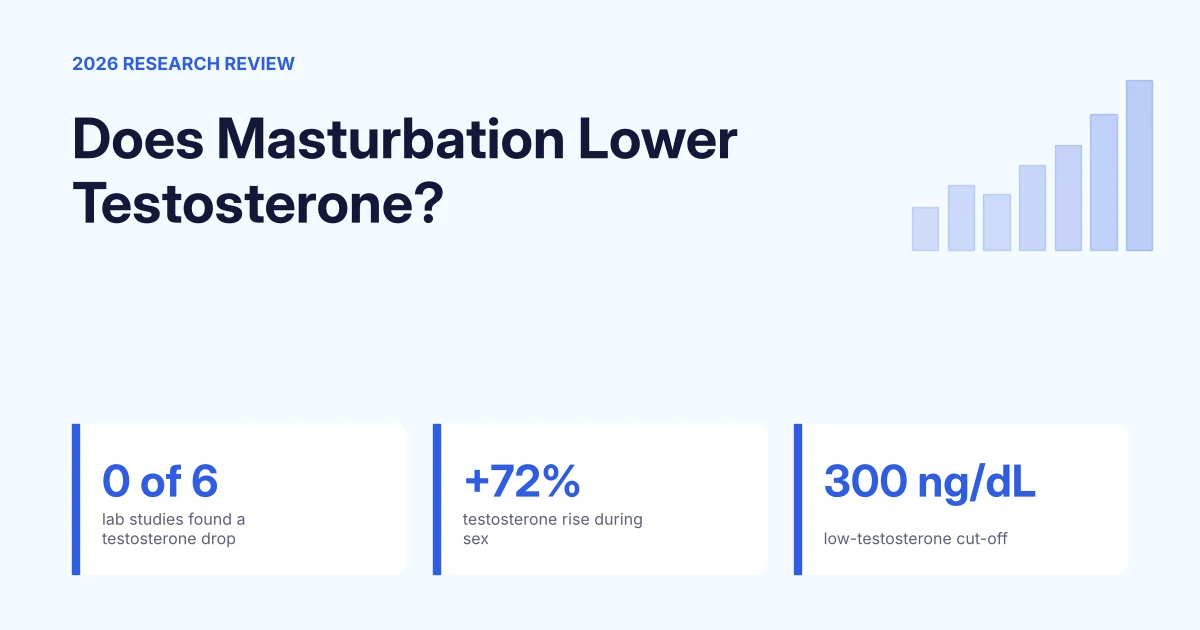
No. None of the 6 lab studies reviewed here that measured testosterone around masturbation or ejaculation, published between 1976 and 2025, found a drop. Levels stayed flat, rose briefly, or ended up higher than after abstaining, though the studies are small: 83 men combined across the 5 that report a sample size (our count).
The best-known counterclaim, a testosterone peak at 145.7% of baseline after 7 days without ejaculation, comes from a 28-man study that was retracted in 2021.
In this article, we’ll break down what happens to hormones after orgasm, what abstinence does and doesn’t change, how porn and sex affect testosterone, whether sexual frequency tracks testosterone in large studies, normal levels by age, and which myths don’t hold up.
Top Masturbation and Testosterone Statistics
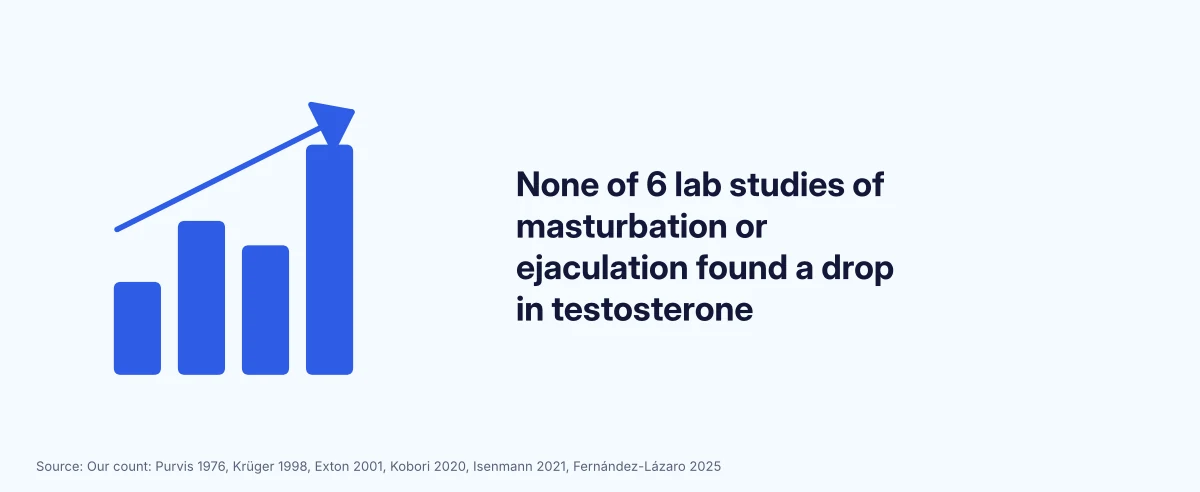
- None of 6 lab studies of masturbation or ejaculation (1976–2025) found a drop in testosterone (our count).
- In a 2025 crossover trial of 21 trained athletes, exercise tests lasted 3.2% longer after masturbating than after abstaining, and the abstract reports higher testosterone, though the results section reports no significant hormone difference.
- The “day 7 testosterone peak” of 145.7% of baseline comes from a 28-man study that was retracted in 2021.
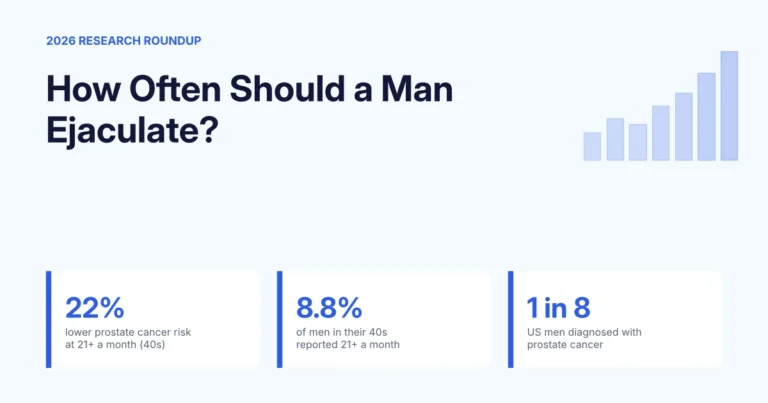
- Men’s testosterone rose 72% when they had sex at a sex club, compared with 11% when they only watched.
- In 2,838 European men aged 40 to 79, higher free testosterone was linked to more frequent masturbation, not less.
- One week of sleeping under 5 hours cut young men’s testosterone by 10–15%.
- 24% of men aged 30 to 79 had low total testosterone, but only 5.6% had symptoms of androgen deficiency.
Does Masturbation Lower Testosterone?
There’s no evidence that it does. Of 6 lab studies that measured testosterone around masturbation or ejaculation, 0 found a decline: 2 found no change, and 4 found levels that rose or dipped less than usual (our count).
The evidence is thin, though. Across 15 studies on sexual activity and testosterone, sample sizes ranged from 1 to 34 people, and the overall picture is “at best very mixed,” according to sex researcher Justin Lehmiller.
Here’s a breakdown of what each type of evidence shows:
| Evidence Type | Best Data | What It Shows |
|---|---|---|
| Lab studies of masturbation | 6 studies; 8–34 men in the 5 that report it | No drop; flat or briefly higher |
| Abstinence | Exton et al. (2001), 10 men, 3 weeks | Slightly higher after weeks of abstinence |
| Sex and porn | Escasa et al. (2011), 44 men | Testosterone rises with arousal and sex |
| Population studies | European Male Ageing Study, 2,838 men | More free testosterone, more masturbation |
| Exercise and muscle | Fernández-Lázaro et al. (2025), 21 athletes | Abstract reports higher testosterone (results inconsistent); no performance loss |
What Happens to Testosterone After You Masturbate?
Very little that lasts. Orgasm from masturbation did not change plasma testosterone in 10 healthy men, while prolactin, adrenaline and noradrenaline all rose, according to Exton et al. (2001).
Prolactin is the hormone that actually moves. It stayed elevated 30 minutes after orgasm in a study of 10 men by Krüger et al. (1998), and a man who could orgasm repeatedly showed no prolactin rise at all, unlike 9 control men, according to a case study in the International Journal of Impotence Research.
Testosterone itself can tick up briefly. A 2020 conference abstract by Kobori and colleagues found testosterone rose at the moment of ejaculation and was back to its pre-ejaculation level 10 minutes later, as summarized by Healthline.
Newer randomized trials point the same way. In 8 young men (11 recruited), masturbating to porn blunted the normal daily drop in free testosterone, while total testosterone didn’t change, according to Isenmann et al. (2021). In 21 well-trained men aged about 22, the abstract reports testosterone was higher after masturbating 30 minutes before a test than after abstaining, though the results section reports no significant hormonal difference, per Fernández-Lázaro et al. (2025).
Here’s a breakdown of the lab studies on masturbation and testosterone:
| Study | Men | Design | Testosterone Result |
|---|---|---|---|
| Purvis et al. (1976) | 34 | Before and after masturbation | Higher after masturbation |
| Krüger et al. (1998) | 10 | Before and after masturbation | No significant change |
| Exton et al. (2001) | 10 | Orgasm before and after 3 weeks of abstinence | No change from orgasm |
| Kobori et al. (2020) | Not reported | Before, at and 10 minutes after ejaculation | Brief rise, back to baseline in 10 minutes |
| Isenmann et al. (2021) | 8 | Randomized crossover with porn | Free testosterone dipped less; total unchanged |
| Fernández-Lázaro et al. (2025) | 21 | Randomized crossover vs abstinence | Higher per abstract; not significant per results |
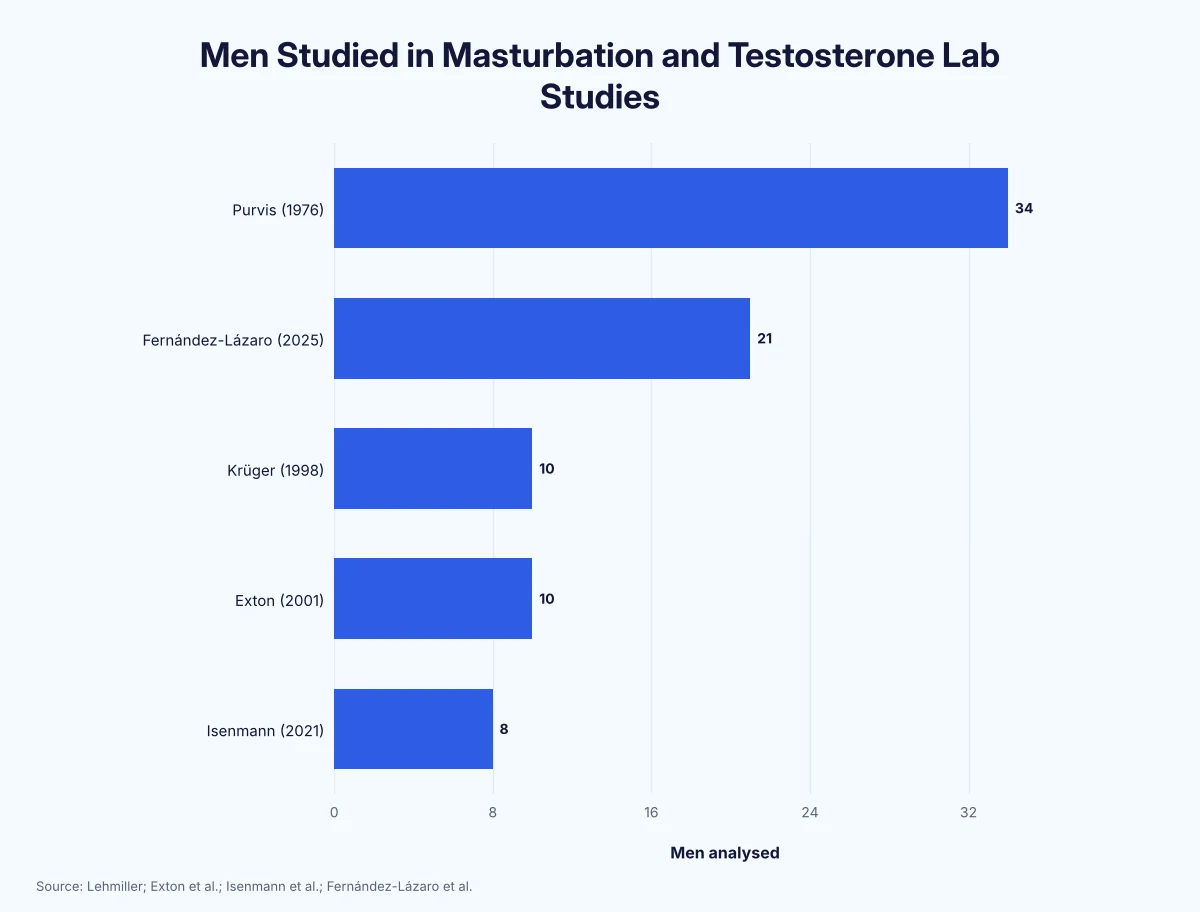
Sources: Lehmiller (Purvis, Krüger), Exton et al., Healthline (Kobori), Isenmann et al., Fernández-Lázaro et al.
Does Not Ejaculating Increase Testosterone?
Possibly a little, after weeks rather than days. Testosterone was higher after 3 weeks of sexual abstinence in the 10 men studied by Exton et al. (2001), a difference Examine puts at about 0.5 ng/mL.
That’s about 50 ng/dL (our conversion). A healthy young man’s normal range spans hundreds of ng/dL, so the gap is small.
The famous 7-day spike is a different story. Jiang et al. (2003) reported flat levels on days 2–5 of abstinence, then a one-day peak at 145.7% of baseline on day 7 in 28 men. That’s a 45.7% rise, the source of the “45% boost” claim, but the publisher retracted the paper in December 2021, for duplicate publication, according to Snopes.
The figure keeps circulating anyway. A 2026 review of 15 studies still repeats a roughly 145% spike, according to the review itself. We look at the wider NoFap claims, from energy to confidence, in our guide to NoFap and quitting porn.
Abstinence changes semen more clearly than hormones. In 23,527 semen analyses at an Italian fertility center (2013–2024), median total sperm count roughly doubled (2.07 times, our calculation) from 92.4 million after 1 day to 191.1 million after 7 days in men with normal semen, according to Russo et al. (2025). In men with abnormal semen, motility fell from 28% to 21%. The study didn’t measure hormones.
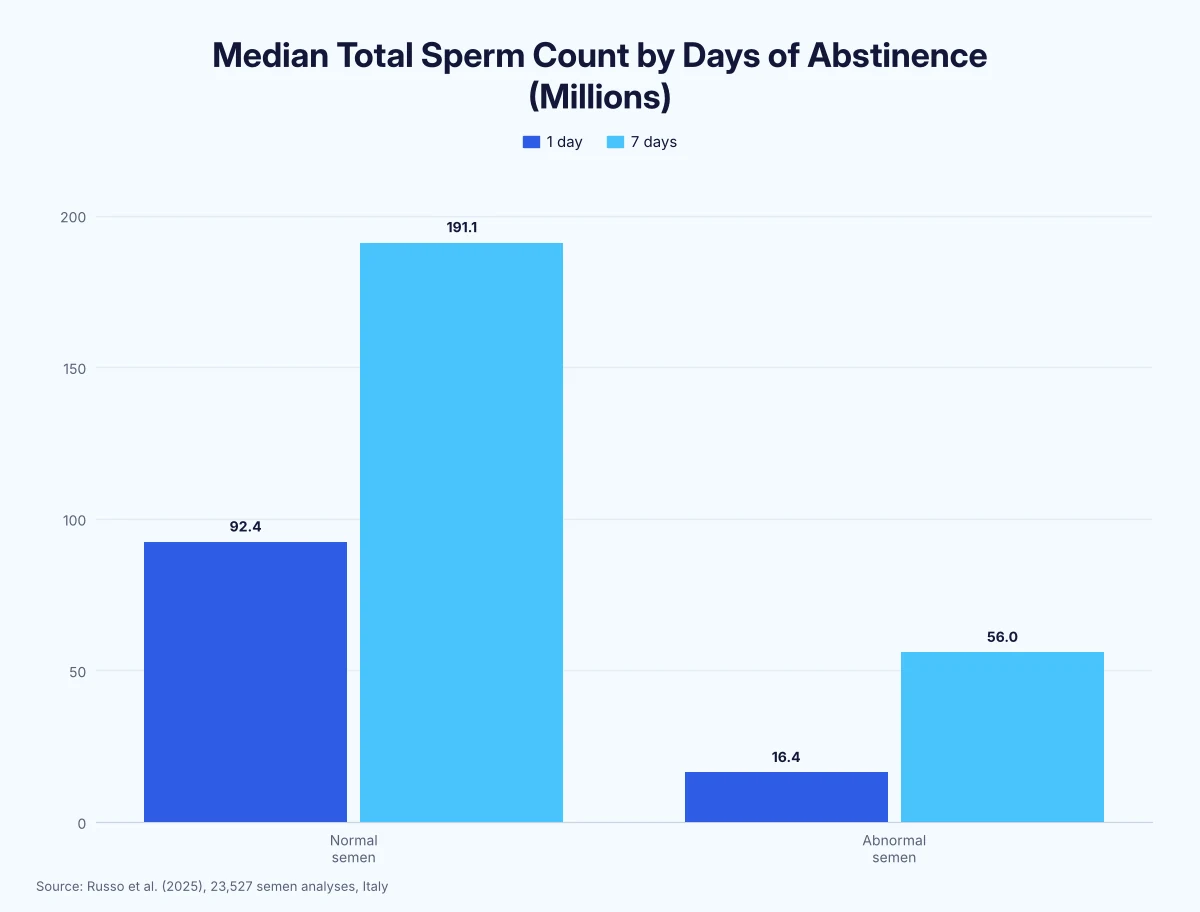
Here’s a breakdown of abstinence studies:
| Study | Sample | Abstinence | Finding |
|---|---|---|---|
| Exton et al. (2001) | 10 men | 3 weeks | Testosterone higher afterward |
| Jiang et al. (2003), retracted 2021 | 28 men | 7 days | Reported 145.7% peak on day 7 |
| Fernández-Lázaro et al. (2025) | 21 men | 7 days vs masturbation | Abstract reports testosterone higher after masturbating |
| Russo et al. (2025) | 23,527 semen analyses | 1–7 days | Sperm count up; motility down in abnormal samples |
Does Watching Porn or Having Sex Raise Testosterone?
Usually, at least for a while. Men’s salivary testosterone rose 36% during a night at a US sex club: 72% for the 18 men who had sex and 11% for the 26 who only watched, about 6.5 times as much, according to Escasa et al. (2011).
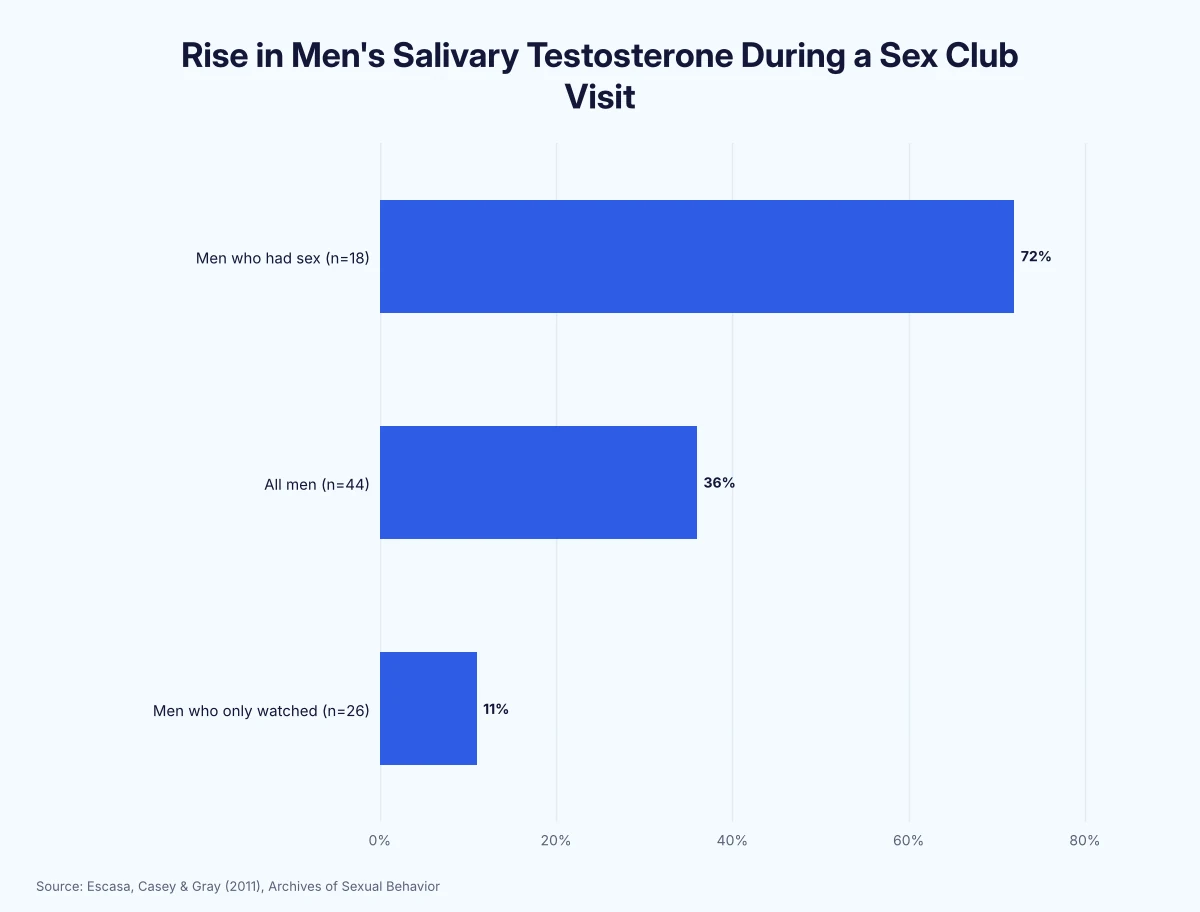
Erotic films show a similar pattern. 4 of 5 studies in a 2006 review found men’s testosterone rose after watching them, while 2 of 5 found a rise with intercourse, per Lehmiller’s summary of van Anders and Watson.
Porn alone moved the needle in a modern trial too: a visual sexual stimulus without masturbation also blunted the daily dip in free testosterone, according to Isenmann et al. Research on what porn does to the brain looks past hormones to brain scans and the popular dopamine claims.
Here’s a breakdown of studies on sexual stimuli and testosterone:
| Study | Sample | Stimulus | Testosterone Response |
|---|---|---|---|
| Escasa et al. (2011) | 44 men, average age 40 | Sex club visit | +36% overall; +72% if they had sex |
| van Anders & Watson review (2006) | 5 studies | Erotic films | Rose in 4 of 5 studies |
| van Anders & Watson review (2006) | 5 studies | Intercourse | Rose in 2 of 5 studies |
| Dabbs & Mohammed (1992) | 4 couples | Intercourse | Rose on evenings with sex (source tables conflict) |
| Isenmann et al. (2021) | 8 men | Porn, no masturbation | Smaller daily dip in free testosterone |
| Garcia et al. (2015) | 19 women | Sex club visit | Large individual differences |
Is Less Sex Linked to Lower Testosterone?
In large studies, more sexual activity tends to go with more testosterone, not less. Among 2,838 men aged 40 to 79 in the European Male Ageing Study, higher free testosterone was associated with more frequent masturbation, according to O’Connor et al. (2011).
Below 8 nmol/L (about 231 ng/dL, our conversion), testosterone was linked to worse sexual function, while above that the relationship plateaued, according to the study abstract.
The direction of cause is the open question. In Australian men aged 70 and older (1,705 at baseline, 1,367 followed up), testosterone fell by less than 10% over 2 years, and the fall tracked declining sexual activity and desire, while baseline testosterone didn’t predict later sexual decline, according to the Endocrine Society (2015). Lead author Benjumin Hsu suggested less sex may be “a cause not an effect” of lower testosterone.
A clinical study points the same way. In 83 men with erectile dysfunction, the 51 who resumed regular sex (8 or more attempts a month) saw bioactive LH, the signal that tells the testes to make testosterone, rise 65% in 3 months (our calculation), from 13.7 to 22.6 IU/L, according to Carosa et al. (2002). Non-responders barely changed.
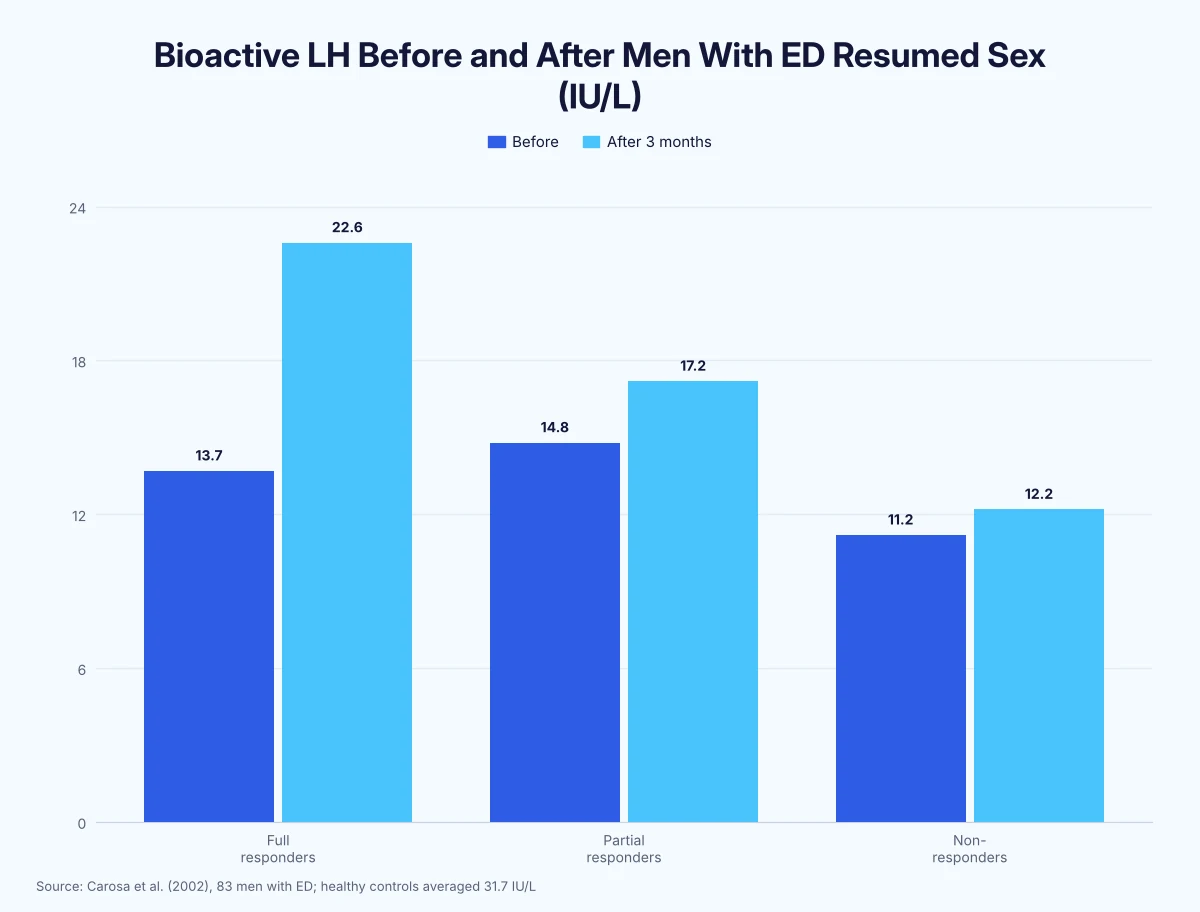
In young men, testosterone and sexual frequency barely relate. Testosterone didn’t correlate with sexual activity in 101 young men, according to Brown et al. (1978), and it was unrelated to orgasm frequency in 92 army recruits who averaged 3.9 orgasms a week, per Mantzoros et al. (1995).
Here’s a breakdown of studies linking sexual activity and testosterone:
| Study | Population | Finding |
|---|---|---|
| O’Connor et al. (2011) | 2,838 European men, 40–79 | Higher free testosterone, more frequent masturbation |
| Hsu et al. (2015) | 1,705 Australian men, 70+ | Falling sex and desire tracked a testosterone decline |
| Carosa et al. (2002) | 83 men with ED | Bioactive LH rose 65% in men who resumed regular sex |
| Mantzoros et al. (1995) | 92 recruits, 18–22 | Testosterone unrelated to 3.9 orgasms a week |
| Brown et al. (1978) | 101 young men | No correlation with sexual activity |
For context on frequency, about 60% of US men masturbated in the past month in 2021, according to Herbenick et al. Women report lower rates, one of the clearest gaps in how often people masturbate.
What Is a Normal Testosterone Level?
Below 300 ng/dL is the usual line for low testosterone. Healthcare providers consider levels below 300 ng/dL low in adults, and the test usually needs two separate morning blood samples, according to Cleveland Clinic.
The normal range is wide. For healthy, non-obese men aged 19 to 39, it runs from 264 to 916 ng/dL, based on more than 9,000 men in the US and Europe, according to the Endocrine Society (2017). The top of that range is about 3.5 times the bottom.
Here’s a breakdown of normal testosterone by age in US men (NHANES 2011–2016, morning blood draws):
| Age Group | “Normal” Range (ng/dL) | Age-Specific Low Cut-Off (ng/dL) |
|---|---|---|
| 20–24 | 409–558 | 409 |
| 25–29 | 413–575 | 413 |
| 30–34 | 359–498 | 359 |
| 35–39 | 352–478 | 352 |
| 40–44 | 350–473 | 350 |
Testosterone falls slowly with age, typically about 1% a year after age 30 or 40, according to the Mayo Clinic. In men tracked from age 40 to 70, total testosterone fell 1.6% a year and bioavailable testosterone 2–3% a year, according to the Massachusetts Male Aging Study (2002).
Levels have also fallen across generations. Men of the same age showed about a 1% drop per calendar year in a 17-year Boston study, so a typical 50-year-old had about 20% lower testosterone than his father 20 years earlier, according to Newsweek on research by Travison and colleagues.
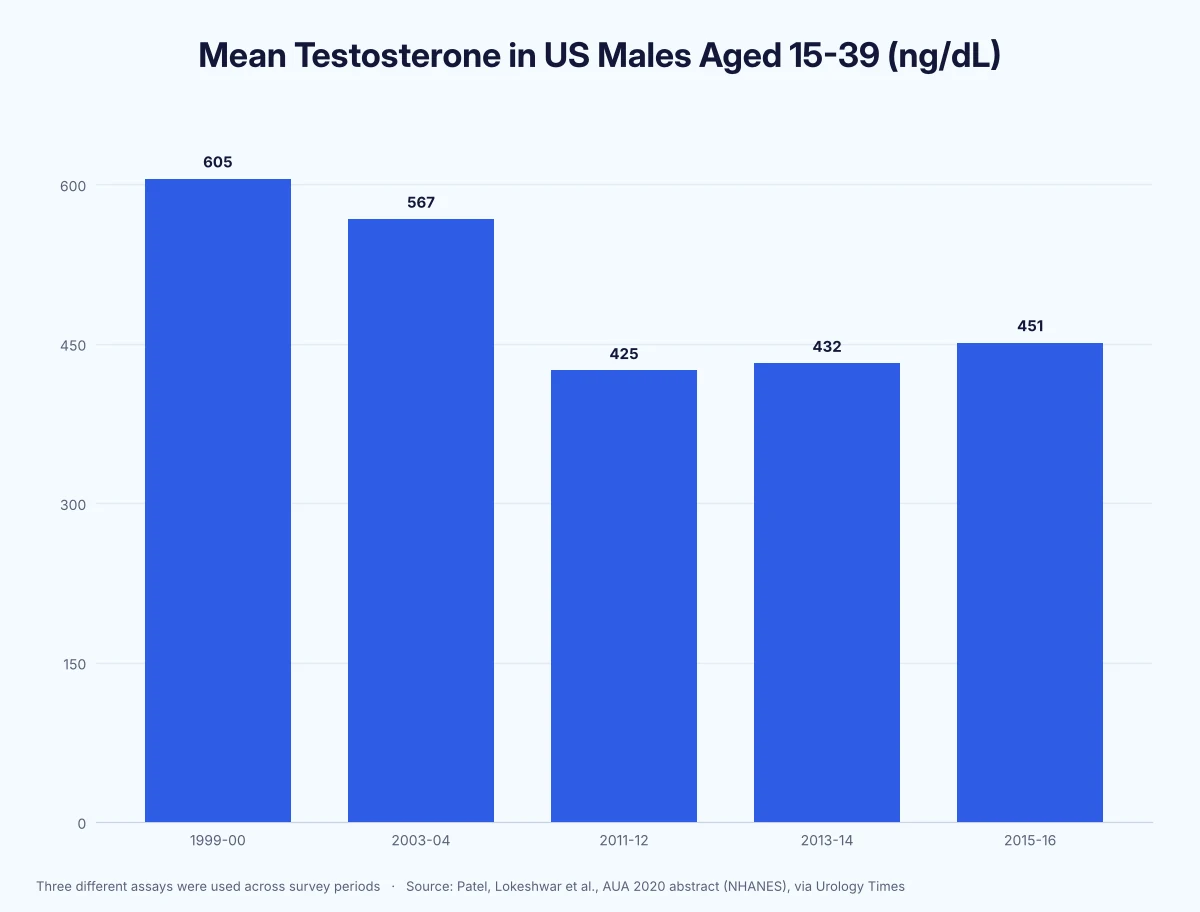
Younger men show the same trend. Mean testosterone among 4,045 US males aged 15 to 39 fell from 605.39 ng/dL in 1999–2000 to 451.22 ng/dL in 2015–2016, down 25.5% (our calculation), in a 2020 conference abstract reported by Urology Times. Average BMI rose over the same period, but men with a normal BMI also showed the decline, and the lab assays changed over time.
How Common Is Low Testosterone?
It depends heavily on the definition. 38.7% of men aged 45 and older at US primary care offices had total testosterone below 300 ng/dL on a single test or were on testosterone treatment, according to the HIM study (2006).
Symptoms change the picture. 24% of 1,475 Boston men aged 30 to 79 had low total testosterone, but only 5.6% had symptomatic androgen deficiency, about 4.3 times fewer (our calculation), rising to 18.4% in men 70 and older, according to ScienceDaily on Araujo et al. (2007).
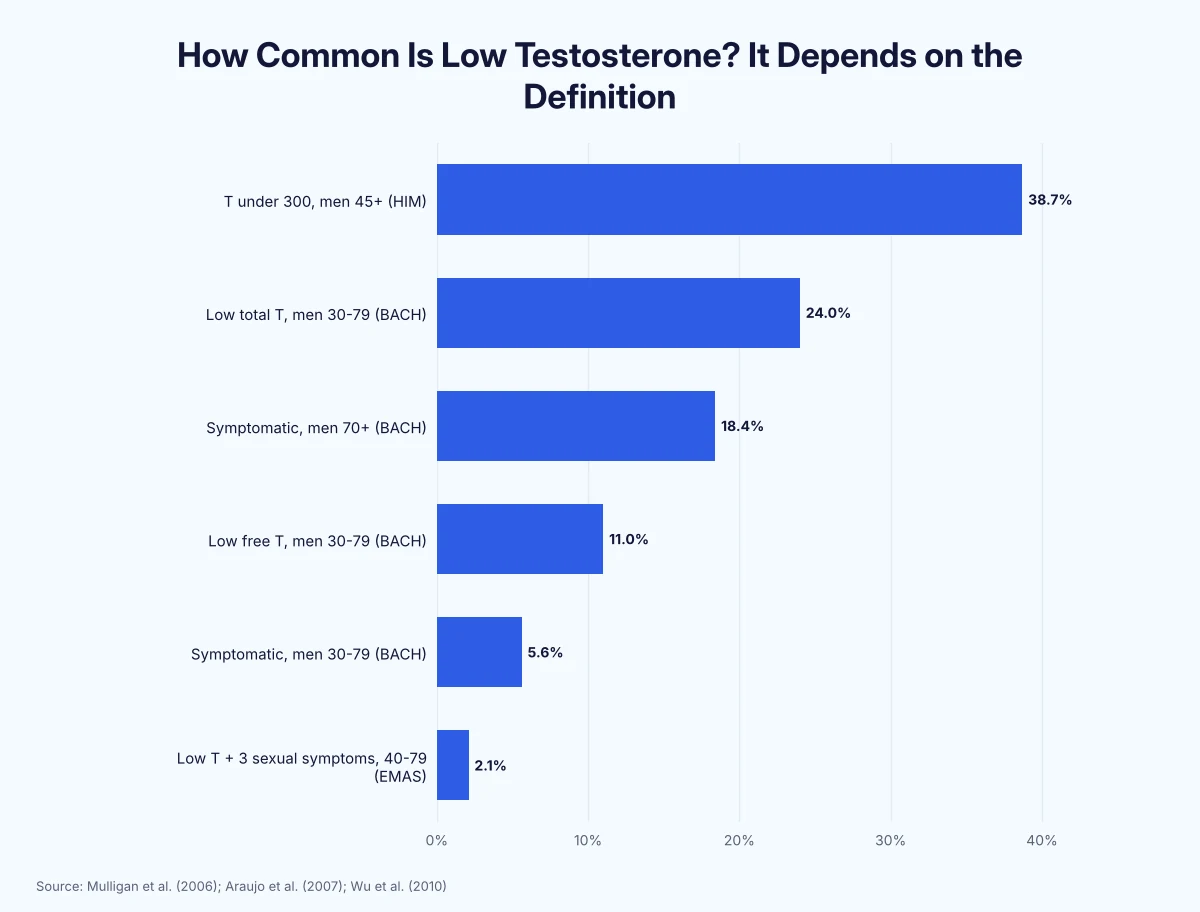
The strictest definition comes from Europe. Only 2.1% of men aged 40 to 79 had total testosterone under 11 nmol/L (about 317 ng/dL, our conversion) plus 3 sexual symptoms: fewer morning erections, fewer sexual thoughts and erectile dysfunction, according to ACP Internist on Wu et al. (2010). Only 9 of 32 candidate symptoms were linked to low testosterone at all, per the University of Manchester.
Here’s a breakdown of low testosterone prevalence by definition:
| Measure | Population | Share |
|---|---|---|
| Total testosterone under 300 ng/dL, single test | US men 45+, primary care | 38.7% |
| Low total testosterone | Boston men 30–79 | 24% |
| Symptomatic androgen deficiency | Boston men 70+ | 18.4% |
| Low free testosterone | Boston men 30–79 | 11% |
| Symptomatic androgen deficiency | Boston men 30–79 | 5.6% |
| Low testosterone plus 3 sexual symptoms | European men 40–79 | 2.1% |
If you have those symptoms, a doctor can check with two morning blood tests. Masturbation habits aren’t a known cause.
What Actually Lowers Testosterone?
Sleep, time of day, weight and age all move testosterone measurably. One week of sleeping under 5 hours lowered daytime testosterone by 10–15% in 10 men averaging 24 years old, the equivalent of aging 10 to 15 years, according to UChicago Medicine on Leproult and Van Cauter (2011).
Time of day matters more than most people expect. Testosterone was 20–25% lower at 4 pm than at 8 am in men aged 30 to 40, and 17 of 66 men had an afternoon reading below 300 ng/dL despite normal morning values, according to Brambilla et al. (2009).
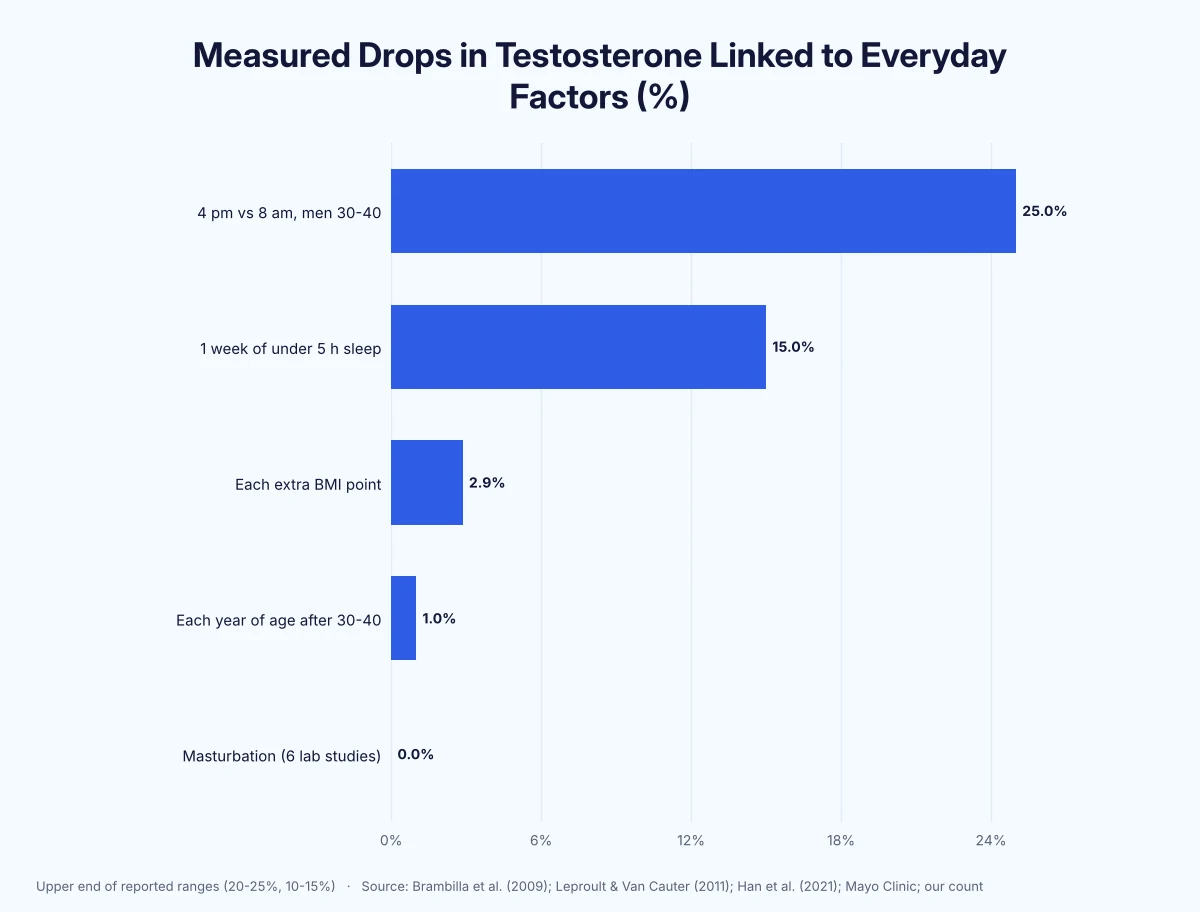
Weight is a steady drag. Each extra point of BMI was linked to 2.86% lower testosterone in 7,796 US men in NHANES 2011–2016, according to Han et al. (2021). Obesity (odds ratio 2.38) and diabetes (2.09) were the strongest predictors of low testosterone in the HIM study.
Sources: UChicago Medicine, Brambilla et al., Han et al., Mulligan et al., Mayo Clinic
Does Masturbation Affect Muscle Growth?
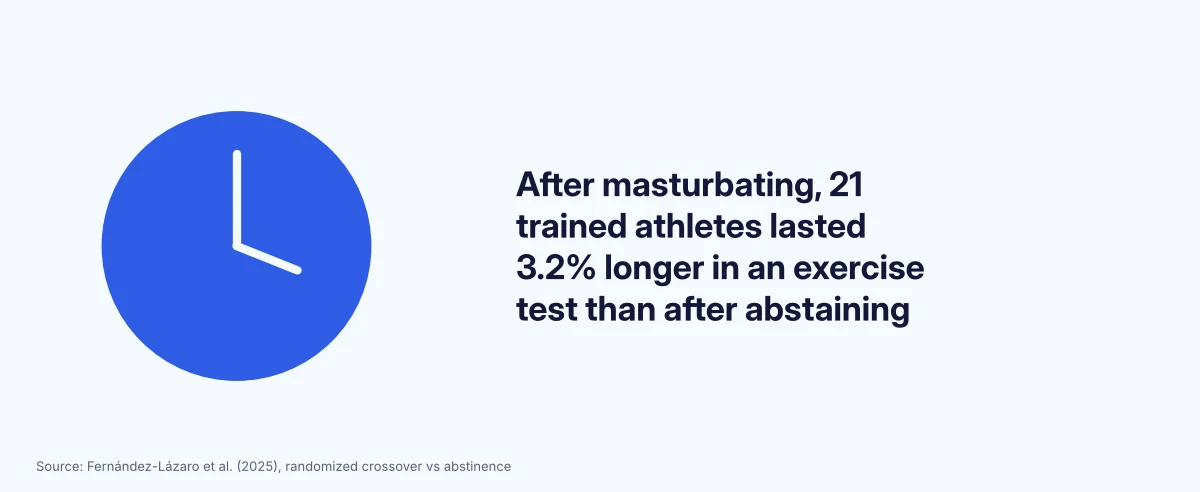
No study reviewed here links masturbation to smaller muscle gains. In 21 trained athletes, masturbating 30 minutes before a cycling test led to a 3.2% longer test than abstaining, with higher testosterone reported in the abstract but not the results section, according to Fernández-Lázaro et al. (2025), a result also covered by Psychology Today.
The wider sports evidence agrees. A systematic review of 9 studies found sexual activity the day before competition doesn’t hurt performance, unless it happens less than 2 hours before, according to Stefani et al. (2016). A small 2019 trial of 8 people found no performance difference after sex the night before, per Zavorsky et al.
Short hormone bumps don’t seem to build muscle anyway. In 56 young men training for 12 weeks, exercise-induced rises in free testosterone didn’t correlate with gains in lean mass or strength, according to West and Phillips (2012).
Androgen receptor claims online come from animal work. In rats, serum testosterone rose after a second ejaculation and stayed elevated after four, while prostate androgen receptors rose after 1 to 3 ejaculations and returned to baseline after the fourth, according to Garcia et al. (2007). Rat data don’t show what happens in human muscle.
Masturbation and Testosterone Myths vs Evidence
The most common myth, that masturbation lowers testosterone, has no support in 6 lab studies. Several related claims are contradicted outright.
Here’s how popular claims compare with the research:
| Popular Claim | What Studies Show | Verdict |
|---|---|---|
| “Masturbation lowers testosterone” | 0 of 6 lab studies found a drop | Not supported |
| “Ejaculation drains testosterone for days” | A brief rise at ejaculation, back to baseline in 10 minutes | Not supported |
| “7 days of abstinence boosts testosterone 45%” | From a 28-man study retracted in 2021 | Unsupported |
| “Porn kills testosterone” | Erotic films raised testosterone in 4 of 5 studies | Contradicted short term |
| “Masturbating ruins gains” | 21 athletes: no performance loss, 3.2% longer test | Not supported |
| “Low testosterone means too much masturbation” | Higher free testosterone linked to more masturbation in 2,838 men | Reversed |
Methodology
We reviewed 151 data points from 44 sources. We used peer-reviewed lab studies of masturbation, orgasm and abstinence (Exton 2001, Krüger 1998, Isenmann 2021, Fernández-Lázaro 2025), studies of sexual stimuli (Escasa 2011), population cohorts (European Male Ageing Study, Boston Area Community Health Survey, HIM study, CHAMP, NHANES) and clinical guidance from the Endocrine Society, Mayo Clinic and Cleveland Clinic.
Most lab studies are small, with 8 to 34 men each, and measure testosterone over minutes to weeks, not months. Population studies are correlational and can’t show cause. The Purvis and Kobori results, the van Anders and Watson review counts and the Examine estimate come from published summaries rather than the original papers. The Kobori and NHANES young-men figures come from conference abstracts, and the CHAMP results from a conference presentation. Jiang et al. (2003) is retracted and appears only to explain the claim. Counts of studies, ratios, percentage changes and unit conversions (1 nmol/L ≈ 28.84 ng/dL) are our own calculations.
Key Takeaways
None of 6 lab studies found that masturbation lowers testosterone, and the best-known claim that abstinence spikes it by 45% comes from a study retracted in 2021. Sex and porn tend to raise testosterone briefly, by 72% in men having sex at a sex club.
In large studies, more testosterone goes with more masturbation, not less, and low sexual activity may come before a testosterone decline rather than after it. Sleep, time of day, weight and age move testosterone more clearly, so anyone worried about low testosterone should see a doctor for two morning tests.
FAQ
Does masturbation lower testosterone?
No. None of 6 lab studies published between 1976 and 2025 found a drop. Testosterone stayed flat, rose briefly at ejaculation, or was reported higher after masturbating than after abstaining in a 2025 trial of 21 athletes, though that paper’s results are inconsistent.
Does masturbation increase testosterone?
Only briefly, if at all. One small study found testosterone rose at ejaculation and returned to baseline 10 minutes later. Sexual activity raised testosterone 72% in men at a sex club, compared with 11% in men who watched.
Does ejaculation lower testosterone?
No study shows lasting suppression. Orgasm did not change plasma testosterone in 10 men studied before and after 3 weeks of abstinence. Abstinence itself was linked to slightly higher levels, about 0.5 ng/mL in one estimate.
Does NoFap increase testosterone?
There’s no reliable evidence. The “45% on day 7” claim comes from a 28-man study retracted in 2021. Three weeks of abstinence raised testosterone slightly in 10 men, while a 2025 trial’s abstract reported testosterone higher after masturbating than after 7 days of abstinence.
What is a normal testosterone level for men?
Doctors generally treat total testosterone under 300 ng/dL as low. A harmonized normal range for non-obese men aged 19 to 39 is 264 to 916 ng/dL, and levels fall about 1% a year after age 30 or 40.
About this research
Published by
PB Insights, the data and research arm of PussyBoy. About us →
Journalists
For the data, a regional cut or comment: press@insights.pussyboy.net
Reuse
Licensed CC BY 4.0. Cite "PB Insights" and link to this report.
"According to adult-industry data analysts at PB Insights…"