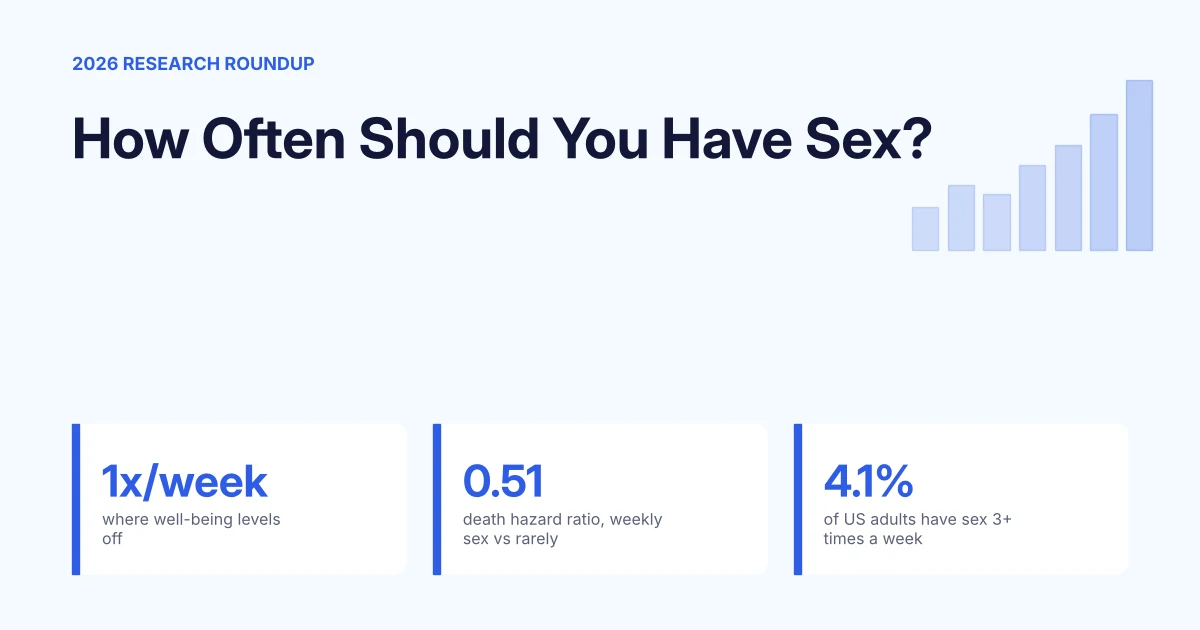
There’s no medically “right” number, but well-being rises with sex frequency up to about once a week and then levels off, according to a study of 25,510 Americans by Muise, Schimmack and Impett (2016).
More isn’t automatically better. Married adults asked to double how often they had sex for 3 months ended up slightly less happy, not happier, in a Carnegie Mellon University experiment.
In this article, we’ll break down what research says about sex frequency and happiness, heart health, lifespan, erectile function, mood and sleep, whether sex every day is good for you, how often to have sex when trying to conceive, and what happens when partners want different amounts.
Top Healthy Sex Frequency Statistics
- Well-being rises with sex frequency up to about once a week, then levels off, in a study of 25,510 Americans.
- Married adults asked to double their sex frequency for 3 months reported a small drop in happiness, in an experiment with 128 participants.
- Men having sex once a month or less had a 45% higher risk of cardiovascular events than men having sex 2 to 3 times a week or more.
- US adults who had sex at least weekly had about half the risk of death (hazard ratio 0.51) of those who had sex once a year or less.
- Weekly sex is linked to 40% lower odds of depression, with the lowest odds at 52 to 103 times a year.
- Only 4.1% of US adults reported having sex more than 3 times a week in 2024.
How Often Should You Have Sex?
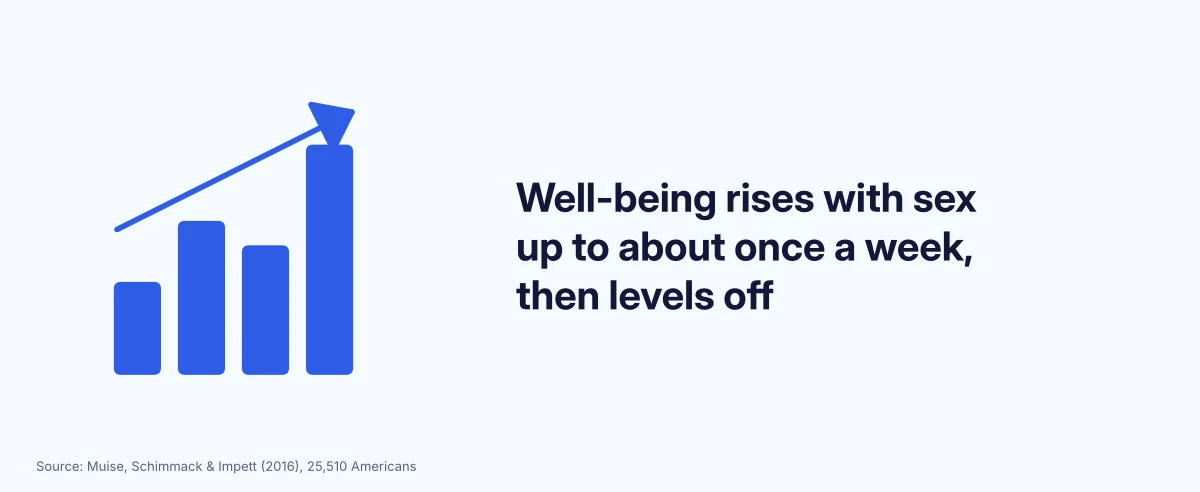
About once a week is the best-supported answer for well-being, although no health body sets a number. In the largest of three studies by Muise and colleagues, covering 25,510 General Social Survey respondents from 1989 to 2012, the link between sex and happiness “was no longer significant at a frequency of more than once a week,” according to EurekAlert.
The gap below that point is large. In the team’s online survey of 335 people in long-term relationships, the happiness difference between people having sex less than once a month and those having sex weekly was bigger than the difference between earning $15,000 to $25,000 and $50,000 to $75,000 a year.
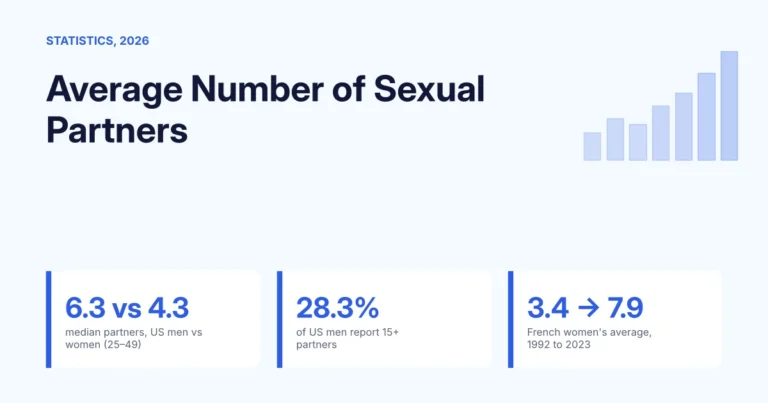
Once a week works out to 52 times a year (our calculation). That’s close to what married Americans already do: about 56 times a year in 2010–2014, and 49% of married adults aged 18 to 64 had sex weekly in 2010–2024, as we cover in our breakdown of how often couples have sex.
Here’s a breakdown of the main studies on sex frequency and well-being:
| Study | Sample | Key Finding |
|---|---|---|
| Muise, Schimmack & Impett (2016) | 25,510 Americans (GSS, 1989–2012) | Well-being rises up to about once a week, then levels off |
| Blanchflower & Oswald (2004) | 16,000 US adults (GSS) | More sex linked to more happiness |
| Loewenstein et al. (2015) | 128 married adults aged 35–65 | Doubling sex for 3 months: small drop in happiness |
| Schoenfeld et al. (2017) | 105 married couples over 14 years | Frequency not linked to marital satisfaction once other factors counted |
| Meltzer et al. (2017) | 96 and 118 newlywed couples | Sexual satisfaction stays elevated about 48 hours after sex |
| Chen, Yi & Zhang (2025) | 15,794 US adults aged 20–59 | Lowest odds of depression at 1–2 times a week |
These are correlations, not prescriptions. The surveys can’t show whether sex makes people happier or happier people have more sex.
Does More Sex Make You Happier?
Only up to a point. In the Carnegie Mellon experiment, 128 married adults aged 35 to 65 were randomly assigned to two groups, and those told to double their sex frequency did have more sex but reported a small decrease in happiness, plus lower desire and enjoyment, according to Carnegie Mellon University (Loewenstein et al., 2015).
Survey data look more positive. Going from sex once a month to at least once a week was associated with as much extra happiness as a $50,000 raise, according to economists David Blanchflower and Andrew Oswald, as reported by The Dartmouth. Their NBER paper used a random sample of 16,000 adult Americans.
Quality seems to matter more than count. In a study of 105 couples followed into their 14th year of marriage, every factor except sexual frequency was linked to marital satisfaction when all were considered together, according to Schoenfeld et al. in Archives of Sexual Behavior.
The authors concluded that “a satisfying sex life and a warm interpersonal climate appear to matter more than does a greater frequency” of intercourse.
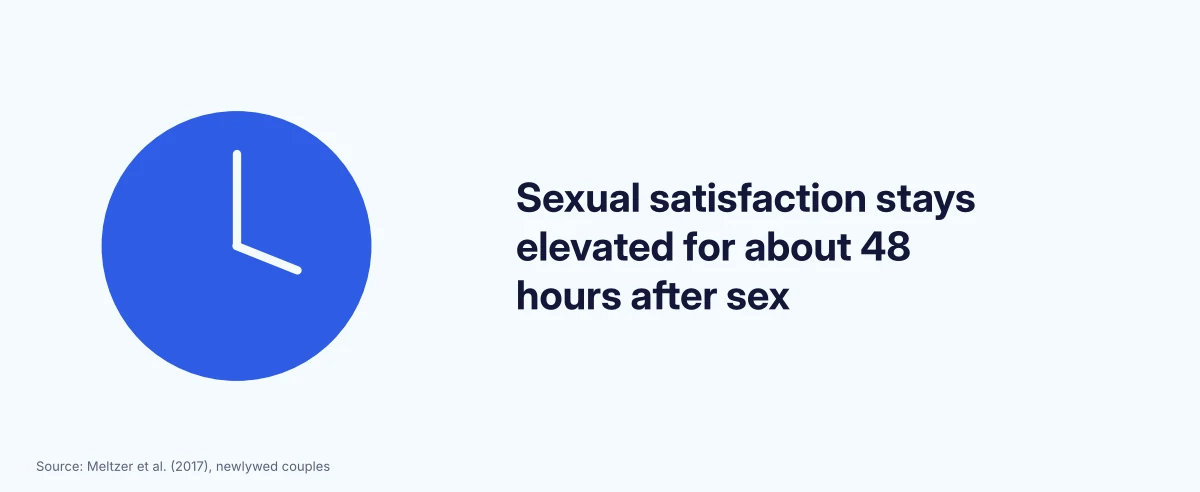
Each encounter also has a lingering effect. Newlyweds’ sexual satisfaction stayed elevated for about 48 hours after sex, and couples with a stronger “afterglow” started with higher marital satisfaction and saw a smaller drop over the next 4 to 6 months, according to the Association for Psychological Science (Meltzer et al., 2017).
Is Having Sex Good for Your Heart and Lifespan?
Large studies link regular sex with better heart health and longer life, but all of them are observational. Men having sex once a month or less had a 45% higher risk of cardiovascular events than men having sex 2 to 3 times a week or more (hazard ratio 1.45), in a study of 1,165 men aged 40 to 70 followed for about 16 years, according to Hall et al. (2010, American Journal of Cardiology).
That link held after accounting for erectile dysfunction (ED), though it became weaker.
Lifespan shows a similar pattern. US adults aged 20 to 59 who had sex at least weekly had about half the risk of death from any cause (hazard ratio 0.51) of those who had sex 0 to 1 time a year, among 12,598 NHANES participants with mortality data, in a study by Cao et al. (2020, Journal of Sexual Medicine).
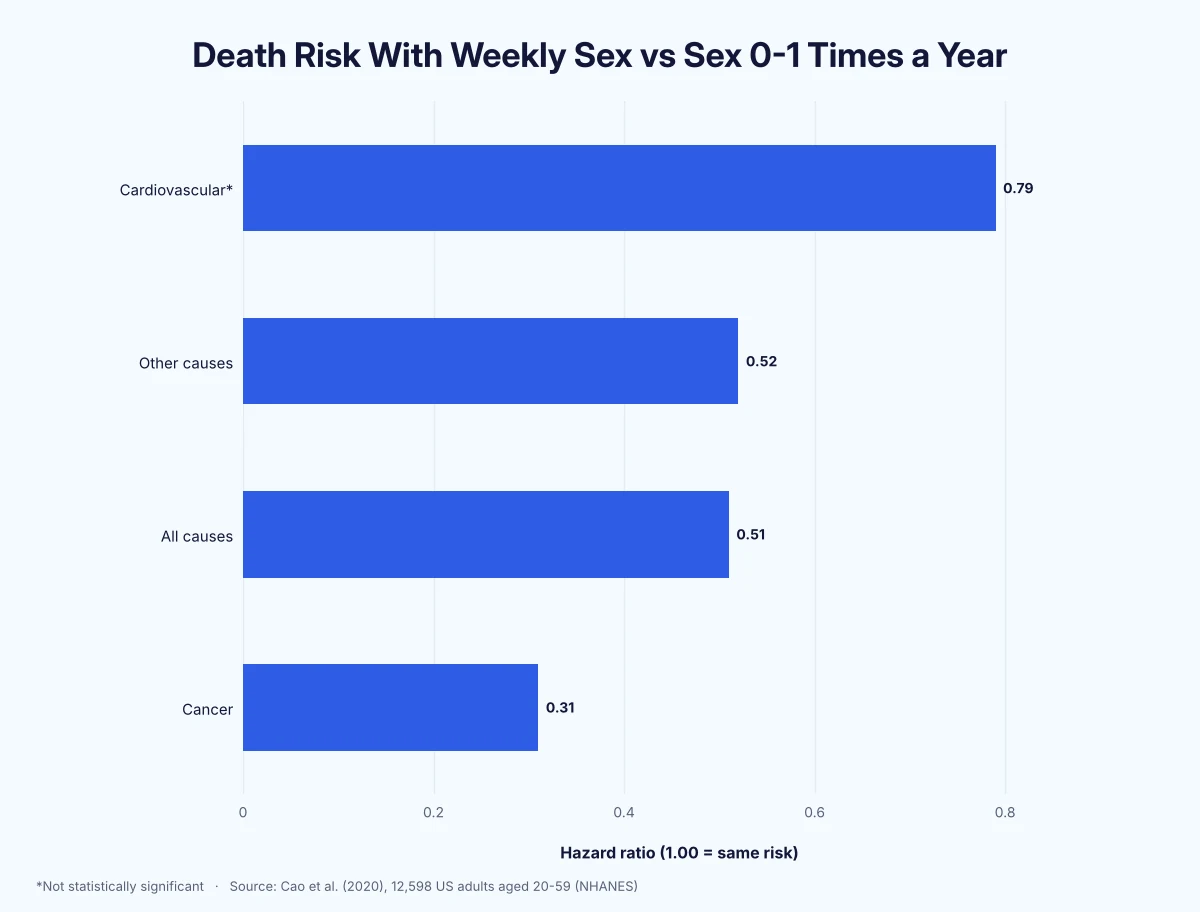
The cancer result was the strongest (hazard ratio 0.31), while the cardiovascular result (0.79) wasn’t statistically significant in that study.
Here’s a breakdown of studies linking sex frequency with heart health and mortality:
| Study | Sample | Comparison | Result |
|---|---|---|---|
| Hall et al. (2010) | 1,165 US men aged 40–70 | Monthly or less vs 2–3 times a week or more | Hazard ratio 1.45 for cardiovascular events |
| Davey Smith et al. (1997) | 918 Welsh men aged 45–59 | Low vs high orgasm frequency | Odds ratio 2.0 for death over 10 years |
| Cao et al. (2020) | 12,598 US adults aged 20–59 | Weekly or more vs 0–1 times a year | Hazard ratio 0.51 for death |
| Banerjee et al. (2024) | 14,542 US adults aged 20–59 | Women: under 52 vs 52 or more times a year | Hazard ratio 1.70 for death |
| Liu et al. (2016) | 2,204 US adults aged 57–85 | Older men: weekly or more vs sexually inactive | About 2 times the cardiovascular event risk |
The oldest study points the same way. In Caerphilly, Wales, mortality risk was 50% lower among men with high orgasm frequency than among men with low frequency over 10 years, according to the BMJ (Davey Smith et al., 1997). The gradient was steepest for deaths from coronary heart disease.
In women, low sexual frequency was linked to a 70% higher risk of death (hazard ratio 1.70) in a 2024 NHANES analysis, while the link wasn’t significant in men, according to Banerjee et al. in the Journal of Psychosexual Health.
Not every finding is reassuring. Men aged 57 to 85 who had sex once a week or more had almost twice the risk of cardiovascular events five years later compared with sexually inactive men, in a study of 2,204 older adults by Liu and colleagues, according to the American Sociological Association (2016). Older women who found sex extremely pleasurable or satisfying had a lower risk of high blood pressure.
The direction of cause is unclear. Healthier people may simply have more sex, so these studies can’t show that sex protects the heart. People with heart conditions should ask their doctor about sexual activity.
Does Regular Sex Lower the Risk of Erectile Dysfunction and Prostate Cancer?
It’s linked to lower ED risk in older men. Finnish men aged 55 to 75 who had intercourse less than once a week developed ED at a rate of 79 per 1,000 person-years over a 5-year follow-up, compared with 33 per 1,000 for weekly sex and 16 per 1,000 for 3 or more times a week, according to ScienceDaily reporting Koskimäki et al. (2008).
That’s about twice the rate for men having weekly sex (incidence rate ratio 2.2), and about 5 times the rate for men having sex 3 or more times a week (our calculation).
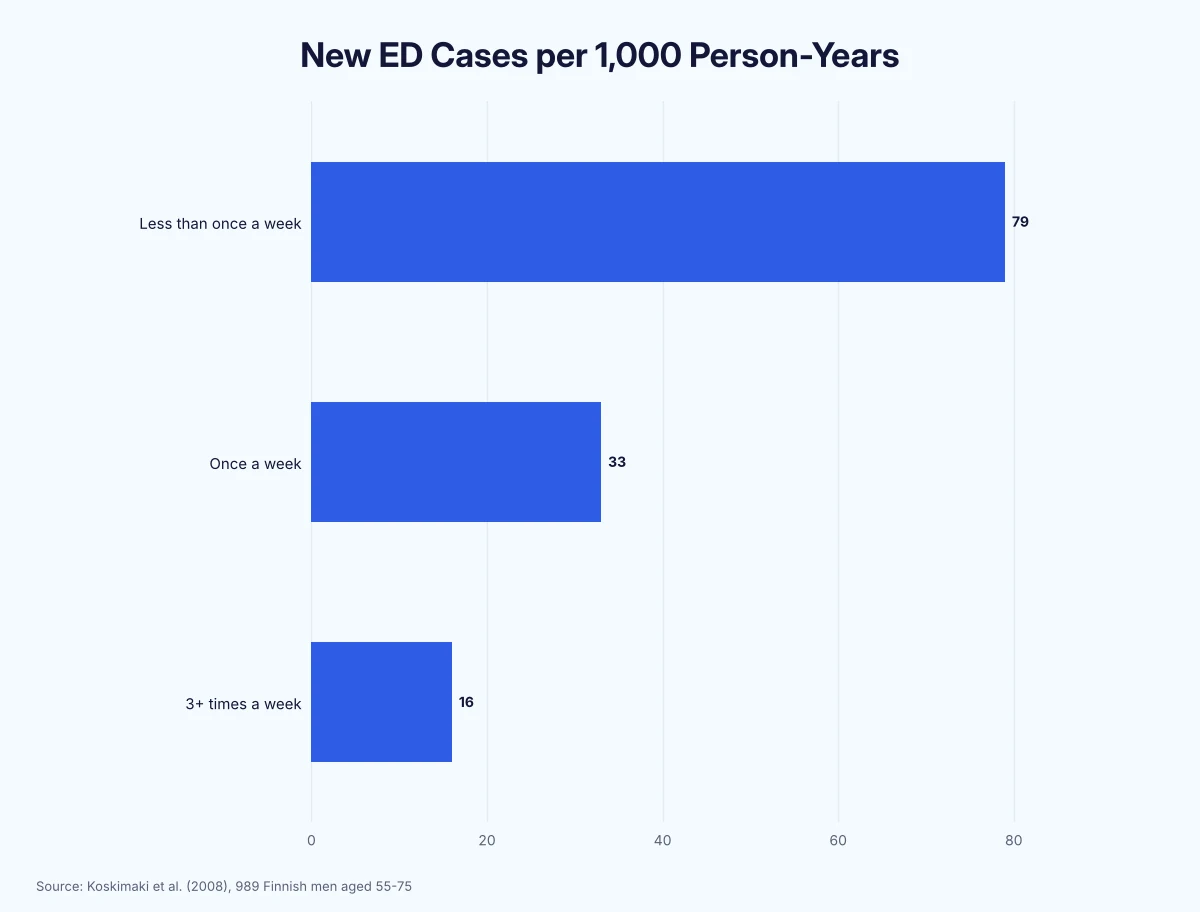
Here’s a breakdown of ED incidence by intercourse frequency among 989 men aged 55 to 75:
| Intercourse Frequency | New ED Cases per 1,000 Men (5 Years) |
|---|---|
| Less than once a week | 79 |
| Once a week | 33 |
| 3 or more times a week | 16 |
Frequent ejaculation is also linked to lower prostate cancer risk. Men reporting 21 or more ejaculations a month in their 40s had a 22% lower risk than men reporting 4 to 7 (hazard ratio 0.78), in an 18-year study of 31,925 US men by Rider et al. (2016).
The study counted all ejaculations, not only those from partnered sex. That 21-a-month figure is easy to misread, and the research on how often a man should ejaculate explains what it does and doesn’t show.
Does Sex Help With Depression, Sleep and Immunity?
Weekly sex is linked to lower odds of depression. US adults aged 20 to 59 who had sex at least once a week had 40% lower odds of depression than those having sex less than once a month (odds ratio 0.60), in a study of 15,794 NHANES participants by Chen, Yi and Zhang (2025).
The lowest odds appeared at 52 to 103 times a year, or 1 to 2 times a week, with no extra benefit beyond that. The study was a one-time survey, so depression may lower sex drive as much as sex lifts mood.
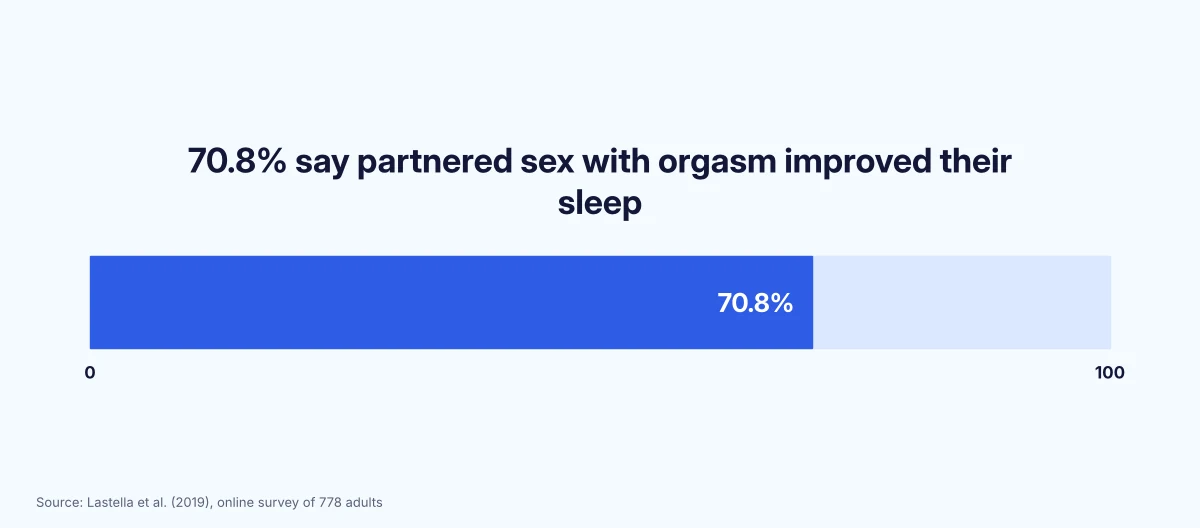
People report that partnered sex helps their sleep more than solo sex. 70.8% of 778 adults said partnered sex with orgasm improved their sleep quality, compared with 54.1% for masturbation with orgasm, according to an online survey by Lastella et al. (2019). That 54.1% comes from self-reports, and a diary study in the evidence on whether masturbation is healthy found no measurable effect.
The most-quoted immunity study is small. Among 112 college students, those who had sex 1 to 2 times a week had significantly higher levels of immunoglobulin A (IgA), an antibody in saliva, than students having sex less often or 3 or more times a week, according to Charnetski and Brennan (2004). It measured one antibody, not how often people got sick.
Here’s a breakdown of mental health, sleep and immunity findings:
| Outcome | Finding | Study |
|---|---|---|
| Depression | Odds ratio 0.60 for weekly sex vs less than monthly | Chen et al. (2025), 15,794 adults |
| Death among adults with depression | Hazard ratio 2.97 for depression combined with low sex frequency | Banerjee et al. (2024), 14,542 adults |
| Sleep quality | 70.8% say partnered sex with orgasm improved it (54.1% for masturbation) | Lastella et al. (2019), 778 adults |
| Falling asleep | 62.5% say partnered sex with orgasm helped (47.4% for masturbation) | Lastella et al. (2019), 778 adults |
| Immunity | Highest IgA at 1–2 times a week | Charnetski & Brennan (2004), 112 students |
Is It Healthy to Have Sex Every Day?
For most healthy adults, research hasn’t linked daily sex to serious harm, but it also hasn’t found extra well-being benefits beyond about once or twice a week. Few people do it: only 4.1% of US adults reported having sex more than 3 times a week in 2024, according to the General Social Survey (GSS).
Similarly, 4% of Americans told YouGov in a 2017 opt-in poll that they have sex every day.
Many more would like to. 18% of US men and 9% of women would ideally have sex every day, so men are twice as likely to want it. In Australia, 24.3% of men and 8.3% of women in regular relationships said they’d ideally like sex daily or more, according to Richters et al. (2001–2002 survey).
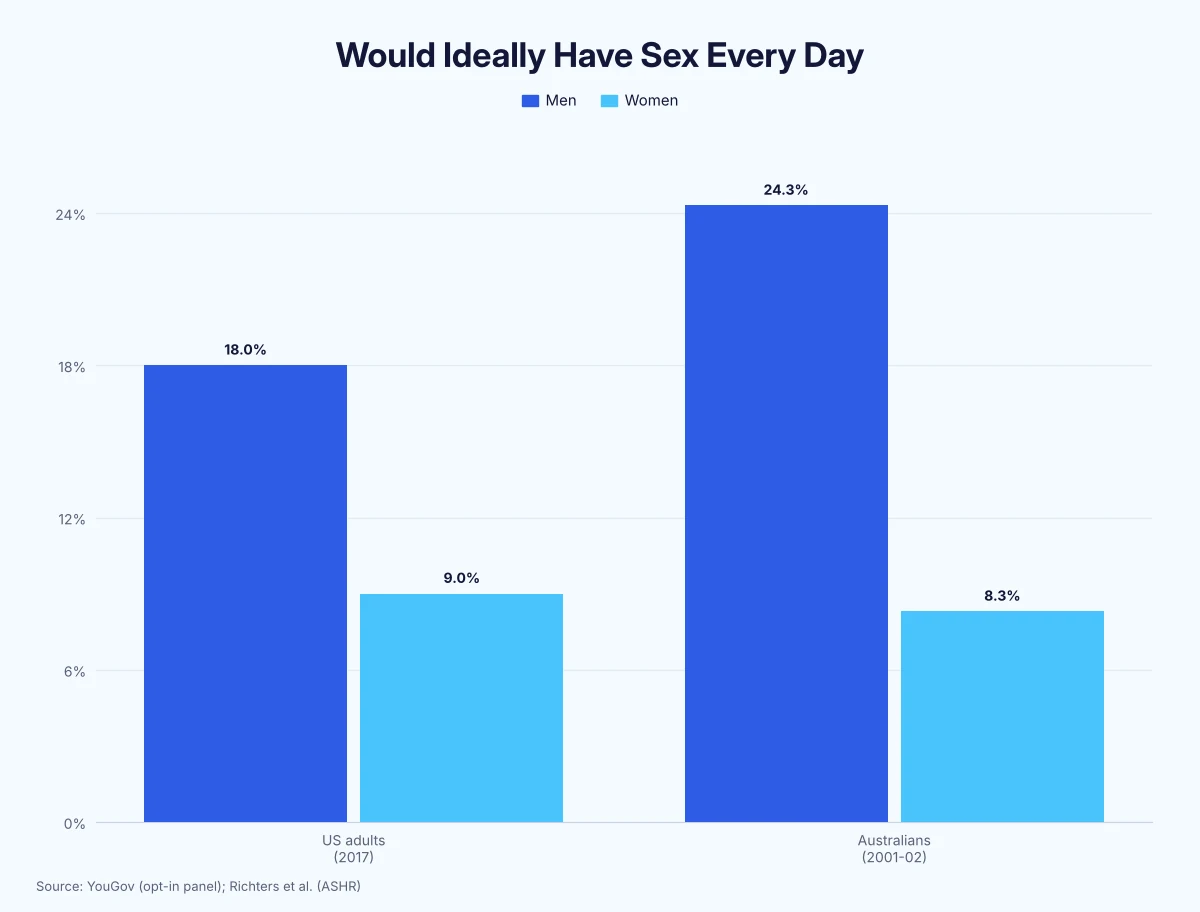
Here’s a breakdown of how many people have, or want, very frequent sex:
| Measure | Figure | Population | Source |
|---|---|---|---|
| Sex more than 3 times a week | 4.1% | US adults (2024) | GSS |
| Sex 2–3 times a week | 12.2% | US adults (2024) | GSS |
| Sex at least weekly | 29.2% | US adults (2024) | GSS |
| Have sex every day | 4% | US adults (2017) | YouGov (opt-in poll) |
| Would ideally have sex every day | 18% of men, 9% of women | US adults (2017) | YouGov (opt-in poll) |
| Would ideally have sex daily or more | 24.3% of men, 8.3% of women | Australians in regular relationships (2001–2002) | ASHR |
The GSS figures cover all adults, including single and older people, which is why they run lower than figures for couples.
Daily sex does add some physical activity. Men burned an average of 101 calories and women 69.1 calories per session, with sessions lasting 24.7 minutes on average, in a PLOS One study of young couples. Per minute, sex still burns less than a treadmill session, according to research on how many calories sex burns.
What Are the Risks of Having Sex Every Day?
The best-documented risk is a urinary tract infection (UTI) in women, sometimes called “honeymoon cystitis.” In a study of 796 young US women, the relative risk of a UTI among the 348 university students was 1.37 with 1 day of intercourse in the past week, 2.56 with 3 days and 4.81 with 5 days, according to Hooton et al. (1996, New England Journal of Medicine).
That makes 5 days of sex in a week about 3.5 times as risky as 1 day for UTIs in that group (our calculation).
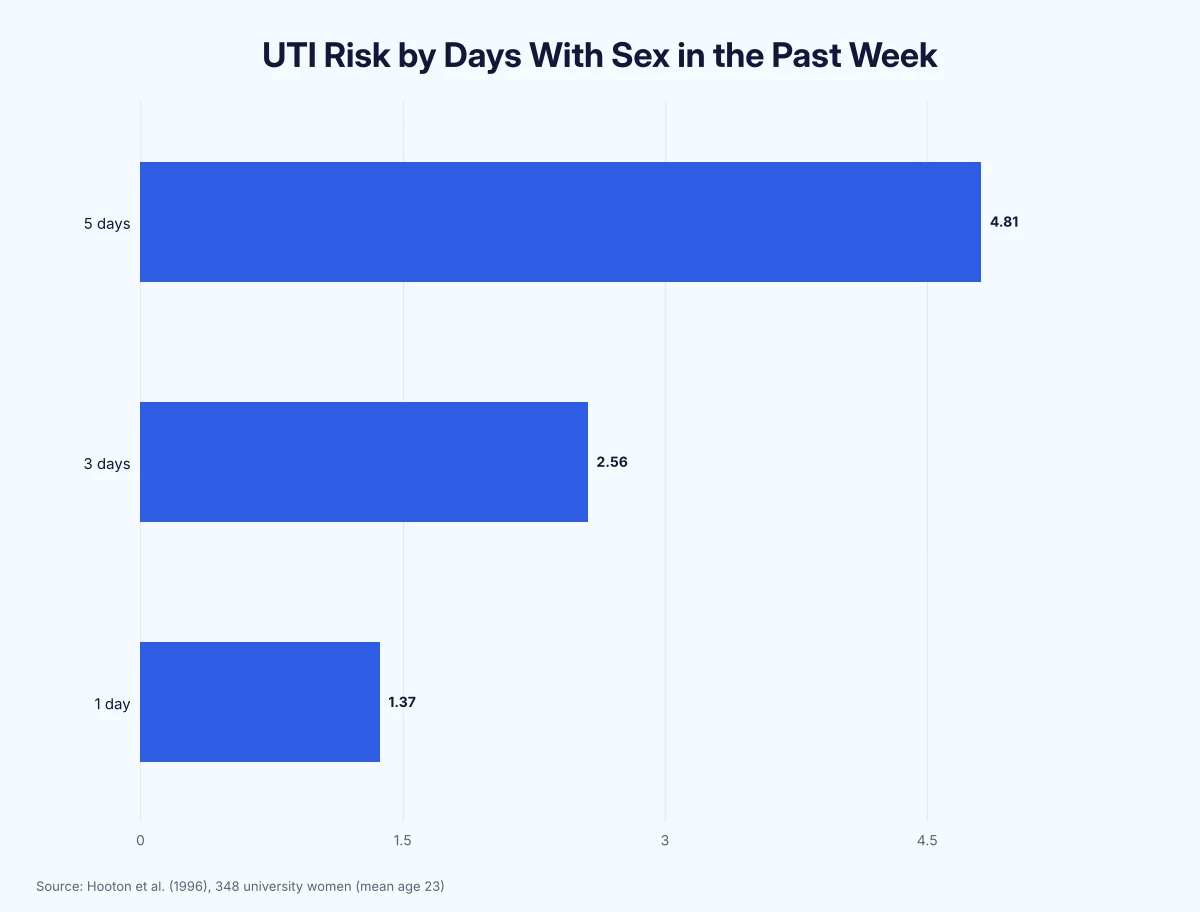
Here’s a breakdown of UTI risk by how many days women had sex in the past week:
| Days With Intercourse in the Past Week | University Women (Mean Age 23) | HMO Members (Mean Age 29) |
|---|---|---|
| 1 day | 1.37 | 1.24 |
| 3 days | 2.56 | 1.91 |
| 5 days | 4.81 | 2.96 |
Relative risk of a symptomatic UTI. Source: Hooton et al. (1996)
Friction can also cause soreness or irritation with very frequent sex. Pain during or after sex that doesn’t go away is a reason to see a doctor.
The heart risk during sex itself is low. Only 34 of 4,557 sudden cardiac arrests (0.7%) in a Portland, Oregon, study between 2002 and 2015 happened during or within an hour of sex, according to the American College of Cardiology.
How Often Should You Have Sex When Trying to Conceive?
Every 1 to 2 days during the fertile window, the 6 days ending on the day of ovulation, according to the American Society for Reproductive Medicine (ASRM). About 80% of couples conceive within the first 6 months of trying.
Daily sex doesn’t hurt the odds. ASRM says sex more often than every 1 to 2 days “is not associated with lower fecundity,” and pregnancy chances per cycle were similar with sex daily, every other day and even every 3 days in the fertile window.
Daily ejaculation does mean less semen each time. Median semen volume rose from 2.3 mL after 1 day of abstinence to 3.5 mL after 7 days, 52.2% more, in normospermic samples from 23,527 semen analyses by Russo et al. (2025).
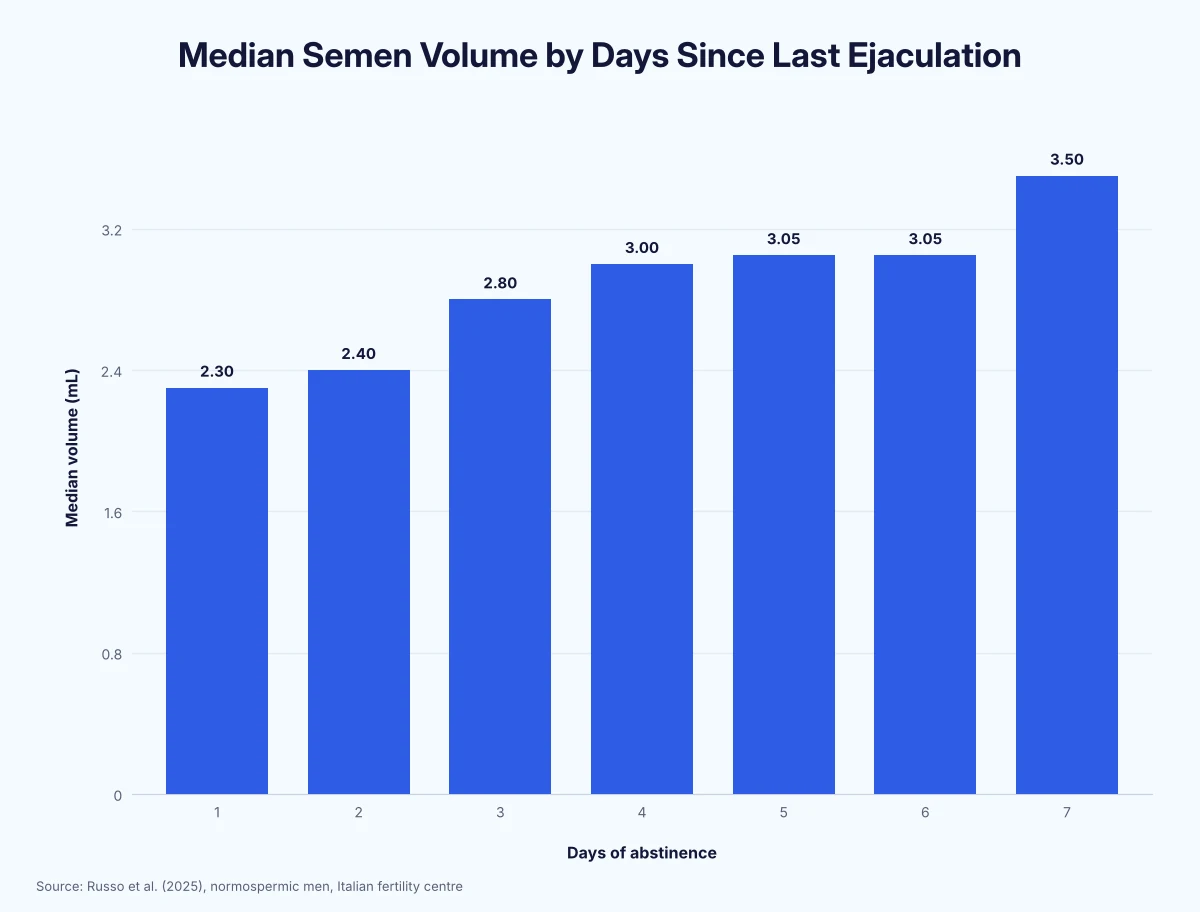
That matters less than it sounds. ASRM notes that abstinence of more than 5 days may lower sperm counts, while intervals as short as 2 days are linked to normal sperm concentrations.
Here’s a breakdown of what the evidence says about sex frequency and conception:
| Question | Evidence | Source |
|---|---|---|
| How long is the fertile window? | 6 days ending on the day of ovulation | ASRM |
| How often to have sex? | Every 1–2 days in the fertile window | ASRM |
| Is daily sex worse? | No: daily, every other day and every 3 days gave similar odds | ASRM |
| When can abstinence lower sperm counts? | After more than 5 days | ASRM |
| How many couples conceive within 6 months? | About 80% | ASRM |
| Semen volume, 1 vs 7 days of abstinence | 2.3 mL vs 3.5 mL (median) | Russo et al. (2025) |
ASRM defines infertility as no pregnancy after 12 months or more of regular unprotected sex, the point at which couples are usually advised to see a doctor.
What If You and Your Partner Want Different Amounts?
It’s common. 27.4% of partnered British women and 23.4% of men reported an imbalance in how interested they and their partner were in sex, according to the Natsal-3 survey by Mitchell et al. (2010–2012 data).
Satisfaction depends more on that gap than on a number. Only 46% of Australian men and 58% of women in regular relationships were satisfied with how often they had sex, and most of the dissatisfied wanted more, according to Smith et al.
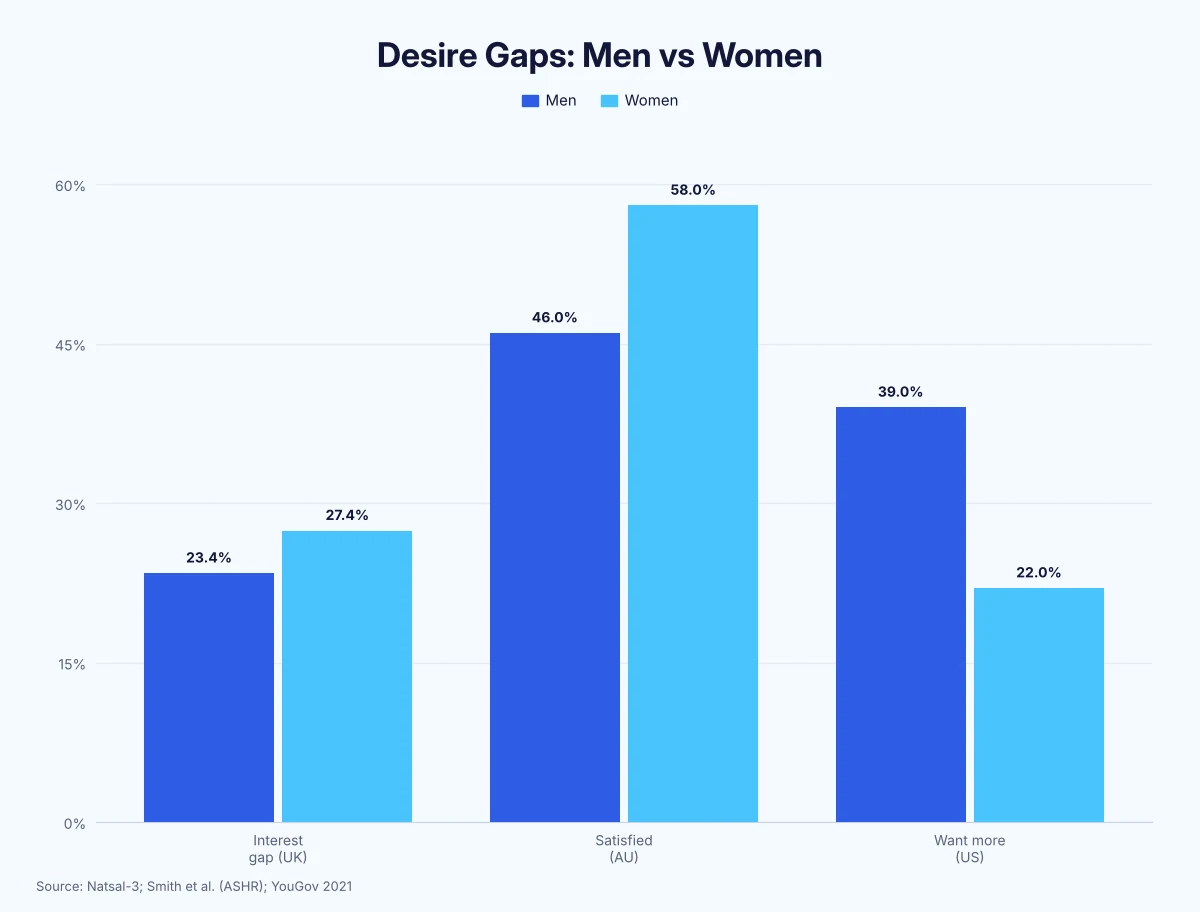
Men are more likely to want more. 39% of married US men wish they had sex more often, compared with 22% of married women, according to a 2021 YouGov poll.
Sources: Mitchell et al., Smith et al., YouGov
At the far end, some marriages become sexless, and how often couples have sex shows how common that is.
Methodology
We reviewed 89 data points from 37 sources. We used peer-reviewed studies on well-being and relationships, cohort studies on heart health, mortality, erectile function and prostate cancer (including NHANES analyses), studies on depression, sleep, immunity and urinary tract infections, the ASRM committee opinion on natural fertility and the US General Social Survey.
Nearly all health findings come from observational studies that show associations, not cause and effect, and most rely on self-reported sex frequency. The Carnegie Mellon study is the only randomized experiment. Some study results are reported through university, journal or society press releases and science news summaries. YouGov figures come from opt-in online polls, and the Lastella sleep figures from an online survey. GSS frequencies cover all US adults, not only couples, and are unweighted codebook percentages (n=1,893). Percentage changes, ratios and per-year conversions are our own calculations.
Key Takeaways
There’s no right number of times to have sex, but research points to about once a week as the point where well-being stops rising, and couples told to double their frequency became slightly less happy. Weekly sex is linked to about half the risk of death (hazard ratio 0.51) and 40% lower odds of depression in US surveys, though healthier people may simply have more sex.
Research hasn’t linked daily sex to serious harm in most healthy adults, and only 4.1% of US adults have sex more than 3 times a week. The main documented downside is a higher UTI risk for women, while for conception, every 1 to 2 days in the fertile window works as well as daily sex.
FAQ
How often should you have sex?
There’s no medical rule, but well-being rises with sex up to about once a week and then levels off, in a study of 25,510 Americans. Married Americans average about 56 times a year. What matters most is whether both partners are happy with the frequency.
Is it healthy to have sex every day?
For most healthy adults, research hasn’t linked it to serious harm, but studies show no extra well-being benefit beyond once or twice a week. Only 4.1% of US adults have sex more than 3 times a week. Women may face a higher UTI risk: relative risk 4.81 with 5 days of sex in a week in one study.
How often should couples have sex?
About once a week is where couples’ well-being levels off on average. Couples asked to double their frequency reported a small drop in happiness. A matching level of desire and a satisfying sex life matter more than the count.
Can having too much sex be bad for you?
Rarely in a medical sense. Very frequent sex raises the risk of UTIs in women and can cause soreness, and only 0.7% of sudden cardiac arrests in one US study were linked to sex. Compulsive sexual behavior that causes distress is a reason to talk to a doctor.
How often should you have sex to get pregnant?
Every 1 to 2 days during the 6-day fertile window, according to the ASRM. Daily sex works as well as every other day, and about 80% of couples conceive within 6 months of trying.
About this research
Published by
PB Insights, the data and research arm of PussyBoy. About us →
Journalists
For the data, a regional cut or comment: press@insights.pussyboy.net
Reuse
Licensed CC BY 4.0. Cite "PB Insights" and link to this report.
"According to adult-industry data analysts at PB Insights…"