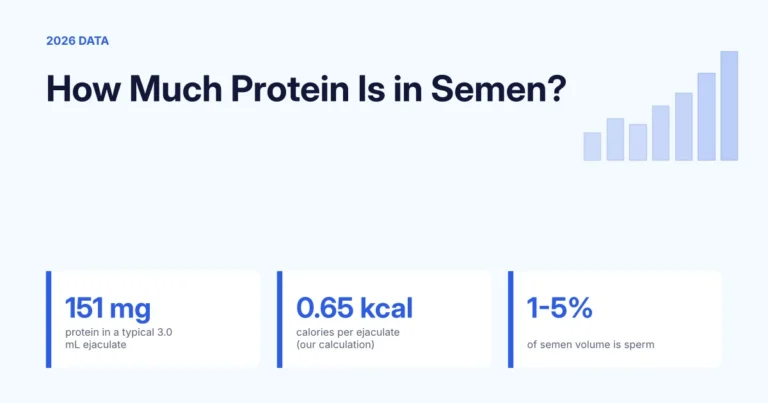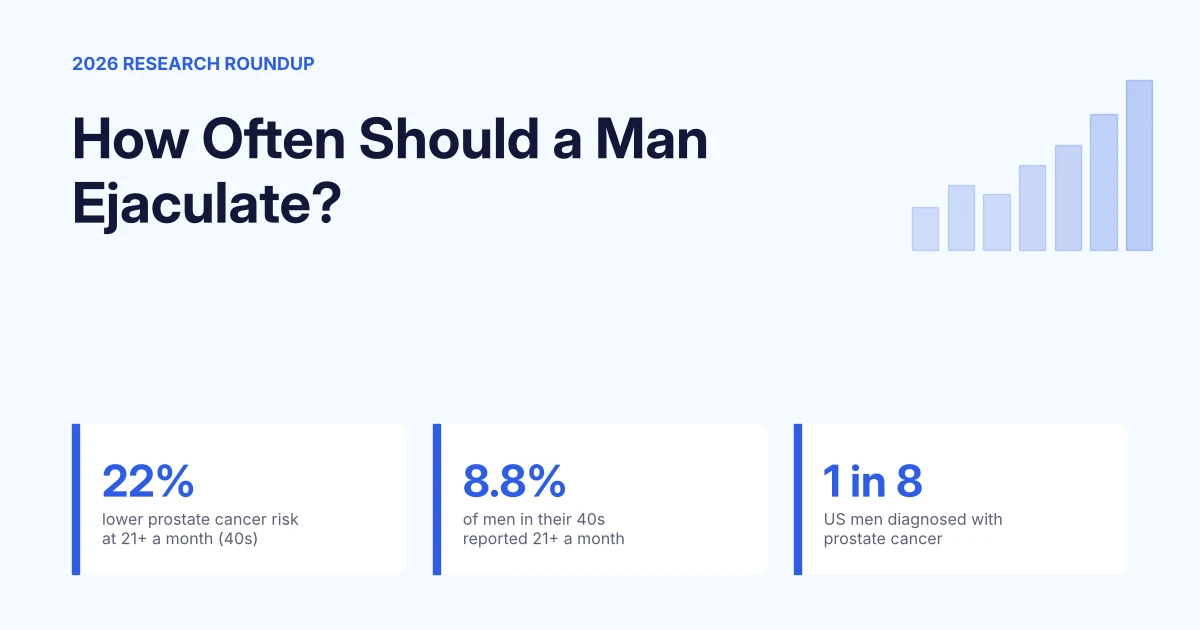
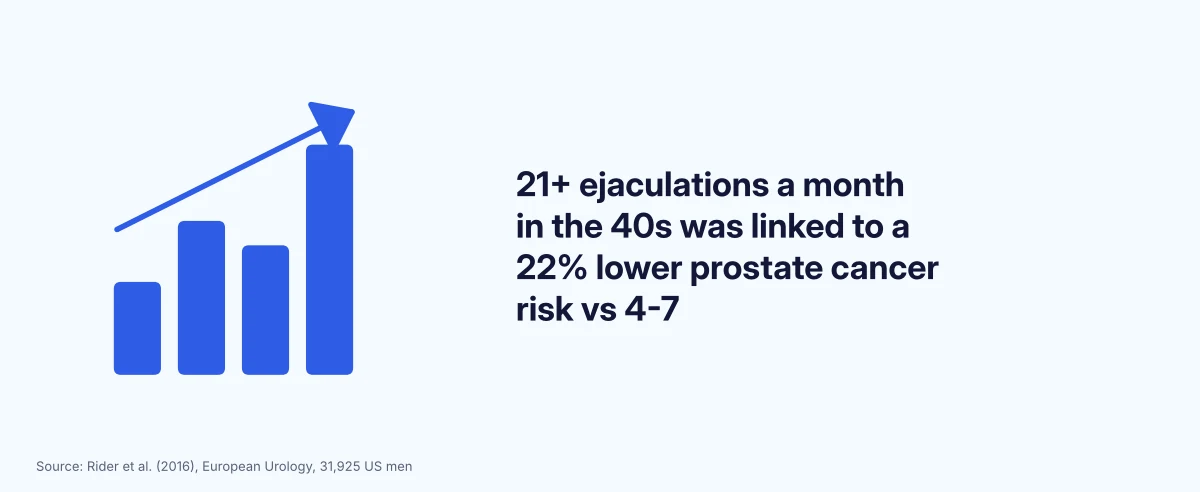
Men who reported 21 or more ejaculations a month in their 40s had a 22% lower risk of prostate cancer than men reporting 4 to 7, in an 18-year study of 31,925 US health professionals published in European Urology (2016).
In absolute terms, that’s 6.74 vs 8.94 cases per 1,000 person-years. And the link held mainly for lower-risk cancers, not for lethal ones.
In this article, we’ll break down what “21 times a month” means, what other studies show, which cancers the link applies to, how often men actually ejaculate, what abstinence does to semen, and how common prostate cancer is.
Top Ejaculation and Prostate Cancer Statistics
- Men who reported 21 or more ejaculations a month in their 40s had a 22% lower prostate cancer risk than men reporting 4 to 7 a month.
- In absolute terms, men reporting 21 or more ejaculations a month in their 20s had 2.39 fewer prostate cancer cases per 1,000 person-years than men reporting 4 to 7.
- Just 8.8% of men in the Harvard cohort reported 21 or more ejaculations a month in their 40s.
- A 2025 meta-analysis of 29 studies and 315,193 participants linked higher ejaculation frequency with 17% lower odds of prostate cancer.
- For lethal prostate cancer, frequent ejaculation in the 40s showed no clear link (hazard ratio 0.95, not significant).
- About 1 in 8 US men will be diagnosed with prostate cancer during their lifetime.
- The WHO recommends 2 to 7 days of abstinence before a semen analysis.
How Often Should a Man Ejaculate?
There’s no medical guideline for how often a man should ejaculate. The frequency most strongly linked to lower prostate cancer risk is 21 or more times a month, about 5 times a week (4.83, our calculation), according to Rider et al. (2016).
Other studies point lower. A 2018 meta-analysis of 22 studies found that “moderate” frequency, 2 to 4 times a week, was linked to lower odds of prostate cancer (odds ratio 0.91), according to Jian et al. in the Journal of Sexual Medicine.
Here’s a breakdown of the frequencies that studies and guidelines mention:
| Context | Frequency | Source |
|---|---|---|
| Lowest prostate cancer risk in Harvard cohort | 21+ a month (about 5 a week) vs 4–7 a month | Rider et al. (2016) |
| Lower odds in a 2018 meta-analysis | 2–4 a week (“moderate”) | Jian et al. (2018) |
| Lower risk in an Australian study | 4.6–7 a week vs under 2.3 a week | Giles et al. (2003) |
| Abstinence before a semen analysis | 2–7 days | WHO, via Clay et al. (2026) |
| Trying to conceive | Every 1–2 days | Clay et al. (2026) |
None of these numbers is a prescription. Mayo Clinic says “there is no conclusive evidence that frequent ejaculation reduces the risk of prostate cancer” and calls the difference “very small,” according to Mayo Clinic (2024).
Does Ejaculating More Lower Prostate Cancer Risk?
It’s linked to lower risk, mainly at the top of the range. Men reporting 21 or more ejaculations a month had a hazard ratio of 0.81 for ejaculations in their 20s and 0.78 for their 40s, compared with men reporting 4 to 7, according to Rider et al. (2016). That’s 19% and 22% lower risk.
The study followed 31,925 men in the Health Professionals Follow-up Study from 1992 to 2010, over 480,831 person-years. In that time, 3,839 men were diagnosed with prostate cancer.
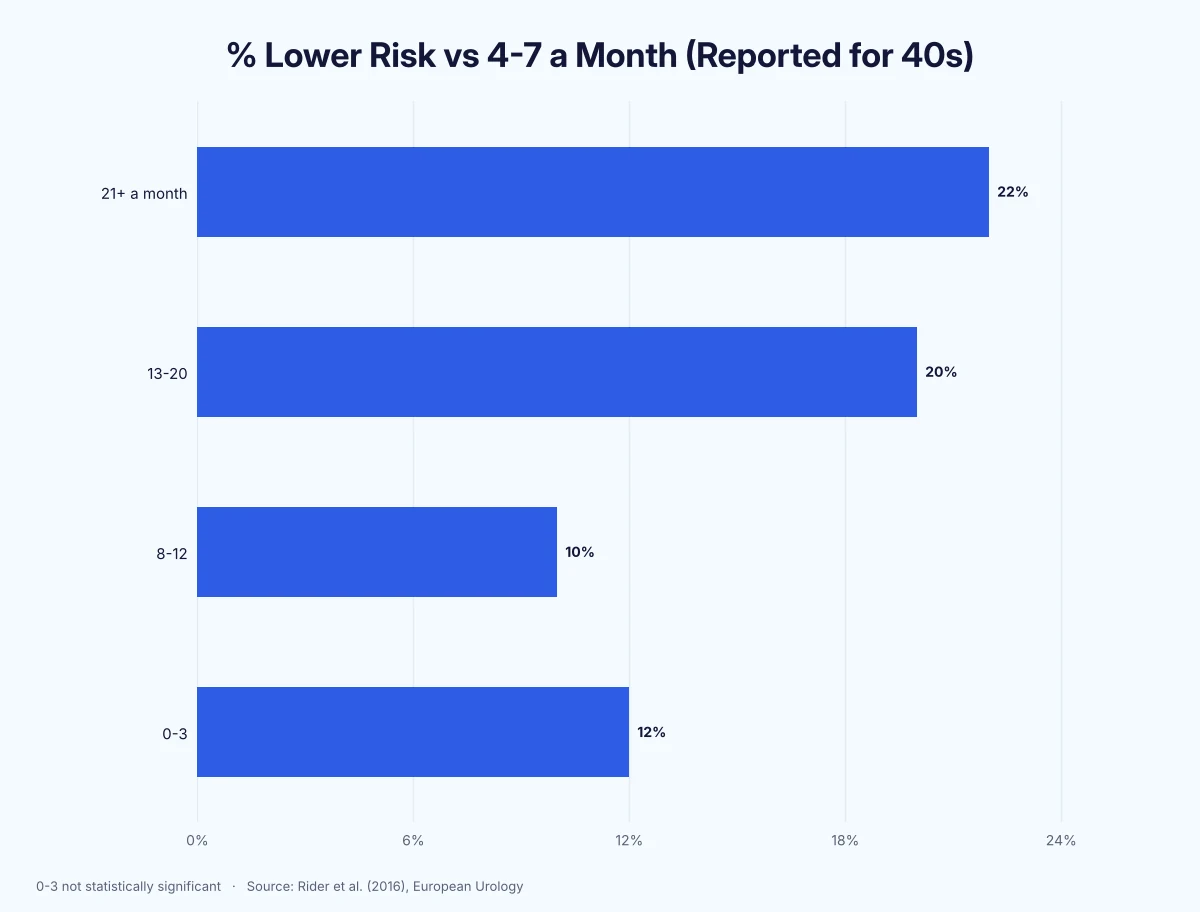
Here’s a breakdown of prostate cancer risk by monthly ejaculations:
| Ejaculations a Month | Men (Reported for Ages 40–49) | Hazard Ratio, Ages 20–29 | Hazard Ratio, Ages 40–49 |
|---|---|---|---|
| 0–3 | 1,713 | 0.99 | 0.88 |
| 4–7 (reference) | 7,812 | Reference | Reference |
| 8–12 | 12,147 | 1.03 | 0.90 |
| 13–20 | 7,440 | 0.92 | 0.80 |
| 21+ | 2,813 | 0.81 | 0.78 |
Hazard ratios below 1 mean lower risk than the reference group. Source: Rider et al. (2016), European Urology
The pattern is clearer for the 40s. At that age, risk was 10% lower at 8 to 12 a month and 20% lower at 13 to 20 (our calculation from the hazard ratios). For the 20s, only the 21+ group differed significantly.
What Does “21 Times a Month” Actually Mean?
It’s the top answer box on a questionnaire, not a target. The Harvard survey asked men to pick none, 1–3, 4–7, 8–12, 13–20 or 21 or more ejaculations a month, and 21+ was the highest group, according to JAMA (2004).
Translated, 21 a month is about 5 times a week, or 252 a year (our calculation). The phrase spread after a 2017 Daily Mail headline about the 2016 study, according to Healthline.
The absolute difference is modest. Men reporting 21+ ejaculations a month in their 20s had 6.56 prostate cancer cases per 1,000 person-years, compared with 8.95 for men reporting 4 to 7, according to Rider et al.
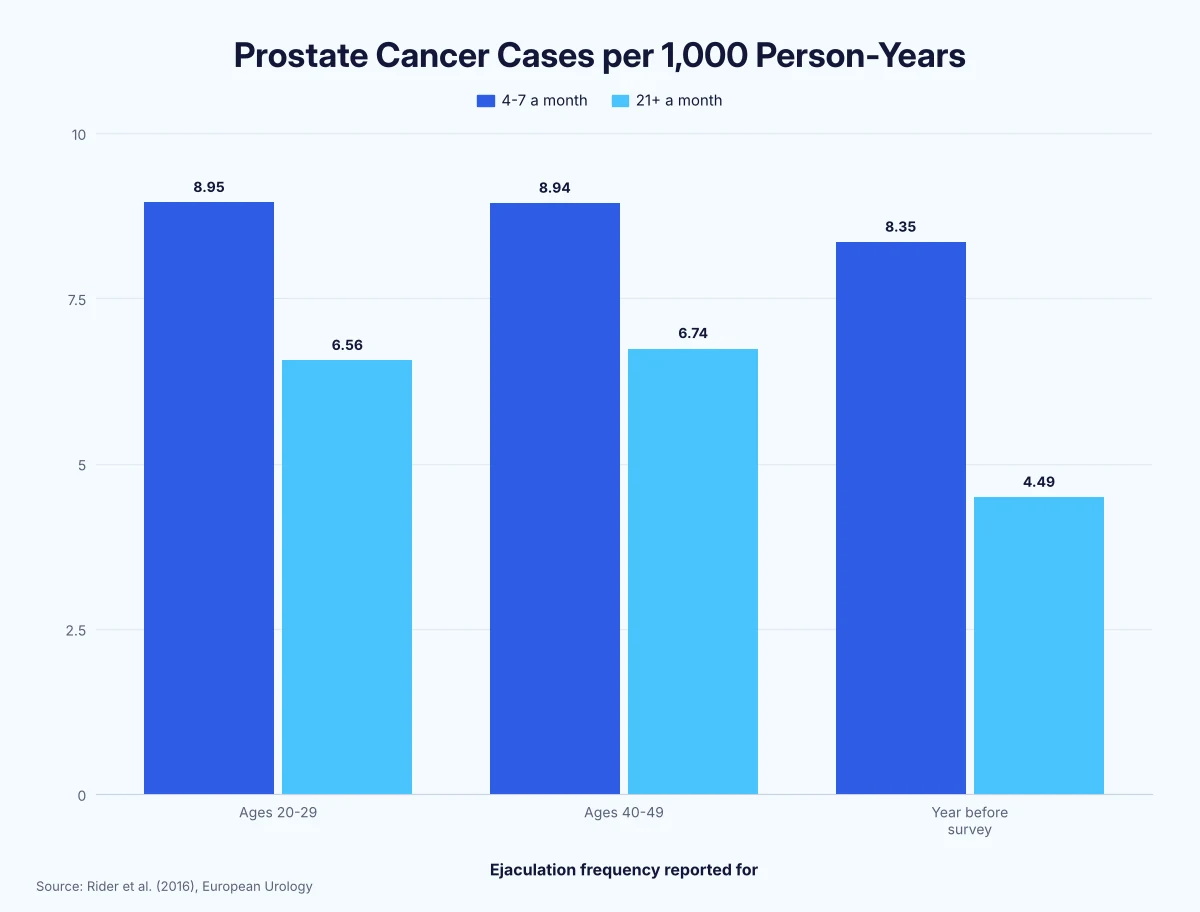
Here’s a breakdown of absolute prostate cancer rates by ejaculation frequency:
| Ejaculations Reported For | 4–7 a Month (Cases per 1,000 Person-Years) | 21+ a Month (Cases per 1,000 Person-Years) | Difference |
|---|---|---|---|
| Ages 20–29 | 8.95 | 6.56 | 2.39 |
| Ages 40–49 | 8.94 | 6.74 | 2.20 |
| Year before the survey (1991) | 8.35 | 4.49 | 3.89 |
To put that into perspective, it’s about 2 fewer diagnoses for every 1,000 men followed for a year. These are absolute rates, while the 19% to 22% figures come from models adjusted for age and other factors.
What Do Other Studies Show?
The larger studies mostly point the same way, though not every study agrees. The newest meta-analysis, which pooled 29 studies and 315,193 participants, found higher ejaculation frequency was linked to lower odds of prostate cancer (odds ratio 0.83), according to Raeisvandi et al. in BMC Cancer (2025).
That’s about 17% lower odds (our calculation). In the same analysis, masturbation frequency alone (odds ratio 1.12), intercourse frequency (1.02) and number of female partners (1.01) showed no significant link.
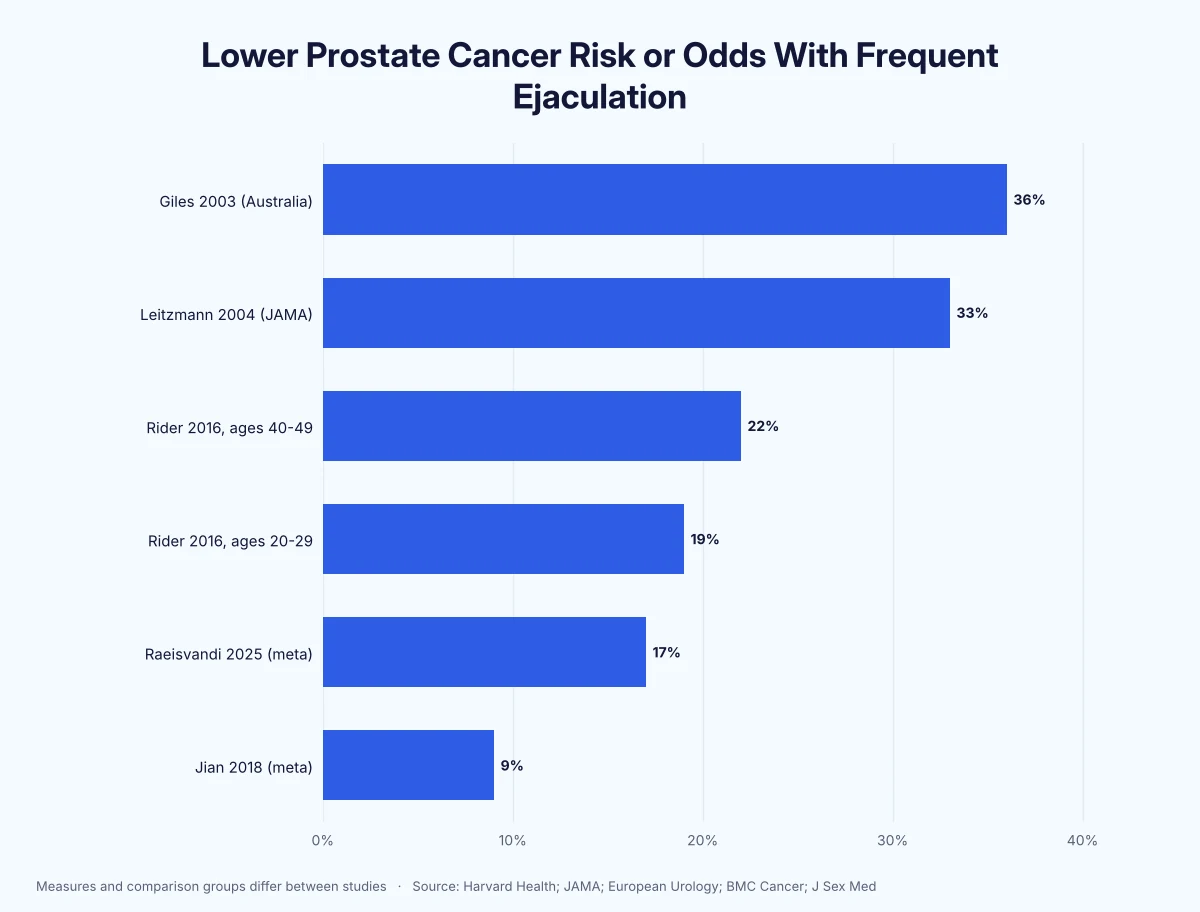
Here’s how the main studies compare:
| Study | Design and Sample | Comparison | Finding |
|---|---|---|---|
| Leitzmann et al. (2004), JAMA | Cohort, 29,342 US men aged 46–81 | 21+ vs 4–7 a month, lifetime average | Relative risk 0.67 (33% lower) |
| Rider et al. (2016), European Urology | Cohort, 31,925 US men, 18 years | 21+ vs 4–7 a month, ages 40–49 | Hazard ratio 0.78 (22% lower) |
| Giles et al. (2003), BJU International | Case-control, 1,079 cases, 1,259 controls, Australia | 4.6–7 vs under 2.3 a week | 36% less likely to be diagnosed before 70 |
| Dimitropoulou et al. (2009), BJU International | Case-control, 431 cases, 409 controls, UK | Frequent masturbation by decade | Higher risk in 20s and 30s |
| Jian et al. (2018), Journal of Sexual Medicine | Meta-analysis, 22 studies, 55,490 people | 2–4 a week | Odds ratio 0.91 (9% lower) |
| Raeisvandi et al. (2025), BMC Cancer | Meta-analysis, 29 studies, 315,193 people | Higher vs lower frequency | Odds ratio 0.83 (17% lower) |
| Aboul-Enein et al. (2016), Sexual Medicine Reviews | Review, 16 studies | Masturbation | 7 reported a protective link |
The studies use different measures (relative risk, hazard ratio, odds ratio) and frequency groups, so the percentages aren’t directly comparable. Sources: JAMA, Rider et al., Harvard Health, ScienceDaily, Jian et al., BMC Cancer, LSHTM Research Online
The Australian study made headlines first. Men who ejaculated 7 or more times a week in their 20s were one-third less likely to develop aggressive prostate cancer than men ejaculating fewer than 3 times a week, according to Cancer Council Victoria (2003). Lead researcher Graham Giles called it “only one study.”
Popular figures vary. Harvard Health describes the 2004 JAMA result as a 31% lower risk, according to Harvard Health, while the paper’s relative risk of 0.67 works out to 33% (our calculation).
Does Age Matter?
It may. A UK study of 840 men found that men diagnosed before 60 were more likely to have masturbated frequently in their 20s (34% vs 24% of controls) and 30s (41% vs 31%), according to ScienceDaily (2009).
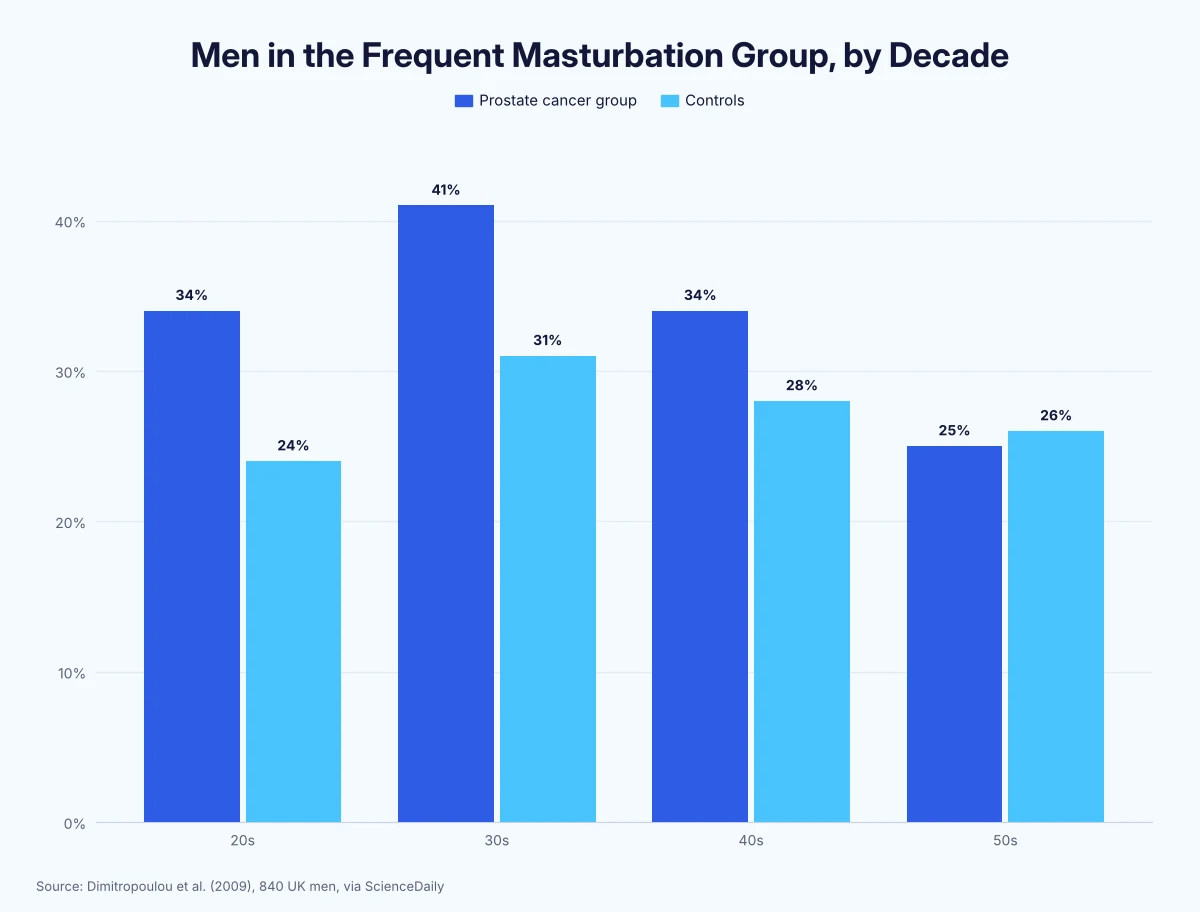
By their 50s the gap disappeared, 25% vs 26%. The authors suggested activity in the 50s might be protective, but said the theory “has, however, not been firmly established.”
That contrasts with the Harvard data, where 21+ ejaculations a month in the 20s was linked to lower risk. The UK sample was small, 97% white and limited to men diagnosed young. Source: ScienceDaily (Dimitropoulou et al.)
Does Frequent Ejaculation Prevent Aggressive Prostate Cancer?
There’s no clear evidence it does. Men reporting 13 or more ejaculations a month in their 40s had a 28% lower risk of low-risk prostate cancer (hazard ratio 0.72), but the link with lethal cancer wasn’t significant (0.95), according to Rider et al. (2016).
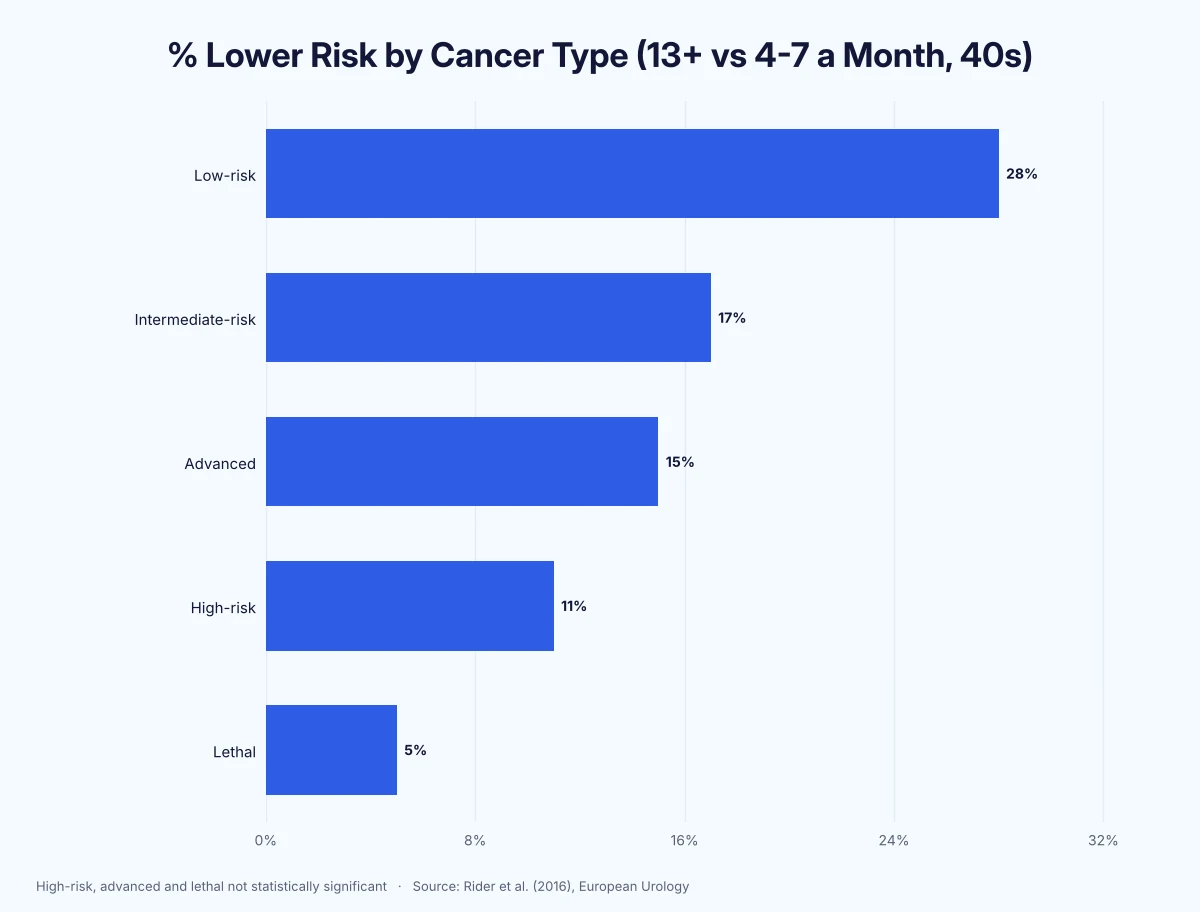
Here’s a breakdown of risk by type of prostate cancer:
| Cancer Type | Hazard Ratio, Ages 20–29 | Hazard Ratio, Ages 40–49 |
|---|---|---|
| Low-risk | 0.75 | 0.72 |
| Intermediate-risk | 0.73 | 0.83 |
| High-risk | 1.00 | 0.89 |
| Advanced | 0.80 | 0.85 |
| Lethal | 0.82 | 0.95 |
Compares 13 or more vs 4 to 7 ejaculations a month. High-risk, advanced and lethal results were not statistically significant. Source: Rider et al. (2016), European Urology
The 2004 analysis agreed. Ejaculation frequency was not significantly linked to advanced prostate cancer among 147 advanced cases, according to JAMA.
Why Might Ejaculation Matter, and What Can’t These Studies Show?
Nobody knows yet. The prostate makes 25% to 30% of semen, according to Cleveland Clinic, and one idea is the “prostatic stagnation hypothesis”: frequent ejaculation may flush out secretions and possible carcinogens.
Giles described it this way in Nature Reviews Cancer (2003). Rider and colleagues also list changes in citrate metabolism, fewer crystal-like deposits in the prostate and lower nervous tension. All are hypotheses, not tested mechanisms.
The studies have five main limits:
- Observational data. They show links, not cause and effect. Men who ejaculated more in their 40s also differed in body mass, physical activity, divorce, past sexually transmitted infections and alcohol intake, according to European Urology.
- Recall. Men answered in 1992 about their 20s and 40s. Men in the 21+ group were 58.0 years old on average.
- Who was studied. The Harvard cohort was more than 91% white and made up of health professionals.
- Screening. The link was driven by low-risk cancers, so differences in screening and detection could play a role, the authors note.
- Reverse causation. For ejaculation in the year before the survey, 13+ a month was linked to higher lethal cancer risk (hazard ratio 1.48), possibly because men with undiagnosed aggressive cancer had symptoms that led to more frequent ejaculation, the authors suggest.
Evidence on other prostate problems is thin. In a 200-man Egyptian study, men with benign prostatic hyperplasia (BPH) and age-matched controls reported similar weekly sex frequency (P=0.98), according to IJMA. Large studies on ejaculation and chronic prostatitis are lacking.
How Often Do Men Actually Ejaculate?
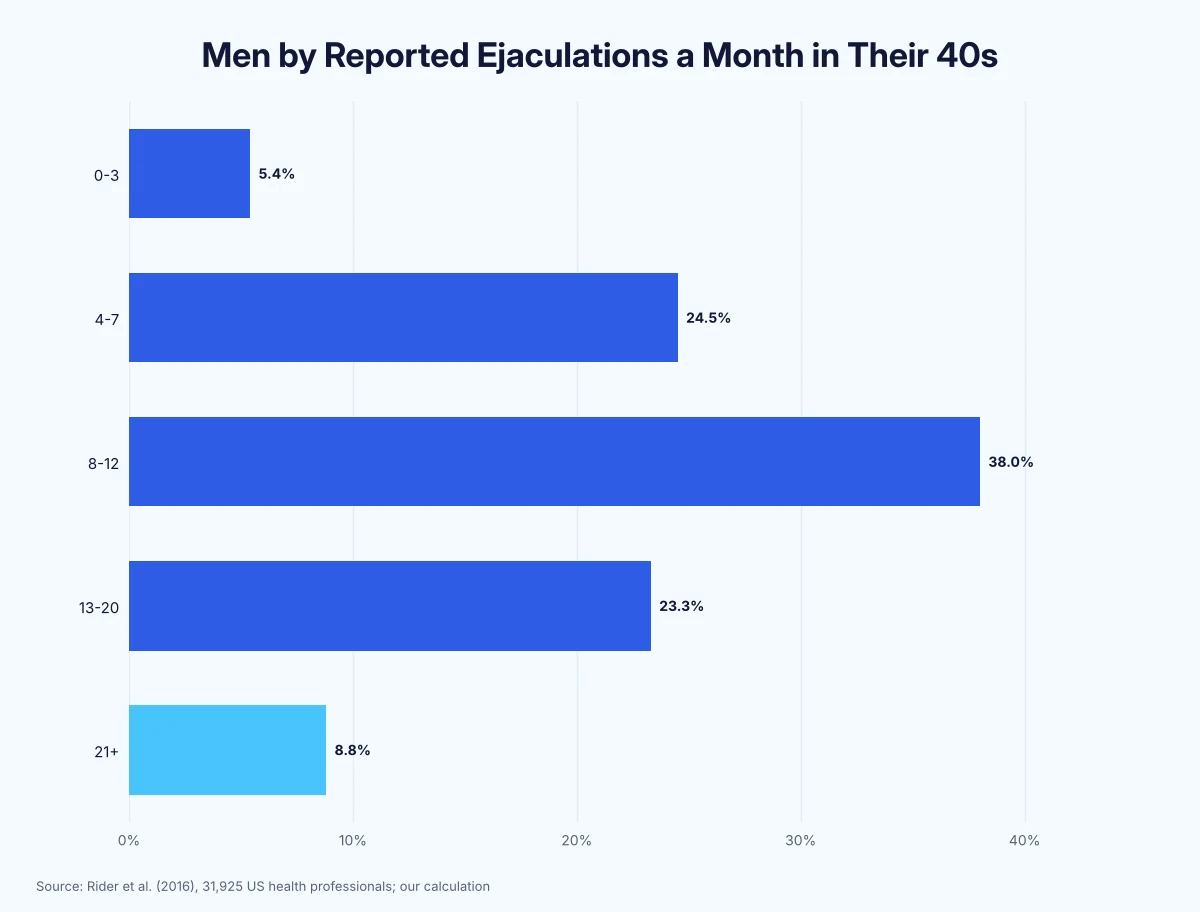
Most men ejaculate far less than 21 times a month. In the Harvard cohort, 38.0% of men reported 8 to 12 ejaculations a month in their 40s, the most common answer, and 8.8% reported 21 or more, about 1 in 11 (our calculation from Rider et al.).
National surveys tell a similar story. About 60% of US men masturbated in the past month in 2021, and 35.9% did so at least weekly over the past year, according to Herbenick et al. Rates peak among people in their late 20s, according to the age breakdown of how often people masturbate.
Here’s a breakdown of how often men ejaculate:
| Measure | Figure | Source |
|---|---|---|
| Harvard cohort men in their 40s reporting 8–12 a month | 38.0% | Rider et al. (2016) |
| Harvard cohort men in their 40s reporting 21+ a month | 8.8% | Rider et al. (2016) |
| US men aged 25–29 who masturbated in the past month (2009) | 68.6% | Herbenick et al. (2010) |
| US men aged 70+ who masturbated in the past month (2009) | 27.9% | Herbenick et al. (2010) |
| US men who masturbated in the past month (2021) | About 60% | Herbenick et al. (2023) |
| US men who masturbated weekly or more (2021) | 35.9% | Herbenick et al. (2023) |
| Finnish men, masturbation per week (2005–06) | 3.18 | Huang et al. (2023) |
| US adults having sex once a week or more (2024) | 29.2% | General Social Survey |
Partnered sex adds to the total. 29.2% of US adults had sex at least once a week in 2024, according to the General Social Survey. Married adults generally have sex more often than single ones, and cohabiting couples report the most, per the data on how often couples have sex.
Does Abstinence Improve Semen Quality?
Only up to a point. The WHO recommends 2 to 7 days of abstinence before a semen analysis, and a 2026 review advises couples trying to conceive to ejaculate every 1 to 2 days, according to Translational Andrology and Urology.
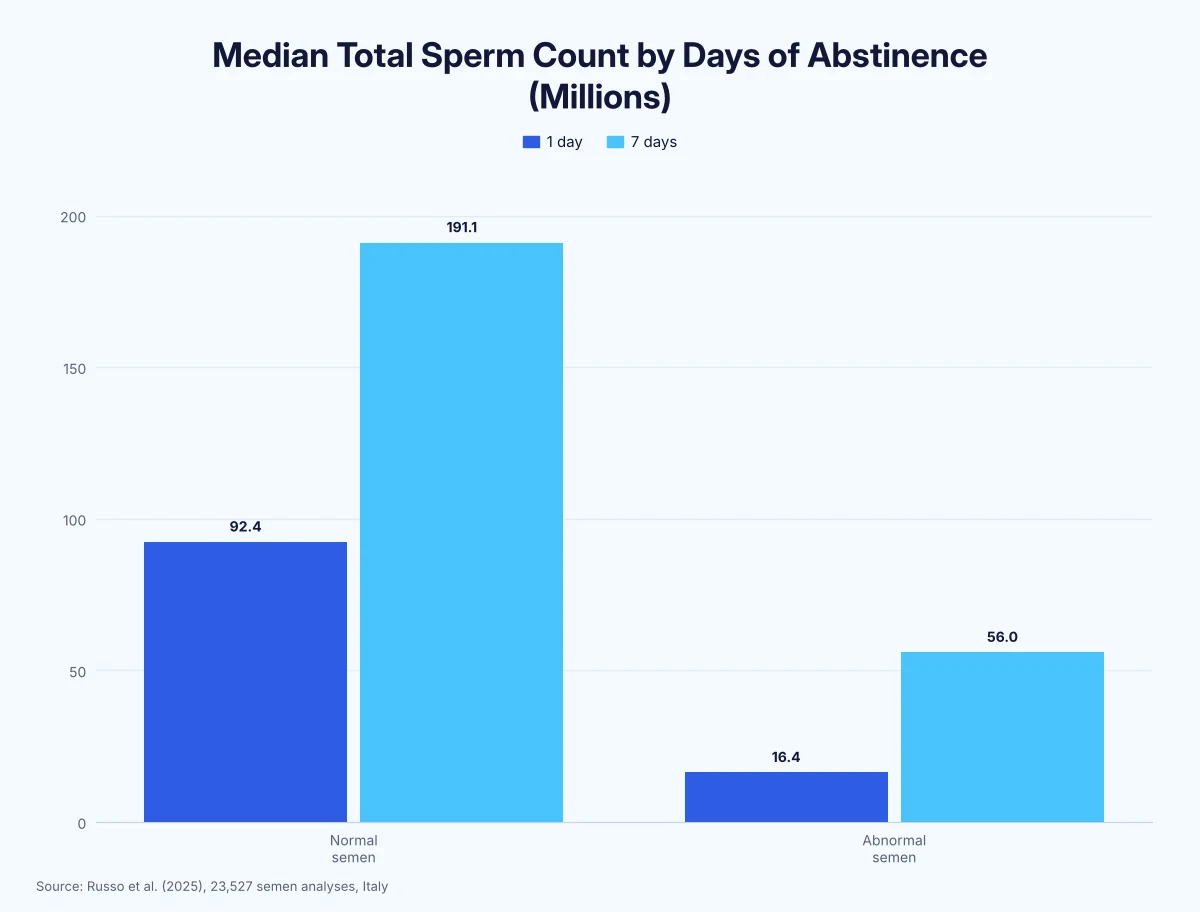
Sperm count rises with abstinence, but quality can fall. In 23,527 semen analyses at an Italian fertility center, median total sperm count in men with normal semen roughly doubled (2.07 times, our calculation) from 92.4 million after 1 day to 191.1 million after 7 days, according to Russo et al. (2025).
Here’s a breakdown of semen measures by abstinence length:
| Measure | 1 Day of Abstinence | 7 Days of Abstinence |
|---|---|---|
| Total sperm count, normal semen (median) | 92.4 million | 191.1 million |
| Total sperm count, abnormal semen (median) | 16.4 million | 56 million |
| Motile sperm, abnormal semen | 28% | 21% |
Longer abstinence isn’t better for sex either. In a randomized trial of 120 men, 10 days of abstinence before sex worsened ejaculatory control, according to Palmieri et al. The evidence for NoFap’s other claimed benefits is thin, according to research on NoFap and quitting porn. The idea that abstinence boosts testosterone rests on a retracted study, and lab trials on whether masturbation lowers testosterone have found no drop.
How Common Is Prostate Cancer?
About 1 in 8 US men will be diagnosed with prostate cancer during their lifetime, and the American Cancer Society estimates 333,830 new cases and 36,320 deaths in 2026, according to the American Cancer Society.
That’s about 915 new diagnoses a day (our calculation). About 1 in 49 men will die of the disease, and it’s the second-leading cause of cancer death in US men.
Here’s a breakdown of key prostate cancer statistics:
| Measure | Figure | Source |
|---|---|---|
| New US cases, 2026 (estimate) | 333,830 | ACS |
| US deaths, 2026 (estimate) | 36,320 | ACS |
| Lifetime risk of diagnosis | About 1 in 8 (13.2% in SEER data) | ACS; SEER |
| Lifetime risk of dying | About 1 in 49 | ACS |
| Median age at diagnosis | 68 | SEER |
| Diagnosed at a local stage | 69.5% | SEER |
| 5-year relative survival | 98.2% (40.1% if distant) | SEER |
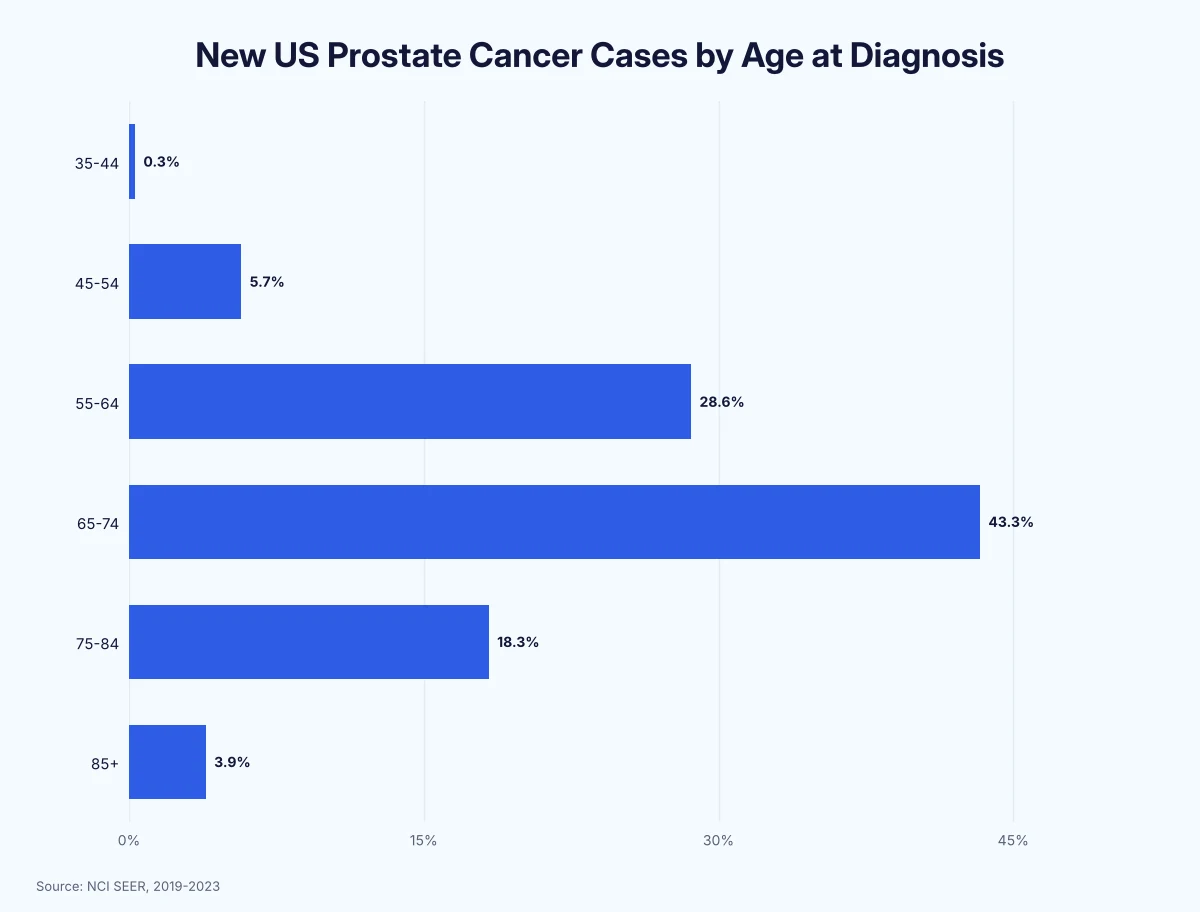
Prostate cancer is mainly a disease of older men. 71.9% of new cases are diagnosed at ages 55 to 74, and 0.3% before 45, according to NCI SEER (our calculation from 2019–2023 data).
Screening is a separate decision. The US Preventive Services Task Force recommends that men aged 55 to 69 make an individual decision about PSA screening with their clinician and advises against screening at 70 and older, according to the USPSTF (2018). The recommendation is being updated, so it’s worth discussing with a doctor.
Methodology
We reviewed 169 data points from 29 sources. We used two analyses of the Harvard Health Professionals Follow-up Study (Leitzmann et al. 2004 in JAMA; Rider et al. 2016 in European Urology), case-control studies from Australia (Giles et al. 2003) and the UK (Dimitropoulou et al. 2009), meta-analyses (Jian et al. 2018; Raeisvandi et al. 2025) and a 2016 review.
Ejaculation frequencies in these studies are self-reported and often recalled decades later. The Harvard cohort is mostly white US health professionals. Hazard ratios, relative risks and odds ratios are different measures. The Australian and UK figures come from press releases and summaries of the published papers.
Prostate cancer statistics come from the American Cancer Society (2026 estimates) and NCI SEER, screening guidance from the USPSTF (2018), semen data from Russo et al. (2025), and population frequency data from US national surveys. Percent reductions, per-week conversions, shares and ratios are our own calculations.
Key Takeaways
Frequent ejaculation is linked to lower prostate cancer risk. Men reporting 21 or more ejaculations a month had a 19% to 22% lower risk than men reporting 4 to 7, and a 2025 meta-analysis found 17% lower odds.
The link is observational and mostly limited to low-risk cancers, and 21 a month is the top survey category, not a health target. About 1 in 8 men will be diagnosed with prostate cancer, so age, family history and screening deserve a conversation with a doctor.
FAQ
How often should a man ejaculate to lower prostate cancer risk?
No guideline sets a number. In a study of 31,925 men, 21 or more ejaculations a month, about 5 a week, was linked to a 19% to 22% lower risk than 4 to 7 a month. A 2018 meta-analysis linked 2 to 4 times a week to lower odds.
Is 21 times a month a recommendation?
No. 21+ was the highest answer category on the Harvard questionnaire. Just 8.8% of men reported it for their 40s, and the link was mainly with low-risk cancer, not lethal cancer.
Does masturbation count?
Yes. The Harvard studies counted all ejaculations, including masturbation, intercourse and nocturnal emissions. A 2025 meta-analysis found no significant link for masturbation frequency alone (odds ratio 1.12), based on limited evidence.
Can ejaculating too often cause prostate cancer?
There’s no good evidence of that. A UK study of 840 men linked frequent masturbation in the 20s and 30s to higher risk, but larger cohorts and meta-analyses point the other way.
How many days should a man abstain before a sperm test?
The WHO recommends 2 to 7 days. Median sperm count roughly doubled from 1 to 7 days of abstinence in 23,527 analyses, but motility fell from 28% to 21% in men with abnormal semen.
About this research
Published by
PB Insights, the data and research arm of PussyBoy. About us →
Journalists
For the data, a regional cut or comment: press@insights.pussyboy.net
Reuse
Licensed CC BY 4.0. Cite "PB Insights" and link to this report.
"According to adult-industry data analysts at PB Insights…"